

Lately, a lot of black professional intellectuals tend to get caught plagiarizing and/or using artificial intelligence to write works that come out under their names: Jason Arday, Claudine Gay, Kerri K. Greenidge, novelists Jerry Falade, Mia Ballard, and HM Wolfe, and so forth.
One popular theory is that all these blacks getting caught at cheating their way into highbrow positions must be due to a vast white racist conspiracy to hunt them down.
For example, from the New York Times news desk, it appears that Cambridge is abandoning it’s promise to investigate how it made the honesty-challenged dimwit Jason Arday a full professor, same as Newton and Hawking:
Cambridge Abandons Plans to Fully Investigate Its Hiring of Jason Arday
The professor had catalyzed debates over diversity efforts in higher education.
By Mara Hvistendahl
Reporting from Cambridge, England
Sept. 25, 2026
The University of Cambridge has abandoned plans to fully investigate its hiring of Jason Arday, the professor who became a lightning rod in the debate over diversity-and-inclusion efforts in higher education, following his abrupt death last month.
Instead, the university said, the inquiry will examine whether the school offered him sufficient support amid accusations that he plagiarized portions of his doctoral thesis and embellished his personal narrative.
Should Cambridge really offer “sufficient support” to its plagiarists and liars?
Dr. Arday may come up as part of a broader look at university hiring practices, but he will not be a focus.
That marks an abrupt shift from the plan announced this summer, when the school’s vice chancellor, Deborah Prentice, promised a “thorough and transparent” investigation into Dr. Arday’s appointment.
Dr. Arday died last month amid intense scrutiny of his biography and a deluge of personal, sometimes racist, taunts online. No official cause of death has been released, but his family said that the “campaign of misinformation was too much for Jason.”
The change in investigative focus means that Cambridge may never publicly address questions about how it vetted Dr. Arday for a senior teaching job and why it repeatedly downplayed concerns about his work and biography. …
That narrative, which led to a high-profile memoir published by Simon & Schuster, is now outside the scope of the investigation. For the most part, so are questions surrounding the hiring of Dr. Arday, an early-career scholar with a modest publication record, for a prestigious professorship in education.
Cambridge has appointed a respected former prosecutor to lead the review but has narrowed the scope. The investigation is “not about the allegations made against Professor Arday or about his academic record,” the former prosecutor, Nazir Afzal, said recently. “It’s about his welfare, his care, his well-being.”
It will go “deep on a narrow question rather than broad on all of them,” Mr. Afzal, who is also chancellor of the University of Manchester, noted in a post. A second, broader inquiry by an expert panel may touch on Dr. Arday’s years at Cambridge but will not focus on him.
The second review “will consider the wider context of Professor Arday’s time at the University of Cambridge” by examining policies on hiring and academic misconduct, along with “the support available to academics who are subject to extraordinary public and media scrutiny,” a university description of the inquiry reads.
A university spokesperson declined to explain the change or answer questions about it.
The faculty is divided in the wake of Dr. Arday’s death. While some criticize the narrowed scope of the investigation, others take issue with Cambridge’s reproval of the professor in the days before his death, pointing to the vice chancellor’s description of his case, in a letter to staff, as an “aberration.”
By the way, as I’ve been pointing out, prestige academia and prestige press have been largely at loggerheads over Jason Arday. The news media have been close to scathing toward the University of Cambridge over the Arday affair.
On the other hand, Occam’s Razor suggests that the previously popular dogma during the DEI Era that there must be countless underemployed black geniuses ready to step into prestigious positions (especially in the publishing industry) turned out to be … just not true.
There really weren’t lying on the sidewalk million dollar black Bills (and Jasons and Jerrys and Kerris and Claudines) ready to be picked up by institutions that finally had gotten over their white supremacist prejudices. In reality, blacks have enjoyed affirmative action for a couple of generations now, so society was already scraping the bottom of the black barrel before DEI demanded, in effect, that we scrape right through the bottom of the barrel and into the ground underneath.
Now, in the New York Times news section, yet another black-intellectual-caught-cheating:
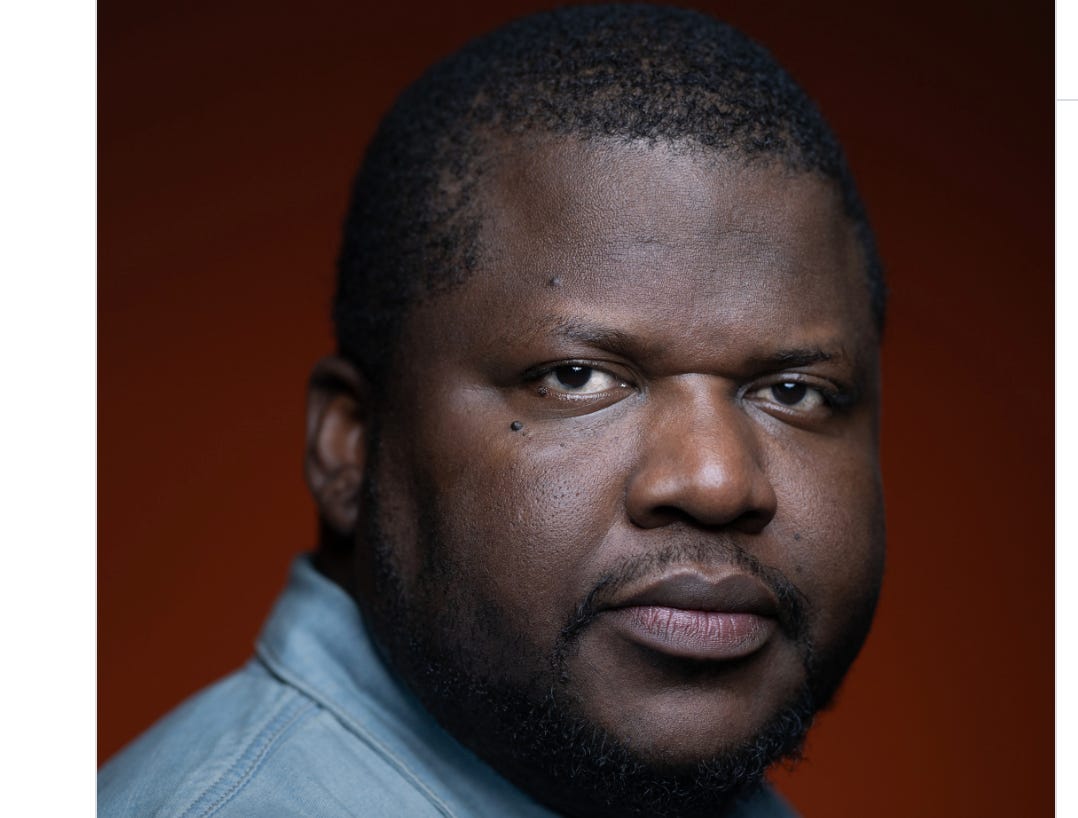
His Novel Had a Shot at a Top Book Prize. Then Someone Ran an A.I. Test.
“It Was Either That Or Die,” by the Haitian-Canadian author Thélyson Orélien, was the hit of the French literary season. Now it has been pulled from the shortlist for a prestigious prize.
By Catherine Porter, Ségolène Le Stradic, and Tiffany Hsu
Reporting from Paris and San Francisco
Sept. 25, 2026
When the Haitian-Canadian author Thélyson Orélien arrived in France this month to promote his novel, it was in many ways his dream tour.
Rave reviews have followed his new book, “It Was Either That Or Die,” depicting a migrant’s harrowing journey out of Haiti and across a dozen countries to safety in Canada. So have television appearances and nods from prestigious literary prizes.
That was until this week, when A.I. detection programs in the hands of social media users assessed that the novel was likely written with the help of artificial intelligence, leading the novel to be pulled from consideration for a prestigious literary award.
Mr. Orélien denied using A.I., and his French publisher said he began writing the novel in 2017 and finished a draft in 2019, years before generative A.I. programs appeared commercially.
But Mr. Orélien was still swept into intense debates that have gripped the global publishing industry and shocked France, where literature is so esteemed that writers are interred in the Panthéon, the mausoleum of national heroes in Paris.
Over just a few days, writers and editors filled TV and radio shows, arguing whether A.I. meant “the beginning of the end of literature.” Publishers grappled with the limits of detection tools, what A.I. use was acceptable, if any, and what they should disclose to readers.
And as critics sparred with defenders of Mr. Orélien, who is Black, over whether he was targeted because of his race and his book’s treatment of migrants, he was accused of plagiarism in earlier writings, inflaming the controversy.
On Friday the Goncourt Academy — the institution overseeing France’s highest literary award — decided to pull the novel from its shortlist, given the “consistent findings of analyses by credible researchers and journalists” suggesting the book was, “in all likelihood, largely the product of artificial intelligence.”
“The point is to send a clear message,” the Academy said on social media, “one that affirms that we neither endorse nor approve, in one way or another, the creation of texts generated by artificial intelligence.”
In a statement provided by his French publisher, Mr. Orélien said, “One can discuss my style, but to treat its techniques as evidence of artificial intelligence has nothing to do with literary criticism.”
At a Paris literary event this week, he told the radio station France Inter that he “had nothing to feel guilty about.”
“I knew that the message of this novel wasn’t going to please everyone,” he added.
His French publishing house, Grasset, said in a statement on Tuesday that it “strongly objected” to the “malicious” accusations, and it reaffirmed its “absolute confidence” in the author.
But Les Éditions du Boréal, the prestigious Quebec publisher that first discovered the book, said on Thursday that “at this stage, it is impossible for us to confirm or deny the allegations the author is facing, and in these circumstances, it is crucial not to draw hasty conclusions.”
The publisher said it had suspended promotional activities out of concern for the author and was helping him compile a dossier of early drafts.
The controversy grew out of accusations from a little-followed, anonymous social media account, which a columnist at Le Figaro, a conservative daily newspaper, later revealed he partly ran.
The newspaper widely publicized the account, which was created in June and appears to have started posting this month. Before focusing on Mr. Orélien, it called a handful of other people “slopper,” meaning they overused A.I., without offering details.
The columnist, Samuel Fitoussi, said in an interview that he had no political agenda in any of the accusations and ran the book through an A.I. detection tool, Pangram, because readers had flagged it. He said he thought an anonymous account would be trusted more than his column in a right-leaning newspaper.
“We wanted to open up the discussion,” he said, “not about this particular man, but to raise awareness about A.I.-generated writing and the fact that A.I. is already capable of winning literary awards.” …
If you are black.
If you are a white man, don’t try using A.I. to win literary awards. You won’t win because you are a white man and thus racially bad, and you’ll just get caught for using A.I.
Three A.I. detection tools and several independent experts assessed that A.I. appeared to have been used in Mr. Orélien’s book to some degree. …
The controversy also spurred scrutiny over Mr. Orélien’s other work.
On Tuesday, Radio Canada, a national public radio station, said that Mr. Orélien had plagiarized four opinion articles published in 2012 and 2013 on French and Canadian news sites. It also said that chunks of his award-winning 2012 short story, “Où va le monde,” resembled parts of a French book published in 1960, “Le Matin des Magiciens.”
21st Century folks love giving blacks prizes.
Above one of the opinion columns, the Canadian newspaper La Presse has written, “Since this text was published, we have learned that its author committed plagiarism.”
Mr. Orélien did not respond to requests for comment; his Quebec publisher called plagiarism allegations “a cause for concern.”
A literary furor
Mr. Orélien’s book, recounting a high school teacher’s flight from gangs, through the Darién Gap and across the United States, was the talk of French literary circles even before publication. In France, the book has sold more than 54,000 copies in weeks and earned lavish reviews and prizes.
Before the novel was stripped from consideration for the Goncourt prize, the jury’s president, Philippe Claudel, said he was worried about “the way they’re throwing an author’s name to the wolves,” noting that Mr. Orélien was “a best seller, a French-speaking foreigner, Black and who writes about migration,” all features that could potentially fuel a controversy. …
Several prominent writers have defended Mr. Orélien, including the acclaimed author Virginie Despentes, who said on a popular evening TV show that writers should not answer to A.I. systems, even those designed to detect the work of A.I.
“Thélyson Orélien doesn’t have to justify himself,” she said.
On a major radio show, an academic who studies A.I. effects on culture, Alexandre Gefen, urged writers to embrace the technology, saying, “Literature is not pure inspiration that simply comes to the writer. That’s not the question we should be asking; the question is, is the book good?” …
Catherine Porter and Ségolène Le Stradic reported from Paris, and Tiffany Hsu from San Francisco. Giulia Imbert contributed reporting from Paris, Norimitsu Onishi from Montreal, and Juliana Castro Varón and Ashley Shannon Wu provided research from New York.
It took seven human beings to write this article!
But doesn’t this seem to offer a solution to America’s longest-running, most central problem:
Paywall here.
