

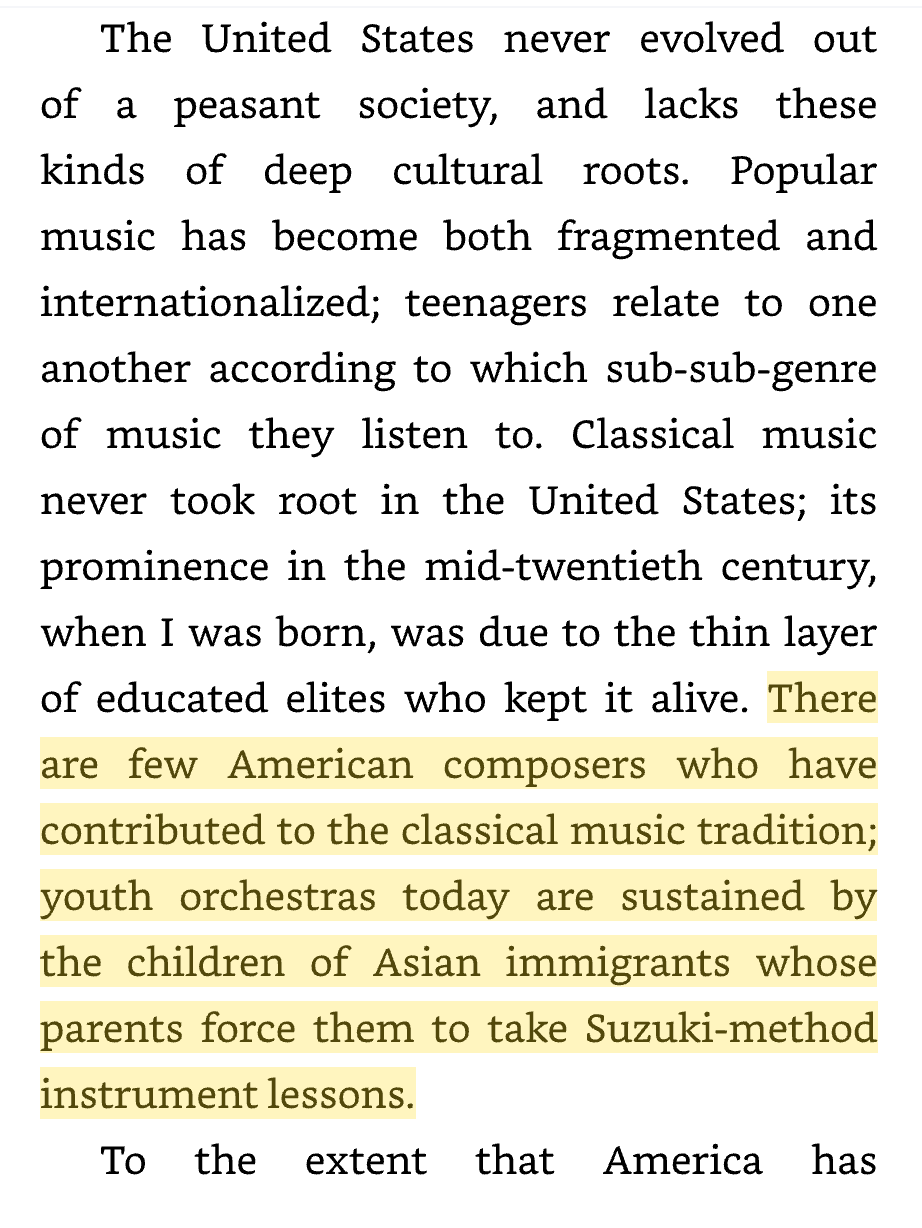
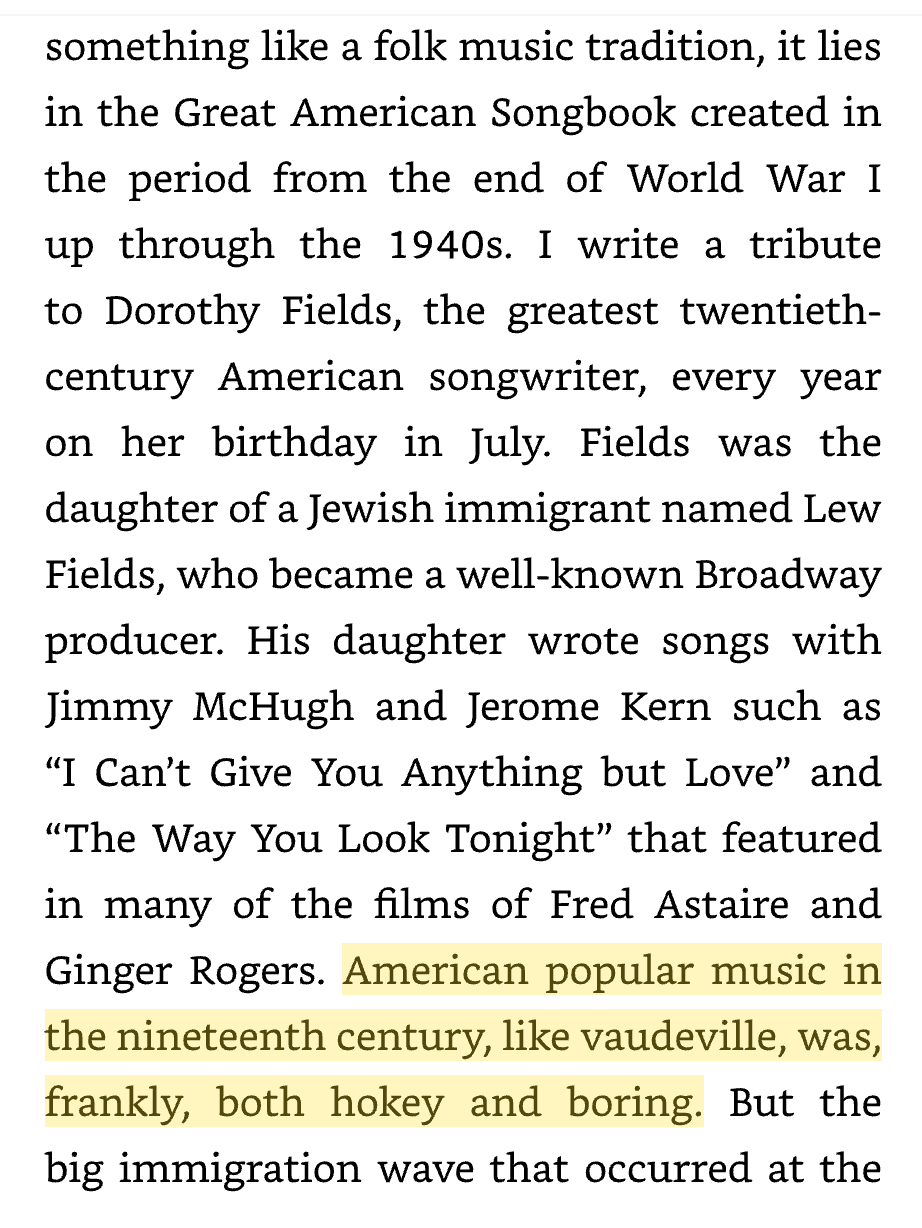
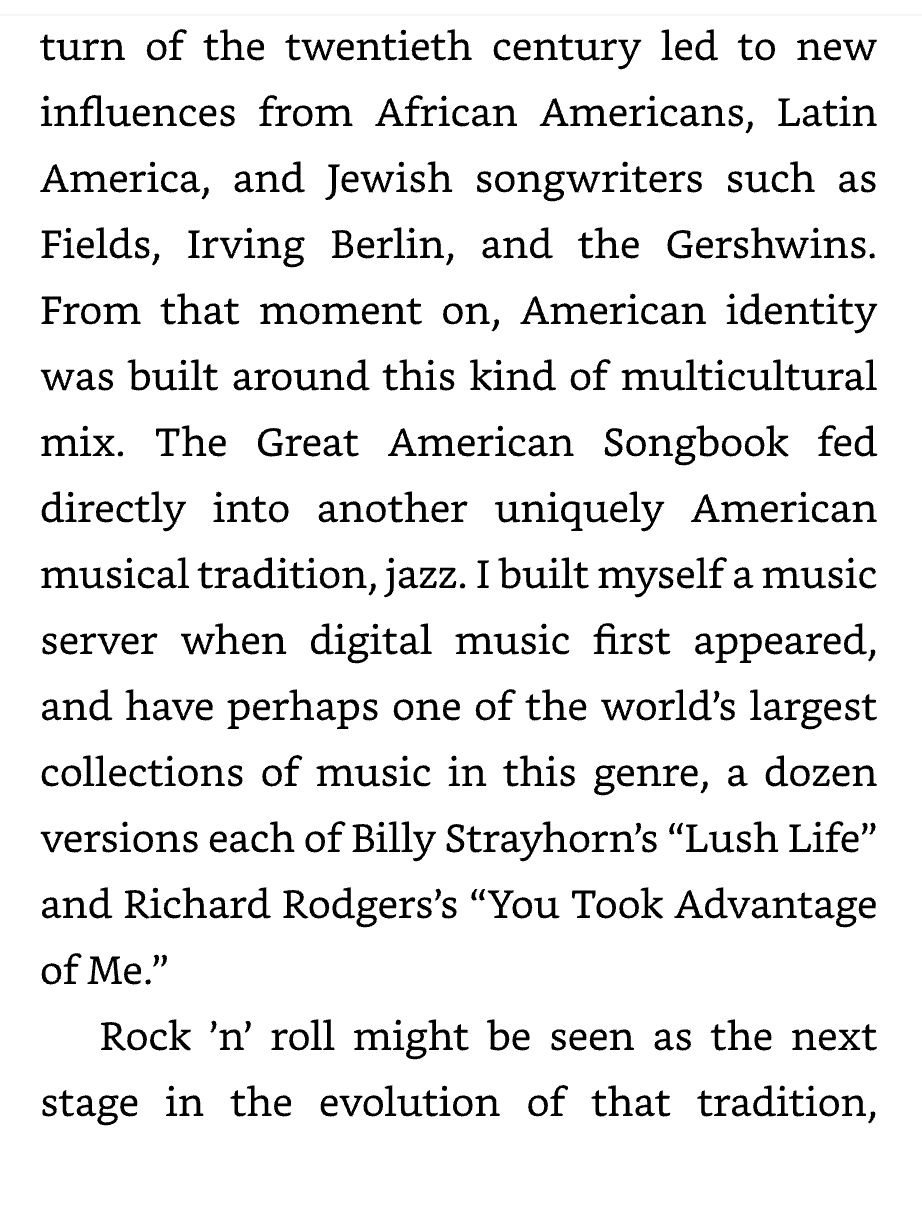
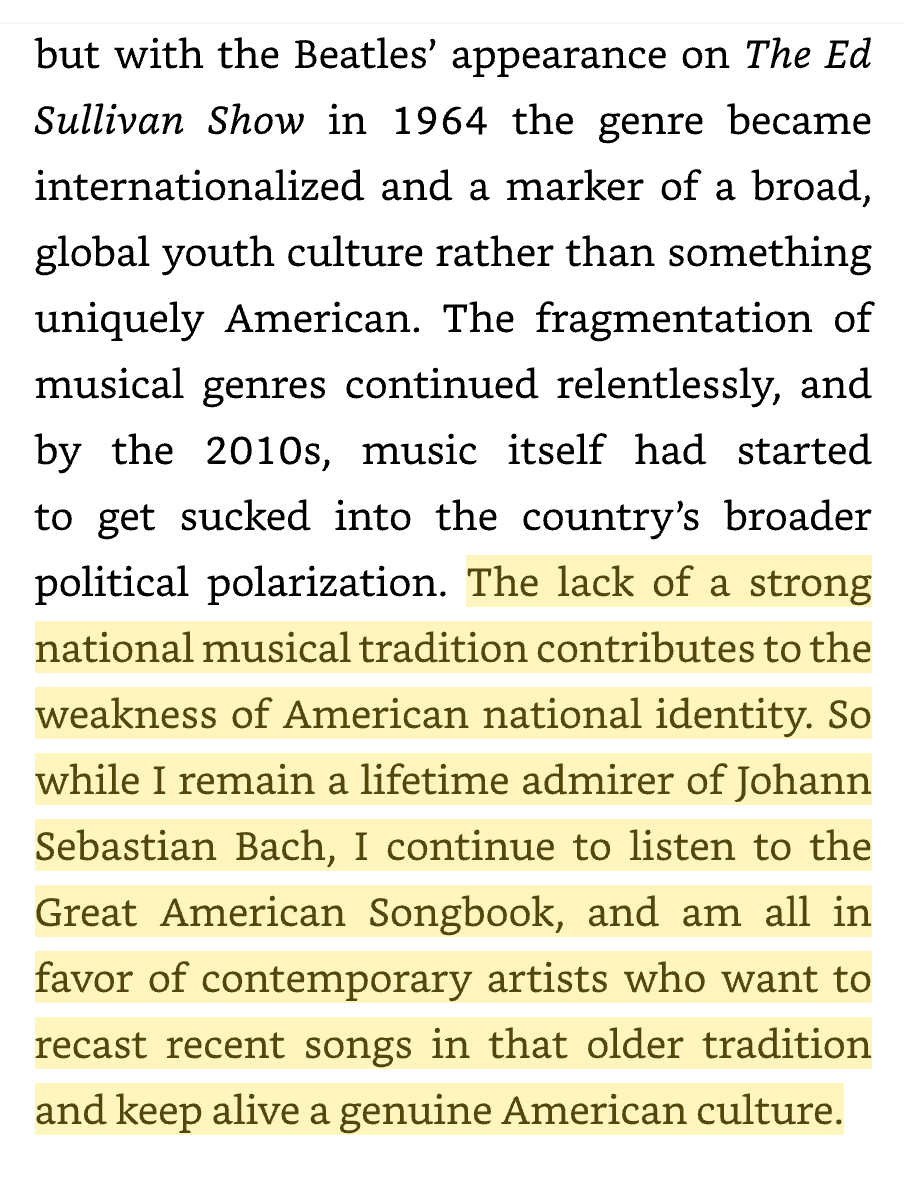
Francis Fukuyama asserts: “The lack of a strong national musical tradition contributes to the weakness of American national identity.”
Fukuyama tries to explain:
Personally, I’m struck by how ethnocentric English language pop music is and how uninterested in world music are most Americans.
For example, how many Americans can name four Brazilian songs? “Well, there’s ‘Girl from Ipanema,’ and then there’s that one Rod Stewart plagiarized, and uh …” I suspect that Brazilian music would have caught on here in the 1960s except it suddenly got plowed under by the British Invasion (i.e., American-style music played by British teens obsessed with America).
But consider countries with indisputably strong national musical traditions, such as Italy and Germany. Yet, how similar did Vivaldi and Verdi sound? How close in style were Bach:
and Beethoven:
Just before the mid-point of the 18th Century, there was a huge change in European musical taste from baroque polyphony to classical homophony. Most popular appreciation memory of J.S. Bach more or less vanished upon his death in 1750. The wealthy and tasteful Mendelssohn family paid to keep Bach’s memory slightly alive. But the public had almost completely forgotten about him until Felix Mendelssohn conducted a triumphant Bach concert in Berlin 1829.
So no strong musical tradition is stylistically stagnant.
I would suggest the American musical tradition is basically an offshoot of English music, which is an offshoot of continental European music. But American music ended up world-conquering over the last century because it blended in two styles — Celtic and African — that in combination turned out to be what chocolate and peanut butter are to candy.
You can see this combination of Celtic and black influences in the first massive name in American pop music, Stephen Foster.
He composed the first big American pop hit, “Oh, Susanna,” 100,000 copies of the sheet music sold (sadly, most of them not by the composer) in 1847 at the high point of American national luck. Just as the U.S. defeats Mexico and conquers California … gold is discovered at Sutter’s Farm.
“Oh, Susanna” becomes the anthem of the Forty-Niners, and even spreads around the world.
Foster went on to compose other classics, but the copyright law of the time didn’t protect his intellectual property. When he died in 1864 at age 37, he had $0.38 in his pocket.
The well-known travails of this national hero eventually contributed to American copyright reform, which is extremely generous financially to songwriters.
In tradeoff, however, American IP law gives songwriters few …
Paywall here.
