

Like Moynihan’s Law of the Canadian Border, Sailer’s Law of Slavery Reparations says the further north you are and the less guilt you ought to feel over slavery, the more intensely you are studying slavery reparations.
Thus, from the Seattle Times:
WA launches study on reparations for descendants of slavery
April 17, 2026
By Alexandra Yoon-Hendricks
Alexandra Yoon-Hendricks is a race and equity reporter at The Seattle Times whose work focuses on the region’s diverse communities and the political, economic and social challenges they face.
Washington [the state] has launched its study into reparations for descendants of enslaved people
Are there any people alive whose ancestors were enslaved in the state of Washington?
to address the enduring repercussions of chattel slavery in America.
During this first phase of the multiyear project, researchers are collecting historical data, combing through archival documents and gathering testimony to better understand the state’s legacy with slavery
if any
and its influences
if any
on racial disparities and injustices that persist.
Nah, I’m just kidding about “if any.” The researchers are guaranteed to find “many.”
Researchers will also review Washington’s role in perpetuating discriminatory practices through laws, policies and economic structures against direct descendants.
“We intended to leave no research stone unturned,” said Ashley Gardner, the study’s principal project director, during an info session last month.
For example, why is black life expectancy in the state of Washington about 21 years longer than back home in Nigeria? Huh?
Oh, wait, that is one stone better left unturned.
… “We’re tasked with looking at the national picture, and understanding, is Washington culpable, and if it is culpable, to what degree?” he said. “It’s a detailed analysis, atrocity by atrocity.”
If any.
Such as … well … Okay, I found that three black cop-killers were lynched in Seattle in 1882. Also, a black DJ was beaten up by white supremacists in 2018. And no doubt a bunch of bad stuff happened in Washington between 1882 and 2018.
State lawmakers allocated $300,000 to fund the landmark study last summer. California released a similar study with policy recommendations in 2023, and Illinois and New York are exploring the possibility of reparations.
Washington’s study, under the state’s Department of Commerce, is being led by Truclusion, a Dupont-based consulting firm focused on diversity, equity and inclusion.
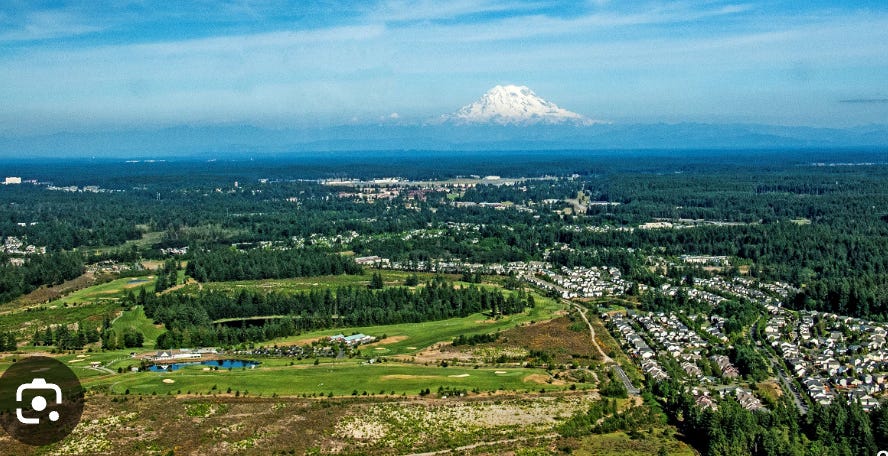
Dupont is apparently an exurb in Washington state, although it sure sounds like it is Washington, D.C.
Calls for reparations have existed since slavery in the U.S. was abolished in 1865, but the movement started gaining more traction in 2020 as the country was embroiled in a racial reckoning following the murder of George Floyd.
Most Americans oppose reparations, according to a 2022 Pew Research study, though support varied significantly based on respondents’ race. In King County, about 59% of people believe descendants of people who were enslaved in the U.S. should be compensated in some way, a 2024 survey conducted by the Seattle/King County African American Reparations Committee found.
In the 11th paragraph of the article, we find out that Washington didn’t become a state until a generation after Emancipation, and didn’t have slavery before that as a territory.
Critics against the study and reparations point out Washington did not become a state until 1889, after slavery was abolished in the U.S., and that slavery was illegal in Washington Territory. Enslaved people were allowed in the territory so long as they were not originally enslaved within its borders.
The 1860 Census recorded approximately 30 blacks in Washington territory.
Establishing a full account of the state’s free people of color population and enslaved population,
if any
as well as their descendants, is an important part of Washington’s study, said Mica Anders, the project’s genealogy team lead.
Other statewide reparations research has surfaced lesser-known histories, such as the exploitation of enslaved people in California during the gold rush, despite California entering the union as a “free state.”
Presumably, a few slaves accompanied their owners, Dred Scott-style, to free territory. They were then free when they reached free soil (although they might continue working for their former legal masters), until the Supreme Court’s disastrous Dred Scott decision of 1857 granting the right of Southerners to own slaves in Northern free states, which ushered in the Civil War that wiped it away.
How many Washington Territory blacks were victims of the Dred Scott ruling?
Paywall here.
