

Nature vs. nurture arguments used to loom fairly large in American highbrow discourse. A half century ago, superstar writers like Stephen Jay Gould, Richard Lewontin, Edward O. Wilson and Richard Herrnstein (to just list some of the Harvard professors involved) would slug it out in the top periodicals.
But over time, even as vast amounts of DNA data poured in, the topic is increasingly swept under the rug, as this rare new exception-to-the-rule New York Times article “How Much Do Our Genes Matter?” exemplifies. (The reporter prudently leaves out all mention of race and thus can be fairly even-handed.)
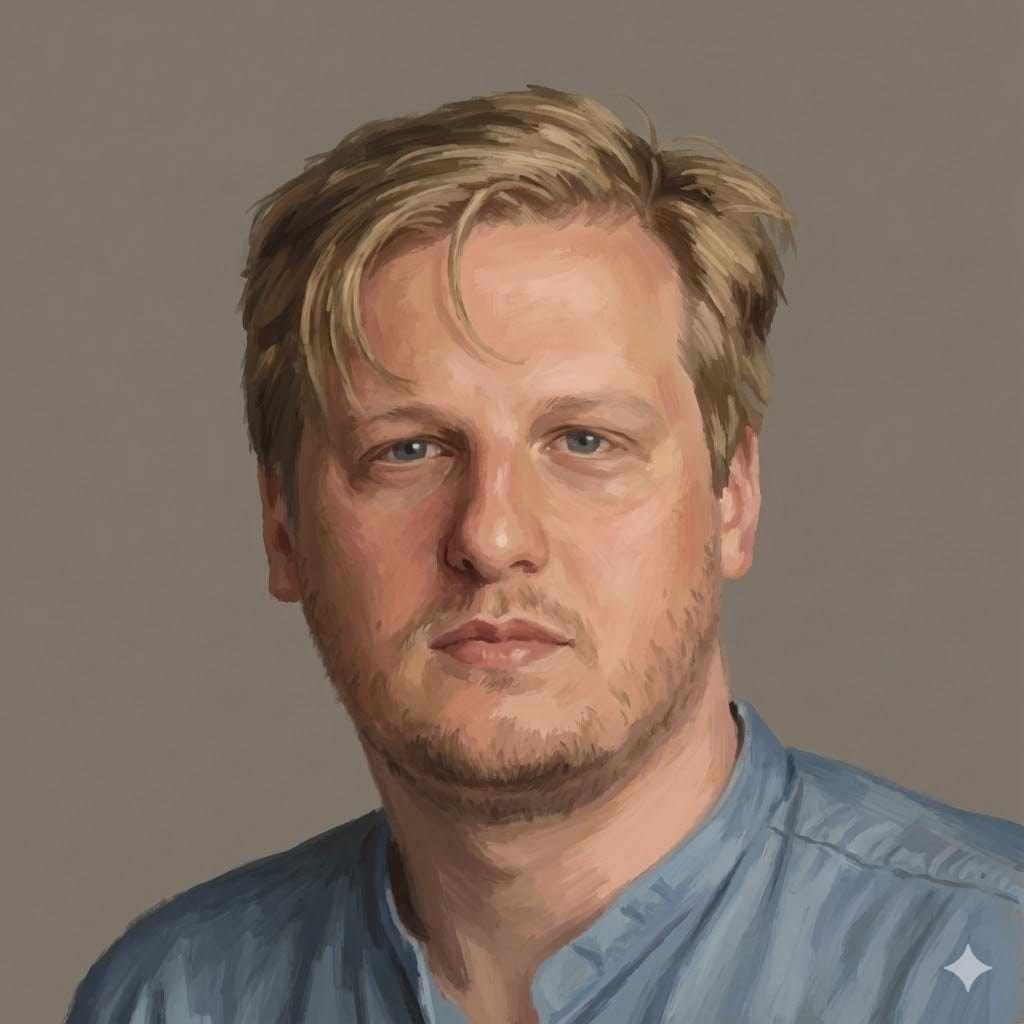
In contrast to the 1970s-1980s, the paladins of Nurture today tend to be relatively obscure academics such as Sasha Gusev and Eric Turkheimer. And many of the most productive researchers working on questions of Nature tend to be independent scholars outside of academia.
From the New York Times science section:
Unknowns
After centuries, the nature versus nurture debate still rages. Now the fight is over “missing heritability” — whether science can find a way to pinpoint inheritance in the human genome.
468 comments
By Emily Baumgaertner Nunn
Emily Baumgaertner Nunn is a national health reporter for The Times, focusing on public health issues that primarily affect vulnerable communities.
Nov. 23, 2026
Sasha Gusev was in the midst of lulling his 2-year-old into a Sunday afternoon nap when he decided he would pour gasoline on an academic fire.
A scientist at Harvard Medical School who studies genetics, Dr. Gusev has spent years arguing that our environments, far more than our DNA, play the dominant role in shaping who we become. The problem is that many people disagree with him.
In an era defined by fast genome sequencing, the age-old debate over nature versus nurture has made a resurgence. Almost weekly, new studies claim to have found further evidence that our quirks and capabilities are embedded in our genes — an uncomfortable frontier in a culture anchored in the egalitarian promise that, through sheer will and circumstance, anyone can become anything.
When it comes to the genetic basis for various traits, Dr. Gusev is there to take the side of the skeptics. A highly accomplished scholar,
Wikipedia says:
Alexander Gusev (professor)
Alexander (Sasha) Gusev is a research scientist and associate professor of medicine at Harvard Medical School and the Dana Farber Cancer Institute. At the former, he leads the Clinical Computational Oncology Group.
In his cancer research, he has identified 34 new genes associated with increased risk of earliest-stage ovarian cancer.
So, tons of technical genetics chops. But he often seems to be learning the relevant social science on the fly after entering into debates.
Back to the NYT:
he is not one to confine his arguments to peer-reviewed journals. If someone puts forth a take based on sloppy statistics, Dr. Gusev is going to let the world know. Using mathematical equations, Bluesky threads and Jack Nicholson GIFs, he has made a habit of turning obscure statistical disagreements into public spectacles.
On that recent afternoon, he sat at the foot of his son’s bed and fired off a response to the latest turn in the debate. Dr. Scott Alexander, a psychiatrist and rationalist blogger, had written what he called a “foil” to Dr. Gusev’s views; Dr. Gusev left 12 separate comments, prompting Dr. Alexander to dedicate 3,000 words in a follow-up post.
“I think scientists and particularly geneticists have bowed out of the debate too much,” Dr. Gusev said in an interview.
In other words, Gusev doesn’t represent mainstream scientific thought. Professional organizations may issue woke statements for public consumption. But, in real life, while few mainstream scientists want to risk getting themselves cancelled by arguing against Gusev, most aren’t rushing to his side either. Gusev seems to be kind of wondering how he got himself stranded out there in such a lonely outpost with Turkheimer, postdoc Kevin Bird, anthropologist Agustin Fuentes, and a few other middleweights.
At the heart of all this back and forth is a simple but fraught question. How much of a person’s complex makeup — intelligence, personality, health status and so on — is fueled by genes, as opposed to upbringing and environment? Look around (or in the mirror) and you may agree that both nature and nurture play an obvious role. But for more than 150 years, scientists have been trying to figure out the proportions. …
That said, do genes account for 30 percent of who we are? Fifty percent? Seventy percent? Who cares? This fundamental question generates so much friction because it taps into contentious theories about human potential, with implications far beyond the wonks who debate it. A firm answer is alluring because it seems to hold the lines on who we blame for our problems, what programs we fund — and how we structure society itself.
Since the 1960s, vastly more money as been spent attacking the Nature vs. Nurture question from the opposite angle. After all, if we could just discover a program or combination of programs that works to significantly close cognitive gaps, that would end the Nature vs. Nurture debate in a rout for Nurture.
How’s that going, anyway?
‘Missing’ or Nonexistent?
… In the 1870s, Francis Galton, a cousin of Charles Darwin, popularized the phrase “nature versus nurture” and swung the pendulum back toward biology, insisting that inborn heredity, not environment, held the reins. …
Throughout the 20th century, scientists ran thousands of studies comparing data from identical twins (who share virtually all their DNA) to that of fraternal twins (who share about half their DNA) in order to estimate how much of a person’s intricacies are baked into the genes. The findings suggested that features as varied as I.Q., body weight and schizophrenia risk had strong biological roots. Traits were often estimated to be between 50 percent and 80 percent heritable, making DNA an overwhelming driver of who a person becomes.
But the Human Genome Project of the 1990s gave researchers access to the letter-by-letter code of that biological blueprint. The International HapMap Project that followed helped them see how people differed on a molecular level. Scientists began running large analyses called genome-wide association studies, which scanned the DNA of thousands of people, looking for small variations in genetic code that correlated with specific traits.
Far from finding rates of 50 to 80 percent, experts were puzzled to find that for some traits, such as nearsightedness or the timing of puberty, genetics accounted for as little as 5 percent. Even when they added up the tiny, subtle signals from thousands of genetic markers all at once — including ones too weak to prove individually — nature’s contributions often appeared to plateau around 30 percent. Now it seemed like a person’s environment actually played the crucial role.
Or random noise in development can play a role.
Or they haven’t found all the impact of genes yet. We’re only about 15 years into the GWAS era of looking for huge numbers of genes of small effect. Before that we had found a few genes of large effect (e.g., sickle cell). But those turned out to be the rare lost keys that got dropped right under the streetlight. Now, we’re looking all over without enough light yet.
And, let’s keep in mind that even if true, this doesn’t tell us “what programs we fund” or “who we blame for our problems.” That’s the job of the social sciences, and after countless programs and studies since the 1960s, we haven’t gotten very far at all at finding effective IQ Gap closing programs to fund.
I call that the Missing Malleability.
Were the traditional twin studies wrong, or were there large swaths of genetic influence that had yet to be discovered? The unexplained gap between the high twin estimates and low genomic estimates is what scientists now refer to as “missing heritability.”
To Dr. Gusev, the issue is really a nonissue. Heritability is not missing; it simply never existed in the first place. He said he believed that the twin studies had radically overestimated the role of DNA because of a serious design flaw. They assumed that environmental variation for identical and fraternal twins were essentially the same. But if identical twins look alike, their worlds — teachers, parents, peers, strangers — probably engage with them in similar ways. Dr. Gusev, like other critics, points out that this extra environmental similarity for identical twins is falsely categorized as genetic influence, artificially inflating the weight of DNA.
Besides standard identical twins vs. fraternal twin studies, there are other types of studies, such as adoption studies and identical twins reared apart.
These have limitations: for example, adoption agencies try hard not to hand out babies to drunken criminal families, so it’s hard to get data on the impact of really bad environments.
Separated identical twins are often not all that separated, as I documented at SteveSailer.Net recently. It’s rare for identical twins to wind up in Prince vs. Pauper-level different environments, because rich people looking to adopt would often be willing to take both twins. So, a lot of separated identical twins get separated after, say, a car crash kills both parents, because nobody in the extended family has the money to raise both twins.
It used to be that some adoption agencies believed in splitting identical twins for some Freudian dogmatic reason, but that has faded since the 1990 “Minnesota Twins” study helped society decide to be more careful about keeping identical twins together.
Still, all these different studies, combined with the failure of Nurture programs to make consistent differences, suggests an Occam’s Razor answer: genes are pretty important in most reasonable ranges of American environments.
Once again, it seems implausible that the welfare state could routinely take such strong measures, as, say, randomly reshuffling tens of millions of children to be adopted by other parents to ensure statistically average nurture.
But when people talk about Nurture or the environment being important, what they think they are talking about is evidence for the welfare state being able to intervene to narrow the gap in performance between the bottom and the top of society.
But how is Mayor Mamdani going to issue you with your own taxpayer-subsidized identical twin?
And, then, assuming he scrapes together the money, how’s he going to raise your IQ by providing you with an identical twin who is smarter than you?
According to Dr. Gusev, three modern molecular research methods — which compare siblings, track distant relatives and read full genome sequences — all seem to independently agree with a 25 percent to 30 percent estimate for the role of genes in outcomes. That average includes traits that are already known to be highly inherited, like height, which means that the genetic contribution to most cognitive and behavioral traits would be significantly lower.
“This is sort of a definitive measurement,” Dr. Gusev said in an interview. “I don’t think there’s any other data to collect.”
Yeah, sure …
Sasha thinks he’s in the lead, so he wants the refs to declare the game over right now!
Other statistical geneticists beg to differ. Peter Visscher, a researcher at the University of Oxford, said he believed that “missing heritability” had long been hidden in plain sight. Complex traits like body mass index or the risk of bipolar disorder aren’t driven by a few powerful genes, he said, but instead by hundreds of thousands of tiny gene variants scattered throughout the genome that early studies lacked the statistical power to detect.
As tools improve and sample sizes expand, Dr. Visscher said, estimates for genetic influence are climbing closer to those in the traditional twin studies. Modern algorithms can analyze millions of full genomes found in today’s global biobanks, rather than spot-checking predetermined locations in a few thousand people; that ability could finally reveal the faint genetic whispers and rare mutations that had once been lost in the background noise.
“The technology is still not perfect to capture everything,” Dr. Visscher said. But for some traits, he added, “everything is already converging — and converging to a large number.”
On either side of the fault line, there is a downside: Many statistical models force dynamic components into one rigid bucket or the other. Scientists know that, in reality, genes and environments frequently shape one another in highly interactive ways.
Behavioral geneticists like Eric Turkheimer, a professor emeritus at the University of Virginia, argue that nature and nurture are too deeply intertwined to assign clean, static percentages for any given quality. People often choose certain environments based on their inherited traits, he points out, such as the way a tall child might gravitate toward a basketball court. At the same time, human development is nonlinear, so life experiences affect the way our genes express themselves.
“If we ask, ‘If I had different genes, would I have a different I.Q.,’ the answer is probably, yes,” Dr. Turkheimer wrote about the issue last fall. “If we ask, ‘If I had these specific genes, how would my I.Q. be different (never mind why),’ the answer is almost entirely, we don’t know. We don’t know because it depends on a thousand other human contextual variables that we have no hope of controlling.”
Especially, government programs seem to have no hope of controlling …
The Specter of Determinism
If Dr. Turkheimer’s thinking is correct, the nature-nurture debate may never reach a satisfying conclusion. But still, the discourse rages on, in part because of its profound implications for society at large.
Many of our most foundational institutions are grounded in the assumption that the right environment can and will affect a person’s fate for the better — and that given equitable opportunities, everyone has the same potential to live a successful and fulfilling life.
Of course, that’s not true. 7’5” Victor Wembanyama has a higher potential to live a successful and fulfilling life in the NBA than most people do.
As a result, there are practical questions in the mix: If cognitive ability is intrinsic, what does that mean for federal learning programs designed to level the playing field, like Head Start? Alternatively, if everyone starts with the same blank slate, who bears the moral burden when something in our lives or our communities goes wrong?
Cisgender straight white males, obviously.
There are also more existential questions: If temperament is set at birth, do people have free will and agency? If career success can be predicted from the genome, what’s the point of hard work?
Without a clear answer to the “missing heritability” question, every school of thought carries its own set of liabilities. Those who fixate on genetic determinism, for example, will have to navigate accusations of fatalism and discrimination. Extremists could endorse the idea of schools steering students away from advanced tracks before they finish grade school, or employers screening out candidates whose DNA simply hints at a lower threshold for stress.
But we don’t have many DNA predictors yet that are better than old-fashioned predictors like IQ tests.
Perhaps one useful DNA forecast today would be for adult height. Polygenic scores for height are now pretty accurate. This could be very useful to families wondering which sport their child should focus upon: e.g., basketball vs. soccer? Tennis vs. golf? (But probably a better method overall for having a happy childhood is to just let your kid play different sports and see which ones he likes.)
Those who lean heavily toward environmental factors might face a different kind of trap: crushing personal pressure. If genetics hardly matter, then life is a cutthroat meritocracy, and every struggle becomes an indictment of parenting or personal grit. When potential is infinite, falling short isn’t just bad luck; it’s a defect of will.
That’s pretty much the East Asian mindset. It has a lot of advantages for economic growth. But they don’t seem very happy, judging by how few children they are having.
For Dr. Gusev, these potential repercussions are no reason to shy away from fiery discussion. He presses on, arguing that much of what may seem inherited is, beneath the surface, still just our environments in disguise.
When Dr. Gusev was a young boy, for example, he slept easily. His own toddler does, too. Relatives often said that being a good sleeper must run in the family.
“But that could be nurture,” Dr. Gusev said. After all, he had grown up in the Soviet Union, where his family had all snuggled into one bed. Now — perhaps as a result — he lets his own son sleep on a mattress on his floor.
“Maybe I’ve been conditioned,” Dr. Gusev said, “and am simply passing it on.”
Wait until …
Paywall here.
