

From the Washington Post opinion section:
Muslims shouldn’t have to assimilate to belong
Minorities don’t need to show they are like everyone else.
by Shadi Hamid
Shadi Hamid is a Post columnist. He is also a senior fellow at Georgetown University’s Center for Muslim-Christian Understanding and the author of several books, including most recently, “The Case For American Power.” follow on X @shadihamid
April 8, 2026 at 6:00 a.m.
… The assimilation defense — look how well we’ve integrated — is satisfying to make. But it concedes a premise I no longer accept: that a minority community’s right to be in the United States depends on its willingness to converge with the cultural mainstream. It shouldn’t depend on that. It shouldn’t depend on anything.
Perhaps the single public policy prejudice that most divides American elites from the masses is the widespread upscale assumption that aliens possess an inalienable American civil right to move to the United States, and to even question that right is to reveal your racism, you hate-filled hateful racist, you [spit].
When you question them if they really believe that all eight billion non-citizens on Earth should be allowed to decide to move here unilaterally, the usual response is … un, no, not literally. But why do you even think about this subject? What is wrong with you that you know what is the world’s population within a billion? It’s downright unAmerican of you to be more concerned with the welfare of Americans rather than of all of humanity.
… This is a community that has increasingly integrated into American civic life, but it has done so while holding on to its religious commitments in a way that most other groups haven’t. Whether you think that’s admirable or worrying probably says more about you than it does about them. The question I keep returning to is: Why do Muslims need to be like everyone else?
Muslim immigrants to the U.S. have tended to be of notably higher quality (i.e., less fanatically Muslim) than Muslim immigrants to Europe, where they often are notorious pests toward indigenous blonde women.
On the other hand, a high percentage of the worst domestic terrorists (e.g., the Pulse nightclub mass murderer) have been second generation Muslims, which is concerning.
A similar demand is directed at other minority groups. Latino immigrants arrive in the U.S. with conservative instincts. But generation by generation, those commitments erode.
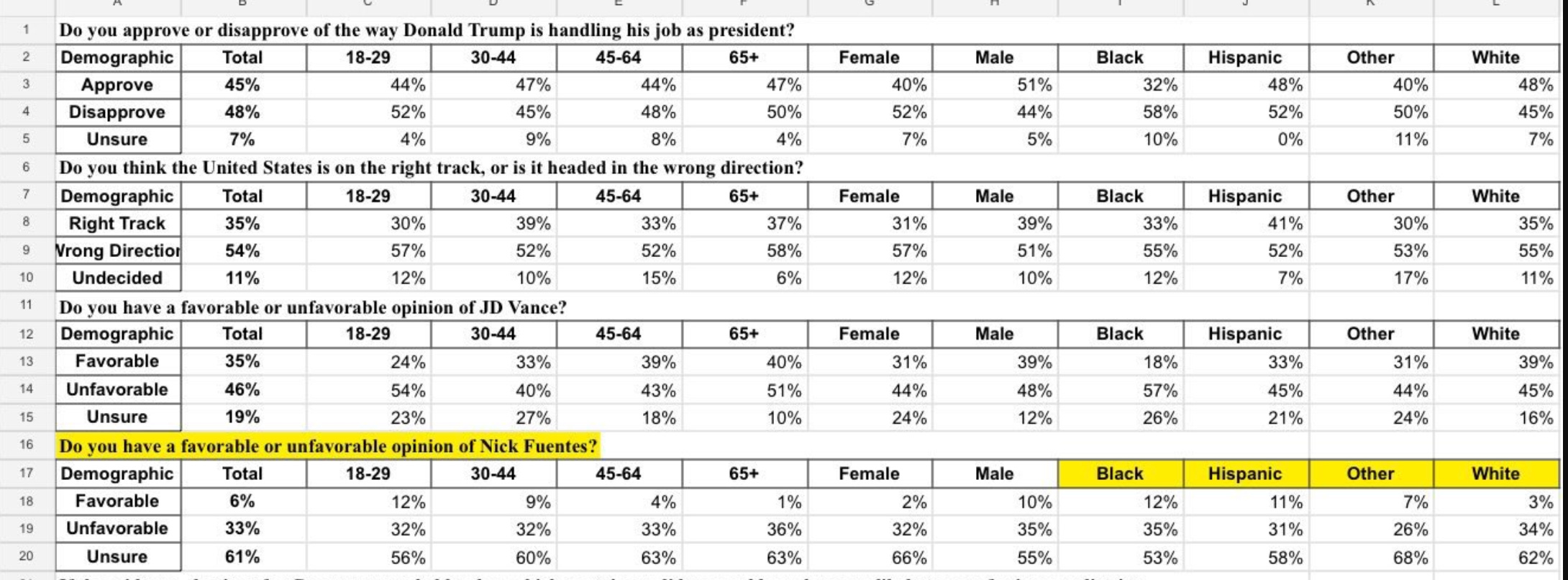
For instance, look how Americans denounce Nick Fuentes for his white supremacy beliefs, when he’s just acting out his traditional Mexican pride in his sangre azul. In a 2025 poll, only 3% of white Americans approved of Fuentes, which is lower than what Scott Alexander calls the Lizardman Constant (4% of poll respondents on average will agree, if you bother to ask them, that lizardmen are running the Earth, which is why firms in the polling business seldom ask them questions like that).
Catholic identification among Latinos has fallen from 67 percent in 2010 to 42 percent in 2024. Acceptance of homosexuality climbs from 53 percent among first-generation Latino immigrants to 63 percent by the third generation.
This trajectory deserves a blunt name: assimilation. And assimilation tends to mean secularization.
Jewish Americans lived through a more wrenching version of this story. Waves of German Jews in the 19th century assimilated eagerly into the Protestant mainstream. When Eastern European Jews began arriving after 1880, they faced pressure not just from gentile America but from established Reform Jews who felt their Yiddish-speaking cousins were both an embarrassment and a threat to the acceptance they had worked so hard to achieve. And assimilation worked in the way assimilation usually works.
And so the U.S. has a lot of Jewish ophthamologists paying a lot of taxes rather than a lot of unemployed Torah-student draft-dodgers on welfare like Israel does.
I’m more in favor of immigrants whose descendants will pay more taxes.
In 2013, intermarriage rates for Jews reached 58 percent among those who married after 2005. The Jewish population declined from its mid-century peak, leading some Jews to lament a “lost generation.” American acceptance offered belonging, but the belonging came at the price of distinctiveness. That many Jews later returned to traditional practices — rediscovering kashrut, Hebrew study and Shabbat observance — suggests an essential surrender in the bargain, and that some who made the trade came to feel its cost.
What strikes me about these stories is how much they resemble each other. The deal is always the same: You can stay, but you have to become less yourself. Less distinctively Muslim, less traditionally Jewish, less recognizably Latino.
Well, yeah.
I mean, that is why foreigners want to move here from those cultures: because America has tended to work better overall.
The specifics of your faith and culture — the things that make your community a community rather than a collection of individuals — are treated as obstacles on the path to real Americanness. The left and the right enforce this expectation. The right says: Assimilate or get out. The left, more gently: Assimilate and we’ll celebrate you.
Or, more accurately, the left wants you to help the rest of its Coalition of the Fringes de-assimilate the United States by, say, supporting transgenderism, but in return you must just restrict your public bile toward approved targets like Straight White Men.
There is nothing that the left loves more than a woman in Islam garb spitting hate at Straight White Men.
Here’s a big question:
Should immigration policy discriminate not just among individuals but among countries and cultures? As Trump implied, should we favor Norwegians more than Haitians? Even with all else being equal?
Paywall here.
