

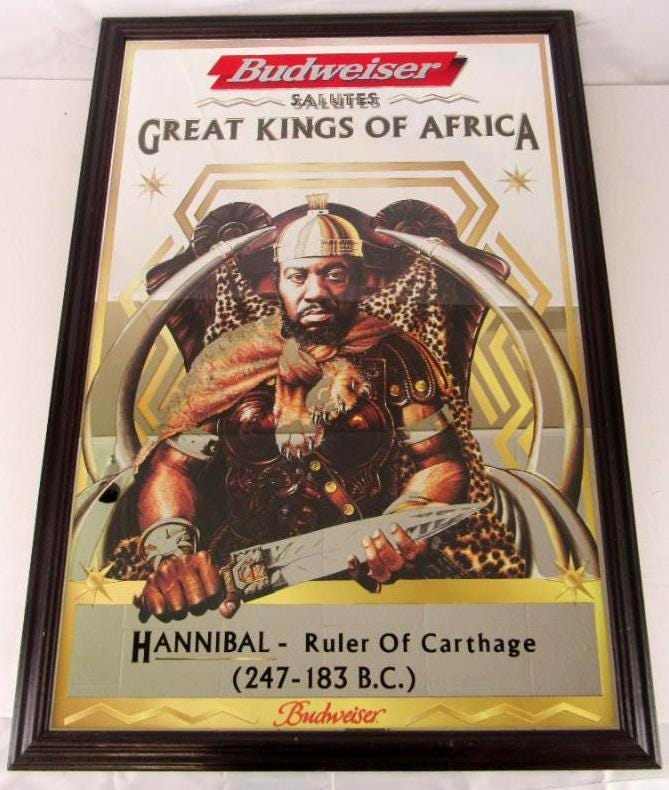
Here’s “Hannibal” from Budweiser’s 1975-2000 series of 30 Afrocentrist heroic paintings, “The Great Kings and Queens of Africa.”
From my UPI article in 2002:
Denzel as Afrocentrist Hannibal?
Press reports that 20th Century Fox is considering making an epic movie starring Denzel Washington as Hannibal - not the cannibal, but the North African general who led his war elephants over the Alps to surprise ancient Rome by attacking from the north - are reviving controversies over Afrocentrism and just how “ethnically correct” movies need to be.
Washington is one of Hollywood’s most honored and consistently profit-generating leading men. Washington can “open” a movie big, and with the kind of budget this costume war movie would require, that’s a crucial consideration.
Washington is black. But, what was Hannibal?
After many decades in which white actors played non-white characters, such as John Wayne’s curious portrayal of the Mongolian Genghis Khan in 1956’s “The Conqueror,” should non-whites like Washington now play ancient figures who were probably Caucasian, such as Hannibal? How important is it for actors to racially match their characters?
Hollywood will have to come up with some solution to the complications that Afrocentrism and other forms of identity politics pose for the casting of ancient epics, because a huge number of these sword-and-sandal films are being planned. The box-office success of the Oscar-winner “Gladiator” and the 30% increase in revenue over the last two years have combined to allow Hollywood’s more macho and grandiose moguls, directors, and stars to seriously propose filming some of their favorite role models - the conquerors of the ancient world.
These include at least four potential Alexander the Great projects and two Julius Caesars.
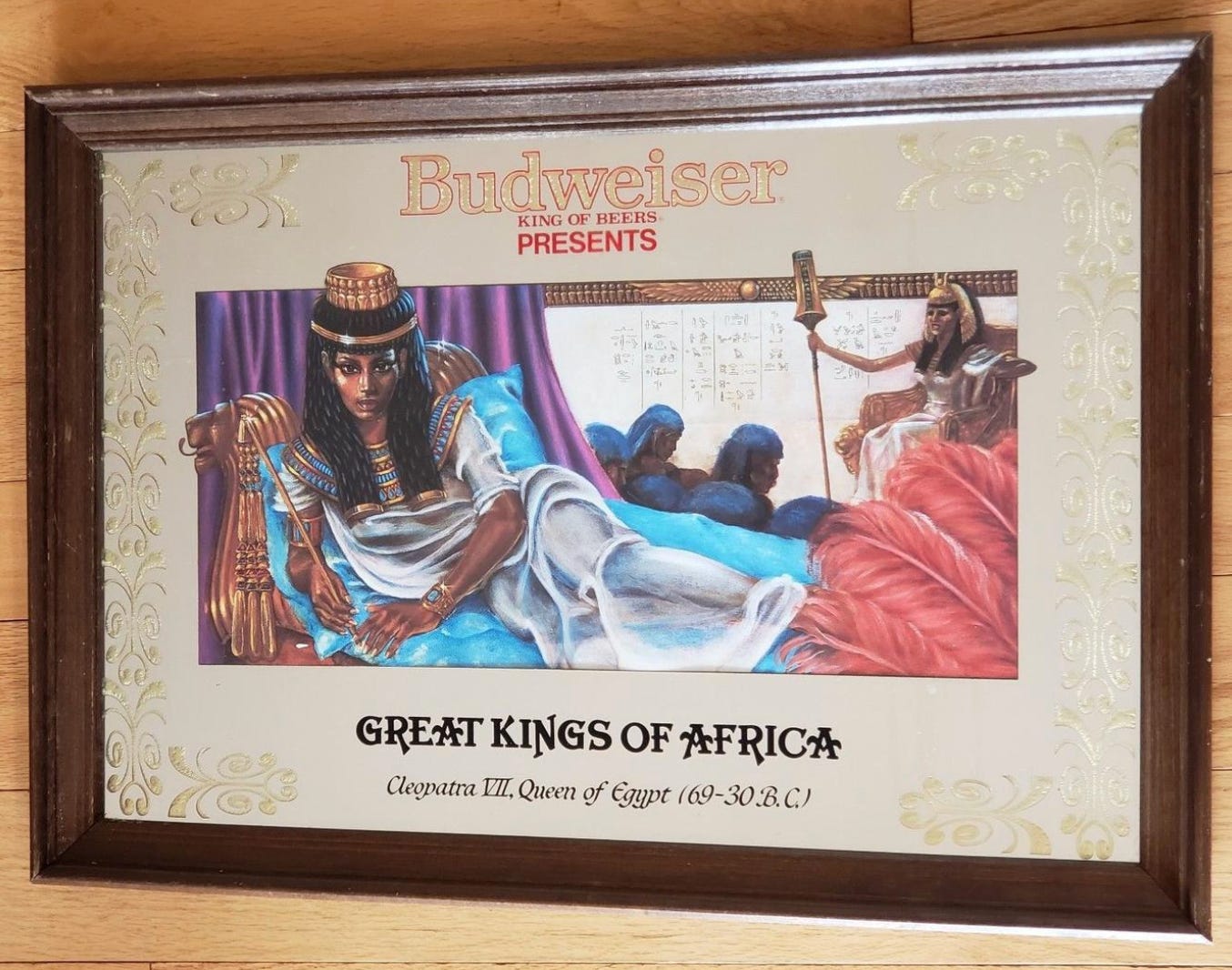
The latter might raise the hugely controversial issue of the race of Caesar’s lover Cleopatra.
One thing to keep in mind about rumored Hollywood productions, though, is that after all is said and done, a lot more is said than done. Southern California is full of respected, veteran screenwriters driving S-class Mercedes who have never had one of the numerous scripts they’ve sold actually made into a movie.
Meanwhile, Revolution Studios is trying to beat Washington’s Hannibal with its own biopic of the Carthaginian military genius who posed the gravest threat to Rome in its first thousand years of existence.

It would feature Vin Diesel, the action star of “The Fast and the Furious.”
Diesel doesn’t like to discuss his racial background in detail, other than to say, “I am truly multiracial.” He appears to have some black ancestry, but strikes many as Mediterranean-looking. “When people view me they don’t necessarily see a black man,” he notes.
To some Afrocentrists, Hannibal ranks not far behind Cleopatra as a black hero. Since 1975, Anheuser-Busch has been promoting its corporate image in the African-American community by commissioning and distributing portraits of “The Great Kings and Queens of Africa.” These attractive and forceful paintings include a Hannibal who is depicted as even blacker than Washington. In the beer company’s view, Hannibal more closely resembled Michael Clarke Duncan, the imposing 6’5” African-American actor who earned an Oscar nomination for “The Green Mile.”
Generally speaking, white liberals are more or less clueless that giant American corporations have been promoting historically dubious but fun Afrocentrist myths for a half-century.
In contrast, non-Afrocentrists interested in the classical world have generally not reacted enthusiastically to the rumors that Washington might play Hannibal.
Mary Lefkowitz, a leading classicist from Wellesley, and author of the anti-Afrocentrist bestseller “Not Out of Africa,” told UPI that Hannibal “came from one of the elite families of Carthage; his ancestors were settlers from Phoenicia [in modern Lebanon], Semites like other peoples in that area of the world. They spoke Phoenician, a Semitic language.”
However, a 2025 ancient DNA study by David Reich’s lab found that most Carthaginians traced their ancestry to the Greeks rather than Phoenicians. From Nature:
23 April 2025
Punic people were genetically diverse with almost no Levantine ancestors
Nature volume 643, pages 139–147 (2025)
Abstract
The maritime Phoenician civilization from the Levant transformed the entire Mediterranean during the first millennium bce1,2,3. However, the extent of human movement between the Levantine Phoenician homeland and Phoenician–Punic settlements in the central and western Mediterranean has been unclear in the absence of comprehensive ancient DNA studies. Here, we generated genome-wide data for 210 individuals, including 196 from 14 sites traditionally identified as Phoenician and Punic in the Levant, North Africa, Iberia, Sicily, Sardinia and Ibiza, and an early Iron Age individual from Algeria. Levantine Phoenicians made little genetic contribution to Punic settlements in the central and western Mediterranean between the sixth and second centuries bce, despite abundant archaeological evidence of cultural, historical, linguistic and religious links4. Instead, these inheritors of Levantine Phoenician culture derived most of their ancestry from a genetic profile similar to that of Sicily and the Aegean. Much of the remaining ancestry originated from North Africa, reflecting the growing influence of Carthage5. However, this was a minority contributor of ancestry in all of the sampled sites, including in Carthage itself.
Generally speaking, most ancient DNA studies have confirmed traditional expectations. So I’m not sure I would wholly buy this one about Carthaginians being Greeks rather than Phoenicians until it is replicated.
Back to my 2002 article:
Carthage was a colony founded by the Phoenicians in what is now modern Tunisia, which is only about 125 miles southwest of Sicily. Philippe Gouillou, a French evolutionary psychologist who spent the last two years in that North African country, laughingly commented about his former hosts, who aren’t always terribly sensitive towards diversity, “I imagine Tunisians would hate Hannibal being considered as a black African.”
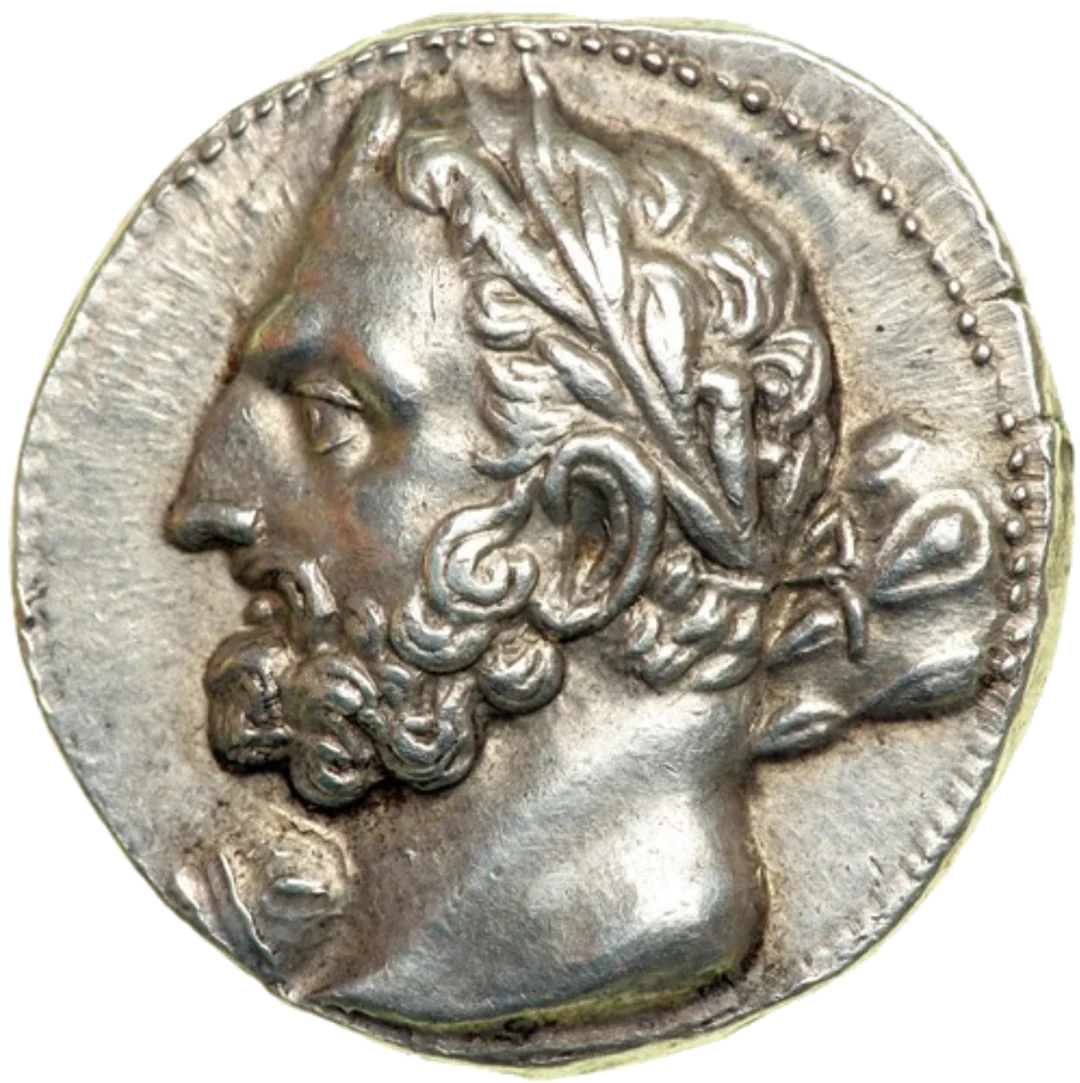
Indeed, in the depictions of Hannibal on Carthaginian coins, he appears to be a strong, handsome Semitic white man. Of course, ancient artworks weren’t always perfectly realistic.
One participant in an online discussion group about the Roman Empire asked rhetorically if anyone would think it odd if Hollywood cast Swedish muscle-man Dolph Lundgren as the brilliant Southern African military innovator Shaka Zulu. “Isn’t there enough ignorance without deliberately setting out to make more?”
Salim George Khalaf, a North Carolinian of Lebanese origin who runs the informative Phoenicia.org website, commented, “Although Washington is a great actor, for him to play Hannibal would be joke.”
On the other hand, as Lefkowitz noted, “Of course, the Phoenician colonists could have intermarried with native African peoples.”
Richard Poe is a white conservative political pundit. He wrote a sophisticated Afrocentrist book called “Black Spark, White Fire,” which argued against Lefkowitz’s view that the ancient Egyptians had very little influence on Greek culture. Poe said, “Nobody really knows to what extent the Phoenicians did or did not intermarry with Africans during the hundreds of years that followed the colonization of Carthage.” He suggested, “For this reason, it is possible that Hannibal might have resembled either Diesel or Washington, but it’s perhaps more probable that he resembled Diesel.”
Still, the indigenous people of Africa’s northern coast west of the Nile were largely white. (Today, the U.S. Census Bureau classifies individuals of North African descent as white.) The largest North African ethnic group of that time was the Berbers, many of whom are quite European looking. Among the Rifian Berbers of Morocco today, redheads are as common as in Ireland.
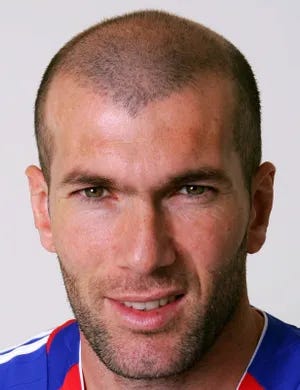
Probably the best-known Berber is the star of the French national soccer team, Zinedine Zidane, who looks quite German.
Yet, there are also other Berbers tribes who have some clear sub-Saharan black admixture. Further, there are some quite black occupational castes in North Africa, such as the blacksmiths. When exactly the bulk of these admixtures took place is hard to say. Although the Nile provided an easy road from the Equator through the Sahara desert to the Mediterranean,
No, the Sud swamp on the Nile that divides the brown people of Sudan from the black people of South Sudan was pretty much impenetrable by the ancients.
crossing the central Sahara to Carthage was much harder, especially before the domestication of the camel.
The racial diversity of North Africans offers the more erudite Afrocentrists a clever response. If you use the old American “one drop of blood rule” for defining who is black, then you could argue that there is a strong probability that Hannibal was “black” in the Jim Crow sense of having at least one black ancestor somewhere in his family tree.
The passions these kind of questions arouse make casting politically delicate.
Many theatre companies these days use colorblind casting. For example, the prominent Goodman Theatre in Chicago blithely cast a black actor as a 17th Century Italian Cardinal in Bertolt Brecht’s “Galileo.”
Film is a rather different medium, however, and moviemakers obsess over whether actors would look right to audiences during close-ups. As fans travel more and become more sophisticated about how different peoples from around the world look, this puts added pressure on casting.
The more ethnically correct the casting tries to be, the narrower the talent pool it can draw from. Lebanese-American actors who would be perfect as Carthaginian aristocrats include the distinguished F. Murray Abraham, the Oscar winner for “Amadeus,” and the respected Tony Shalhoub (”Monk” on the USA Network). Yet, both are a little too old for the sword-swinging Hannibal, so they’d be better for supporting roles. It might not be easy to find a Lebanese or Tunisian action star who can carry such a massive movie.
Hollywood has a long tradition of using stars to portray ancient North Africans who, like Diesel, are hard to pin down racially. The exotic European and Mongolian Yul Brynner made a striking Pharaoh in “The Ten Commandments,” and wrestler The Rock (who is Samoan and black) was a likable hero in “The Scorpion King.”
Poe argued, “Using racially ambiguous stars in some roles is not only a reasonable precaution, but also probably gives a relatively accurate picture of how many people in ancient North African societies looked.”
Several ancient world enthusiasts who objected to Washington as Hannibal, approved of Diesel in the role. Khalaf of the Center for Phoenician Studies enthused over the star of the upcoming “XXX, “Vin Diesel is the absolute best choice for playing Hannibal. He looks very Mediterranean, much like the us who can trace our origin to Phoenician blood.”
And here’s my 2004 review of Troy:
Troy
reviewed by Steve Sailer
The American Conservative, June 7, 2004
The lavish, and deserved, success of 2000’s “Gladiator” set off an almost comical frenzy among Hollywood’s he-man stars and directors to mount stupendous productions honoring the pagan heroes with whom they most closely identify. Back in the 1930s, studios would have hustled out numerous knock-offs of Ridley Scott’s sword-and-sandal hit within a year, but in today’s entrepreneurial industry, the pace of dealmaking is ponderous and the chance of a particular project making it all the way to your local multiplex is shaky.
For example, veteran director Michael Mann (”Ali”) tried to launch movies about a couple of guys he feels he can relate to: Julius Caesar and King Leonidas of Sparta, hero of Thermopylae. But in Hollywood, after all is said and done, more is said than done, so don’t expect to see either any time soon.
Similarly, Denzel Washington was attached to an Afrocentrist life of Hannibal (not the Cannibal, but the elephant-bestriding Carthaginian general). Vin Diesel’s more ethnically correct Hannibal, though, now looks likelier to get off the ground.
At one point, Oliver Stone, Mel Gibson, Martin Scorsese, and, improbably enough, Baz Luhrmann of “Moulin Rouge” were all vying to make Alexander the Great movies. The only right and fitting solution would have been for each to lead his cast of thousands into a four-way mass melee upon an agreed-upon battlefield, with the last auteur standing getting to make his conqueror epic while the losers lick their wounds. Disappointingly, a humdrum race to organize financing and logistics instead ensued, with Stone the apparent winner.
Yet, the laurel for being the first to wrap a “Gladiator” facsimile goes to Wolfgang Petersen, director of “Das Boot” and “The Perfect Storm.” His seriously barbaric “Troy,” starring Brad Pitt as the wrathful Achilles, turns out to be worth the 48 month wait.
Just as Achilles is destined to fight Hector, prince of Troy, Pitt’s looks and talent have always seemed to foreordain that he’ll challenge Tom Cruise, prince of blockbusters, for leading man supremacy. Although Pitt resembles a younger Robert Redford, he seems to lack the necessary Legend in His Own Mind gene. Notorious as an underachiever who sells more magazines than movie tickets, Pitt has favored quirky roles better suited to Steve Buscemi.
Yet, by starring in this super-colossal $185 million extravaganza as fabled Achilles, a hero driven solely by his lust for eternal fame, Pitt finally has submitted to his fate. Of course, Achilles is such an antihero that Pitt isn’t fully sacrificing his indie-cred. (The 40-year-old’s insanely ripped abs and ferociously masculine persona make me wonder whether he turned to hormonal help.)
The film works best for semi-educated folks like me who know the characters of Homer’s Iliad, but had forgotten the finer points of his plot. Homeric aficionados will sniff that young screenwriter David Benioff cut the meddlesome Olympian gods while expanding the plot beyond Homer’s tight focus to include such traditional crowd-pleasers as the launching of the thousand ships and the delivering of the Trojan Horse.
Even more heretically, Benioff makes up new scenes. For instance, Homer violated Screenwriting 101 by killing off his star before the boffo finale, so Benioff sends Achilles with the commandos inside the Trojan Horse.
The gay crowd will moan that Achilles’ pal Patroclus has been turned into a chaste cousin, but ancient Greek bisexuality was so radically unlike modern American homosexuality that gays shouldn’t have proprietary rights over Achilles’ depiction.
I fear that Petersen, a 63-year-old German, may too generously estimate the classical learning of America’s movie-going lumpen-youth. For example, the wily but likeable tactician played by Sean Bean is introduced only as “the King of Ithaca.” A less trusting soul would have explained to the teen audience that he’s Odysseus. (”The one who got, like, his own spin-off sequel, you know?”)
Moreover, “Troy,” like Homer, refuses to tell them for whom to root. The minding-their-own-business Trojans are nicer, but the belligerent Greeks are winners.
Still, the youth market may find the Bronze Age warriors comprehensible since their prickly, pre-chivalric trash-talking ethos prefigures that of post-chivalric African-American athletes like the petulant hoops prodigy Allen Iverson and rappers like the murdered Tupac Shakur. Achilles sulking in his tent because King Agamemnon insulted his honor by taking his spoils-of-war sweetheart Briseis is surprisingly like Kobe Bryant moping on the court because Shaquille O’Neal dissed him by demanding the basketball.
My review of Alexander by Oliver Stone from later in 2004:
Paywall here.
