

My wife and I took a test drive of a 2026 Tesla Model Y.
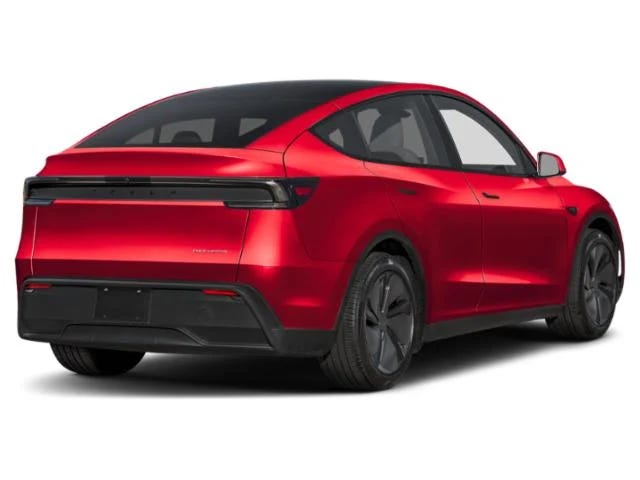
(That’s the slightly homely tall Tesla SUV, while the Tesla Model 3 is roughly the same footprint, but is a better-looking low-slung sports sedan.) Even with Chinese electric vehicles largely blocked by regulation from the American market, EVs are no longer necessarily boutique luxuries. The new decontented Model Y Standard now starts at $39,990, and the Premium trim at $45,990.
My guess is that in the long run, EVs will be the dominant type of cheaper car, with gasoline powered cars reserved for luxury and enthusiast niches.
It will be a little like how back in the 1960s, front wheel drive was a luxury available on the Cadillac Eldorado and little else. But then after the Energy Crisis of the 1970s, FWD became the standard because it was cheaper to not have a driveshaft powering the rear wheels. And you saved on weight, so you got better miles per gallon.
Of course, they couldn’t just sell you in 1979 on the objective benefits of front wheel drive, they had to tell you it handled better because it didn’t push you through curves, it pulled you through curves, which sounded extremely persuasive 47 years ago. After all, what could be less subjective than handling? Handling is science!
Front wheel drive was especially good in the rain, I was informed.
And I believed. The first time it rained on my new Datsun 310 after buying it in L.A. in July 1979 was in Houston in September. I took it out onto just about the only curving street in Houston. In the pouring rain, I confidently entered the turns at the northern corner of Rice University and …
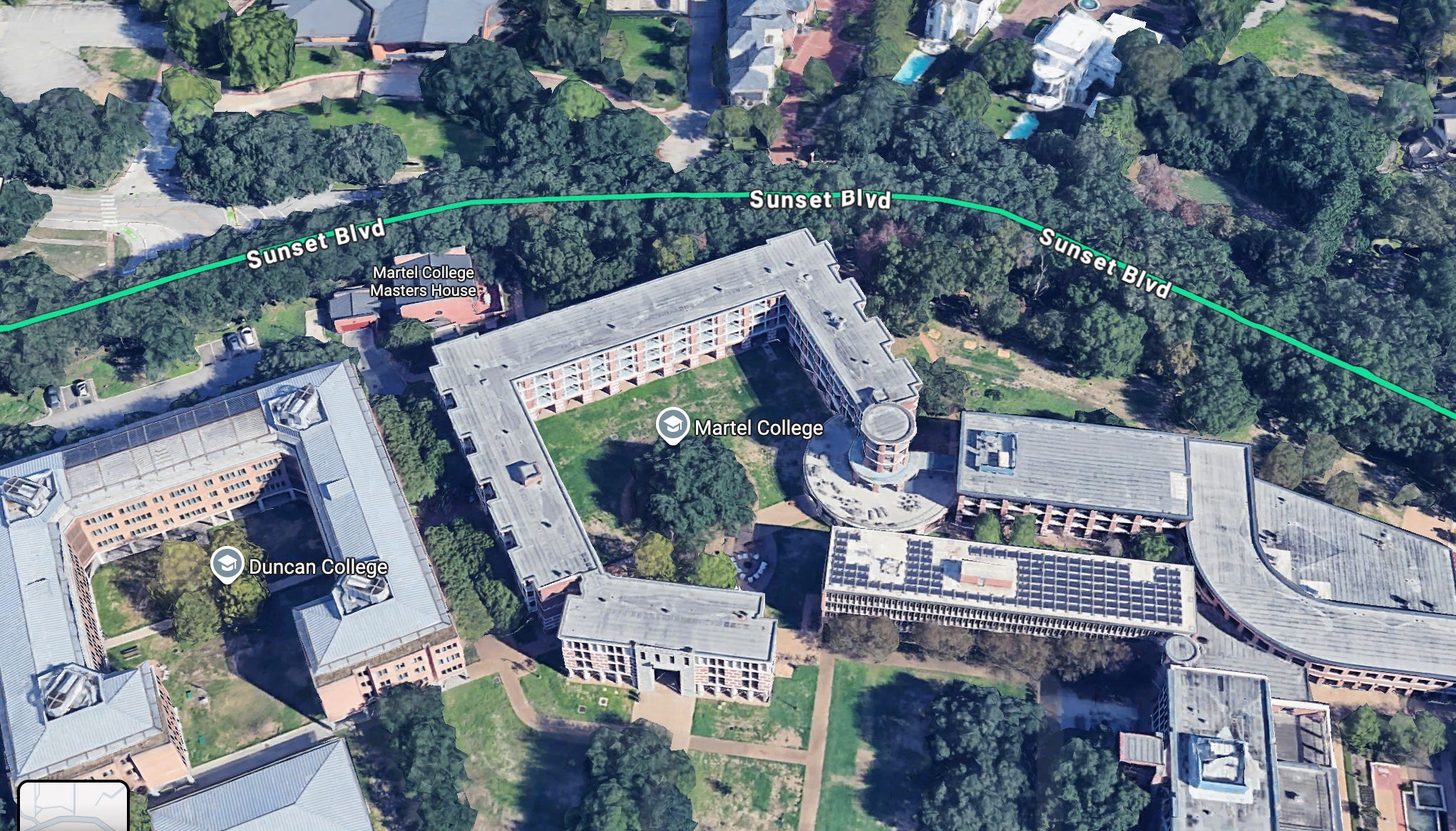
… found myself skidding sideways down Houston’s Sunset Blvd., which is lined with stout trees. I then steered the opposite direction and … was still sliding sideways, but pointed 180 degrees opposite. I yanked the wheel again and found myself going back and forth like a windshield wiper about a half dozen times.
The left-and-right whipsawing went on so long I started to long for my car to hurry up and hit something to relieve the tedium. While my car was out of control, I vividly imagined myself in the hospital in a head-to-toe body cast.

All my friends would visit to commiserate with me, then crack up as soon as they got out the door over how I’d destroyed my new car because I believed a salesman’s pitch about how front wheel drive made it invincible on wet roads.
Remarkably, there didn’t happen to be any other traffic on this normally busy Houston street and I didn’t hit any of the countless trees I slid past.
After a while, automotive opinion reversed and front wheel drive went out of fashion for handling. Old-fashioned rear wheel drive became a mark of the proper car for a driving aficionado. For instance, BMW offers only rear wheel or all wheel drive. (Tesla makes rear wheel drive standard, and its all wheel drive cars come with two electric motors and ridiculous acceleration.)
These days, there’s only one thing really special about Teslas, but it’s a doozy: For about 11 months now, Tesla’s v.14+ of its Full-Self Driving (Supervised) system has been about 98% of a self-driving robot car.
Note that while Tesla often abbreviates its capability to FSD, it should call it FSDS: Full Self-Driving (Supervised). You have to sit in the driver’s seat ready to grab the steering wheel or hit the brakes. You can’t climb in the backseat with your laptop. If you nod off in the driver’s seat or get obsessed with your phone, your Tesla will notice, pull over, and record a strike against your driving record. The Tesla salesman said: “Four strikes and you are out (of FSDS privilege).”
Waymo robot taxis where you do sit in the back seat have been tooling around the West Side of Los Angeles for 18 or 24 months now. But those use expensive radar and lidar as well as visual sensors (along with Google employees in India on call to intervene when Waymos get themselves in an unexpected situation). The latest generation Waymo is a Chinese Geely electric short bus with about $20,000-$25,000 of Google hardware (4 lidars, 6 radars, and 13 cameras). And Waymos are restricted to surface streets from downtown L.A. to Santa Monica. I’ve seen a couple of Waymos on Ventura Blvd. in Los Angeles’s San Fernando Valley lately, but they appear to have just been test runs. I can’t call a Waymo to come get me at home yet.
Tesla’s strategy is to use only cameras (just 8 in the Y), but leverage it’s colossal amount of data. The Model Y competes with the Toyota RAV-4 as the best-selling model of car in the world.
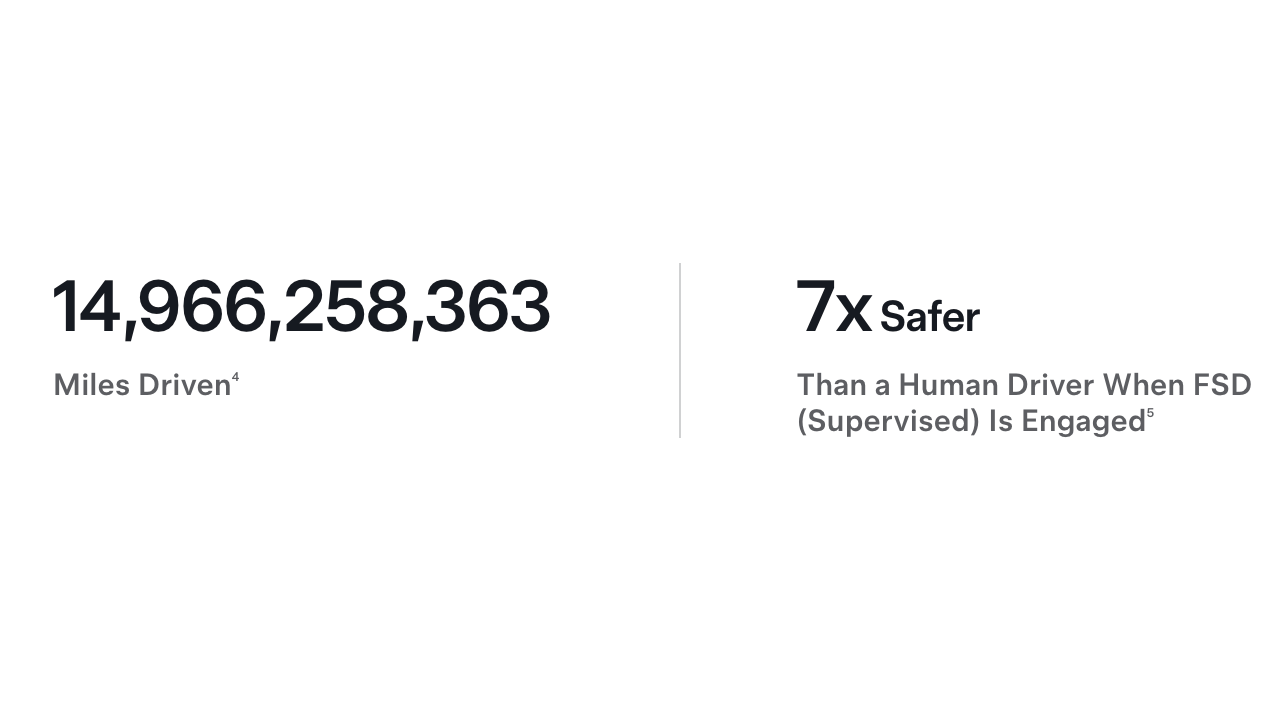
Tesla claims its customers are now approaching 15 billion miles driven in FSDS mode.
Waymo figures that since nobody is behind the wheel, it needs to have mapped every inch of the finite number of streets it dares drive down.
Tesla’s strategy is to wing it more aggressively. Since the car’s owner must be behind the wheel supervising, it can go anywhere, relying on its vast corpus of training materials (more or less every mile a Tesla owner has ever driven) to figure out how to do the right thing at the right time. And if it doesn’t, the owner can leap to the rescue.
On my test drive, I found supervising the quasi-robot car somewhat …
Paywall here.
