

Americans are constantly offering to soccer experts our ill-conceived suggestions about how to make soccer more enjoyable to watch. But beyond pooh-poohing our understanding of the game’s technicalities, soccer philosophers try to explain to uncultured Americans that mere enjoyable entertainment fails to meet humanity’s higher needs, such as melancholy, despair, nausea, angst, and ennui, all of which soccer provides.
But, still, soccer fans seem to enjoy higher-scoring games, such as England 3 - Mexico 2 more than park-the-bus games.
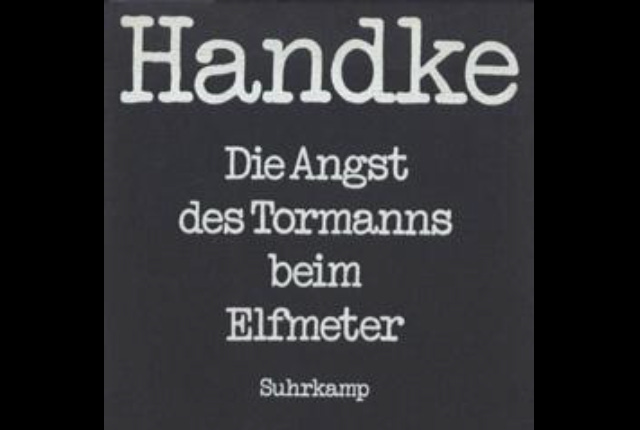
Speaking of European preferences, a reader pointed out to me what sounds like the most European short novel I’ve ever heard of.
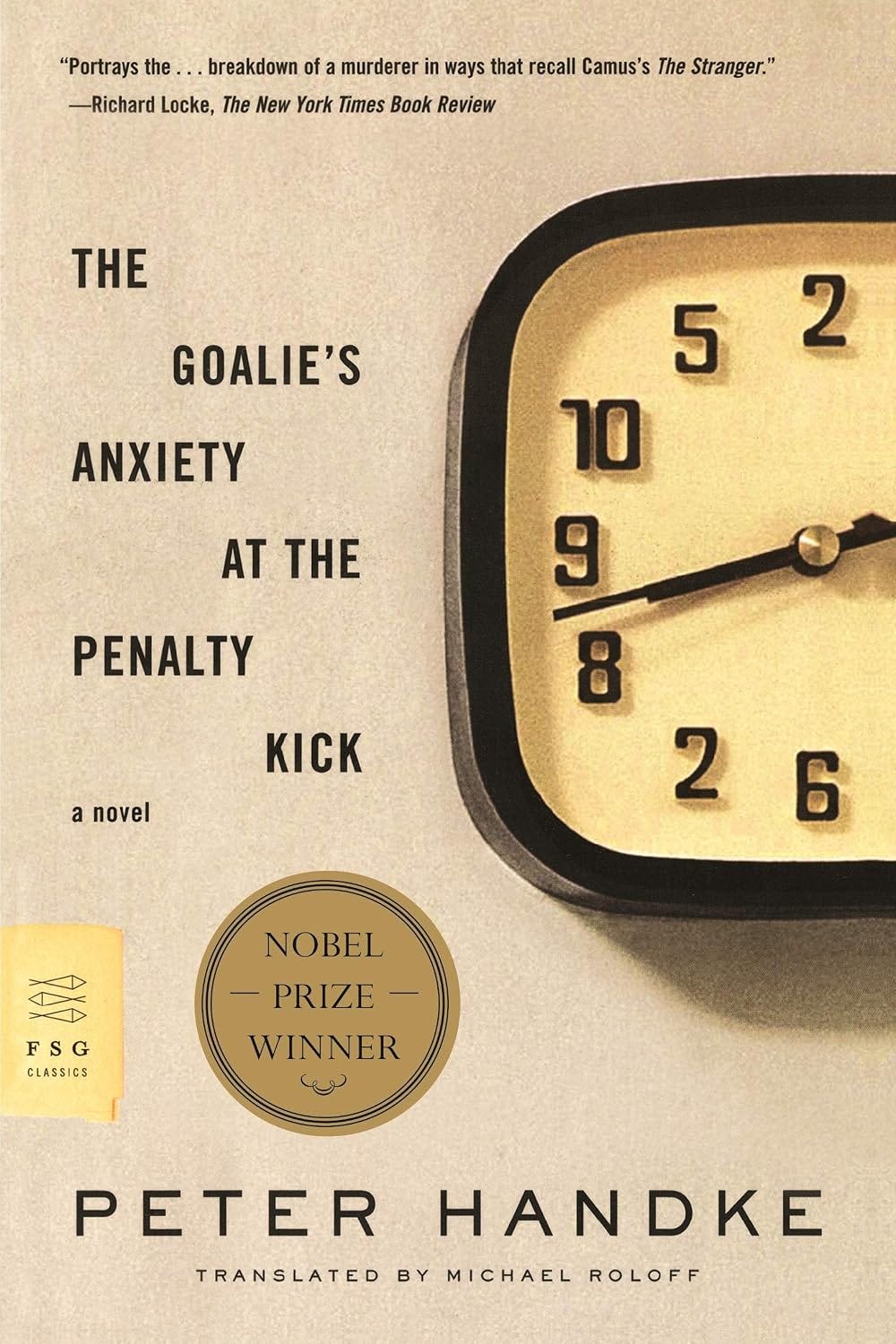
Google Gemini says:
The Goalie’s Anxiety at the Penalty Kick is a 1970 novella by Austrian Nobel laureate Peter Handke, following a former soccer goalie, Josef Bloch, who commits a senseless murder and wanders aimlessly, experiencing a breakdown of reality and language. The spare, detached prose mirrors Bloch’s alienation and explores themes of absurdity, the inadequacy of language, and the disintegration of the self, drawing comparisons to Camus’ The Stranger.
It was adapted into a 1972 film by Wim Wenders.
Among Americans, Handke’s best known work is probably the screenplay he co-wrote for Wenders’ 1987 fantasy about guardian angels watching over West Berlin, the wonderful Wings of Desire with Peter Falk as himself:
Back to The Goalie’s Anxiety at the Penalty Kick:
Key aspects of the novel:
Protagonist: Josef Bloch, a former famous goalkeeper who becomes a construction worker, is fired, and then commits a murder, leading to a disoriented journey.
Plot: The narrative lacks traditional plot, focusing instead on Bloch’s internal state as he drifts through mundane activities, fixates on details, and grapples with a world that seems increasingly unreal.
Style: Written in a deliberately plain, almost report-like style with minimal dialogue, reflecting Bloch’s disconnect and the breakdown of meaning.
Themes: Explores alienation, the absurdity of existence, the crisis of language, and the feeling of living in a movie.
Connections: Shares thematic and stylistic similarities with existentialist works like Albert Camus’ The Stranger and Jean-Paul Sartre’s Nausea.
Film Adaptation: A 1972 film adaptation directed by Wim Wenders captures the book’s atmosphere.
Handke’s 2019 Nobel Prize was extremely controversial in European literary circles because …
Paywall here.
