



A humpback whale frolicking in New York City’s Hudson River has been spotted for the first time since one was seen near the Statue of Liberty in 2020.
In general, wildlife has made an impressive comeback in urban America over my lifetime.
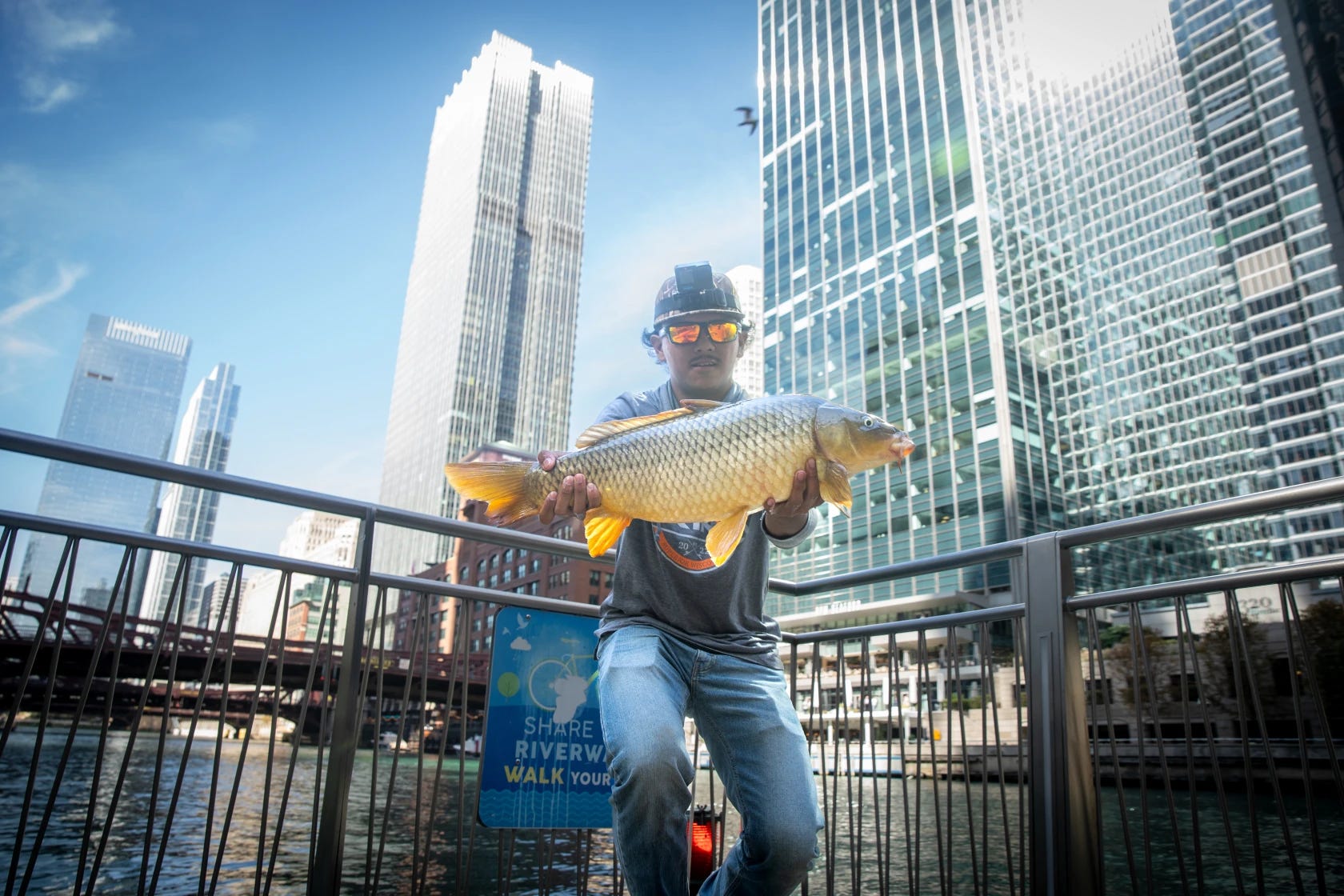
For example, last June in the heart of Chicago, I saw quite a few guys fishing in the Chicago River, which had been Mayor Daley the I’s (1955-1976) long-term environmental goal: that a working man could drop his line in the Chicago River without worrying that, if he ever caught anything, he’d poison his family at the fish fry.
Similarly, when I was a kid in the 1960s-1970s, I seldom saw pelicans, much less dolphins and whales at Santa Monica and Zuma beaches. But once DDT, which weakened eggshells, was restricted, pelicans became common:
And the last time I saw my mother alive in the late 1990s, we sat on El Matador beach in Malibu and watched a whale and two dolphins 100 yards offshore run amok through a school of sardines for 45 minutes.
There are multiple reasons for these improvements, such as reductions in whaling, focused regulations of certain chemicals, and general reductions in water pollution.
Some of the increase in wildlife sightings is also due to the initiative of the animals themselves. For example, I now see more coyotes, raccoons, and possums strolling down the streets of the densely suburban San Fernando Valley than when I was a kid, back when housing was fairly new.
I presume that after a few dozen generations, the animals have evolved (whether genetically or culturally I couldn’t say) to deal better with the new environment.
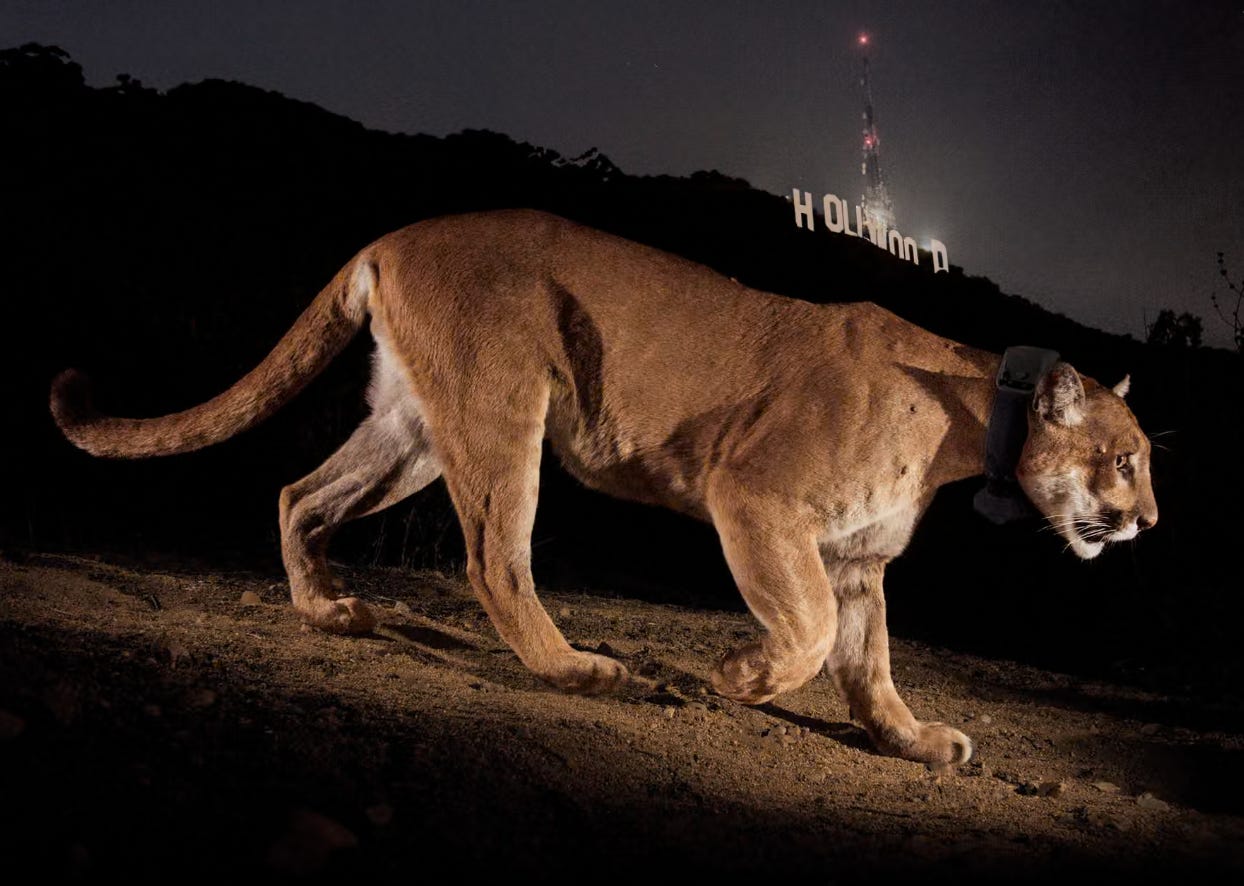
More alarmingly, mountain lions have been moving into the Hollywood Hills in this century. That expensive new animal overpass across the 101 freeway in Agoura Hills west of the Valley is beginning to function. It is intended to funnel more mountain lions and black bears into the Santa Monica Mountains/Hollywood Hills from the taller, wilder Transverse mountain ranges to the north.
Mountain lions don’t like people and they don’t like human habitat landscapes. They try to stay out of our sight, so almost nobody ever sees one. That famous photo above of the Griffith Park cougar P-22 by Steve Winter of the National Geographic required prodigies of pre-planning and technique.
But if you surprise a panther … well, they kill a human about every ten or fifteen years in Southern California. That kill rate will likely go up.
So, the payoff from reintroducing mountain lions to the heart of Los Angeles will be mostly psychological: it’s cool knowing a giant cat is out there, somwhere, even if you never see it, and if you do stumble upon one, it could be bad for all concerned.
Black bears, in contrast, are a little too human-friendly. Their reaction to a backyard with a swimming pool tends to be: “Man, this is the life. I wonder how I could afford it?”
Unlike the terrifying brown (grizzly) bear on the state flag (despite being extinct in California since the 1920s), which lived in the San Fernando Valley into early American times, the black bear is not at all terribly homicidally inclined toward humans. (Black bears appear to have moved into California from Back East once Americans got rid of grizzlies for them.) But they weigh up to 600 pounds and increasingly encounter people and their pets on their rambles.
So far, there are only preliminary efforts in California to bring back the grizzly bear, which reached up to 2,200 pounds and tend to be ill-tempered. Even California legislators have second thoughts about whether grizzlies would be a bridge too far.
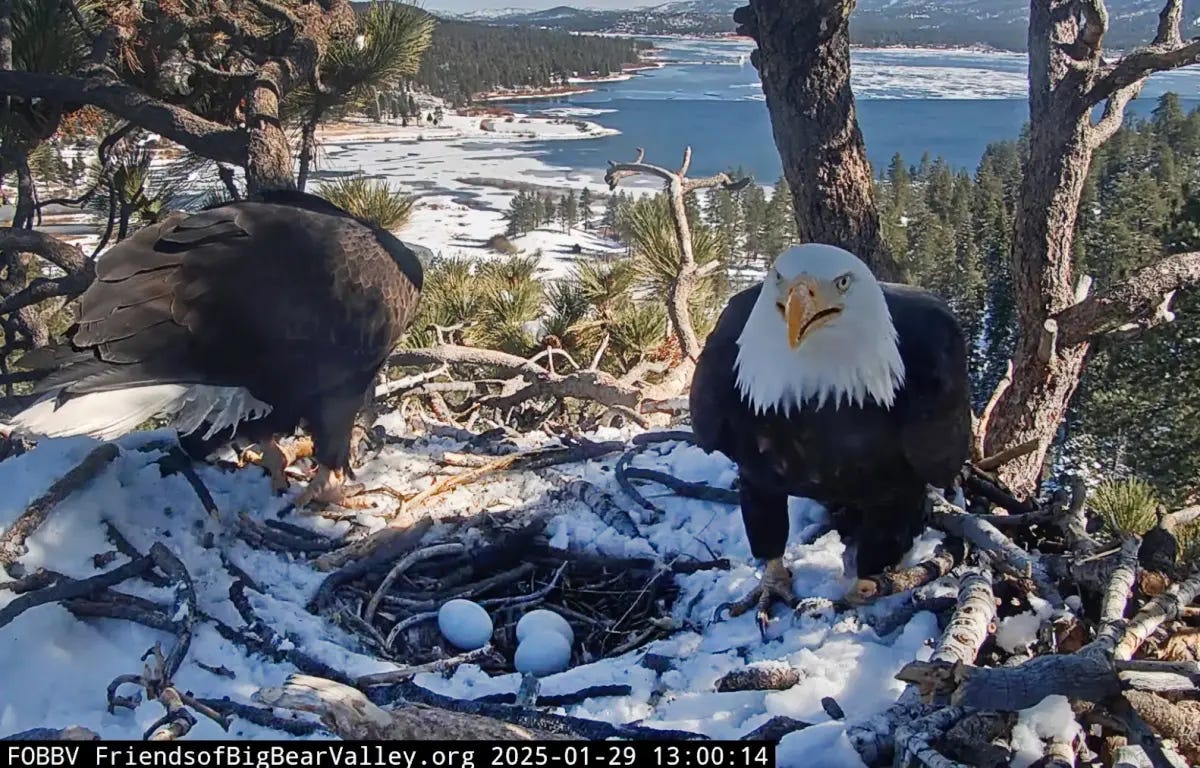
Anyway, the return of “charismatic megafauna” like the Big Bear Lake, CA bald eagles Jackie and Shadow was exactly what was hoped for with early 1969-era environmentalism (just as Teddy Roosevelt-era conservationism centered on stopping the buffalo from going extinct).
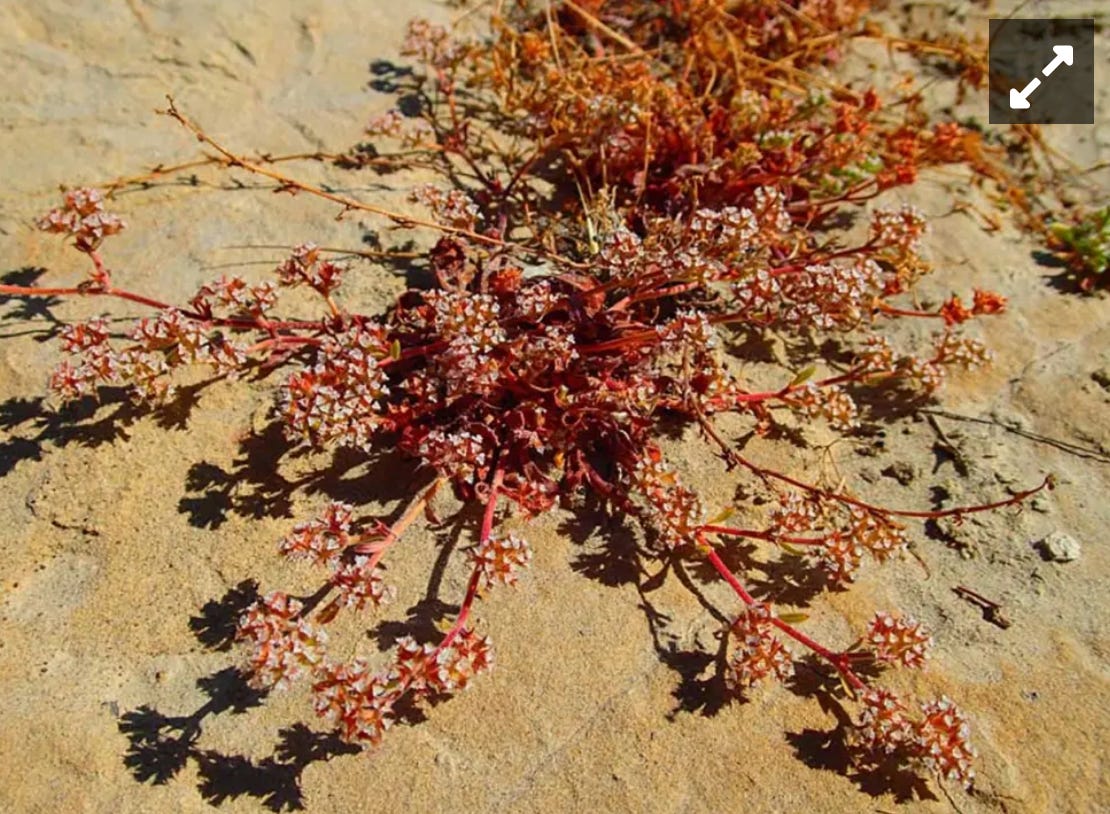
Rather quickly, however, enforcement of the Endangered Species Act devolved into obscure but vastly important …
Paywall here.
