

In the 1990s, the Atlantic Monthly ran quite a few articles on biodiversity and environmental protection, which had a sizable influence on my thinking.
Harvard entomologist Edward O. Wilson’s campaigned in the 1990s to make people care about biodiversity so humanity wouldn’t chop down the Amazonian rain forest with their thousand of fascinating (to Wilson) undiscovered species of ants.
I’m fine with ants (as long as they stay out of my house), but I’m really interested in humans. So, I came up with the term “human biodiversity” in the later 1990s (which I immediately looked up in a pre-Google search engine and found was the title of anthropologist Jonathan Marks’ 1995 book, so he has priority).
For many years I couldn’t find one of my favorite Atlantic articles from this era, which turned out to be Charles C. Mann’s and Mark L. Plummer’s “The Butterfly Problem” from January 1992 about the conundrums raised by the 1973 Endangered Species Act. But now I’ve finally dug it up.
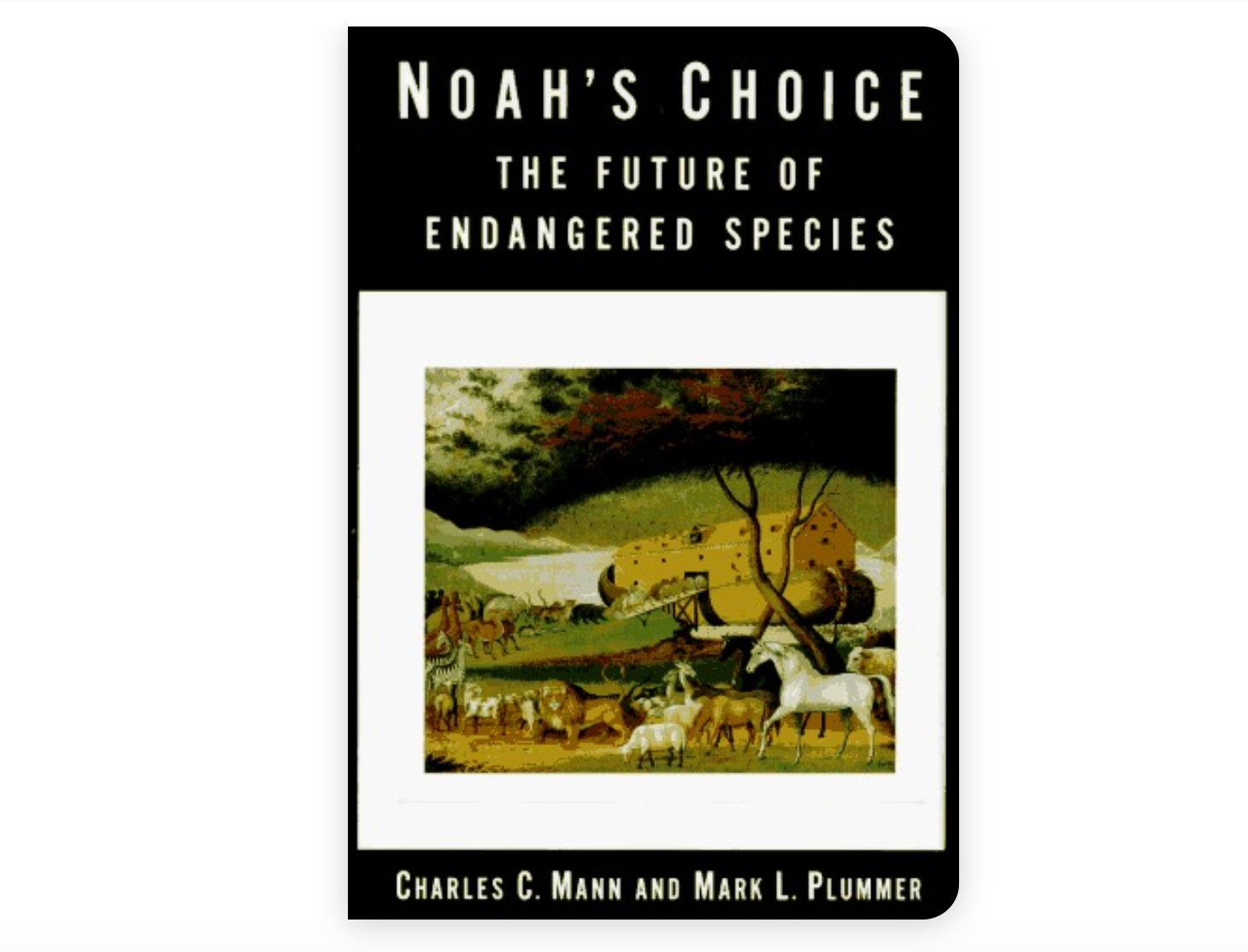
Mann and Plummer expanded it into the 1995 book Noah’s Choice: The Future of Endangered Species.
Rereading the article, I was struck by two things:
How utterly forgotten this article (and subsequent book) are, despite their still being highly relevant.
And how much influence the article had on me.
I love lumper-splitter controversies, like the “What Is a Species?” questions inevitably raised by the 1973 Endangered Species Act. I have something of a knack for being able to see both sides of an issue simultaneously, which leads to my notorious moderation.
Hence, Mann and Plummer’s writings on the ESA played a sizable role in my intellectual development.
For example, I recently also recovered the spec script I wrote in 1999 for the HBO sitcom Arliss: The Art of the Sports Superagent. (The show’s title was a parody of the 1987 bestseller Trump: The of the Deal.)
I now realize that my script’s main plot — in which Arliss is tasked by his superstar black quarterback client to build him a black-only golf club … but then they run into the Endangered Species Act — was in part lifted from this Atlantic article.
The showrunner for Arliss irately told me it was the worst attempt at an Arliss script he’d ever read. (On the other hand, a couple of old Simpsons writers liked it enough to hire me to write a screenplay for their animated sitcom.)
At the same time in the 1990s as I was evolving human biodiversity concepts, intellectual conventional wisdom was moving in the opposite direction toward Race Does Not Exist extremism, as proven (to its satisfaction) by simple-minded lumper-splitter questions that every field of science must deal with.
So, here are excerpts from the Mann & Plummer article:
As originally published in The Atlantic Monthly, January 1992
Because the government doesn’t have the means to preserve endangered species, let alone a coherent plan, its decisions are haphazard -- and private landowners often find themselves paying for the preservation of species they’ve never heard of
by Charles C. Mann and Mark L. Plummer
Mann went on to write the fine books 1491 and 1493 about the Americas before and after Columbus.
RICHARD Schroeder was five when he moved into the new house. It had a big back yard that opened up into the tall grass of the dunes--his own private slice of the Oregon coast. He played there almost every day until he was ten or eleven. Then his father began taking him to play golf. Richard loved the game, and was soon working as a caddy at the country club. In college he won several regional amateur tournaments. After graduation he went into the securities business, but he still played whenever he could. And he kept thinking about the land behind his parents’ house. The rippling dunes, the smell of the surf--he could create a world-class golf course, eighteen holes as good as Pebble Beach, right there in Gearhart, Oregon. People would come from thousands of miles away just to play on his course.
Dropping out of securities, he spent the mid-1970s working as a club pro, learning the golf trade. He also learned the development business. For the scheme to be profitable, the course had to be built in conjunction with a destination resort--a mixture of hotel and residential space. Schroeder was looking at a $100 million project. The acreage was split into a dozen parcels, each with a separate owner. Schroeder got them all behind the scheme and found a backer who would build it and a famous golf-course designer who would lay it out. All this took ten years--a long time, but Schroeder knew that dreams do not come true easily.
Only in 1986, he says, did he learn about the “butterfly problem.”
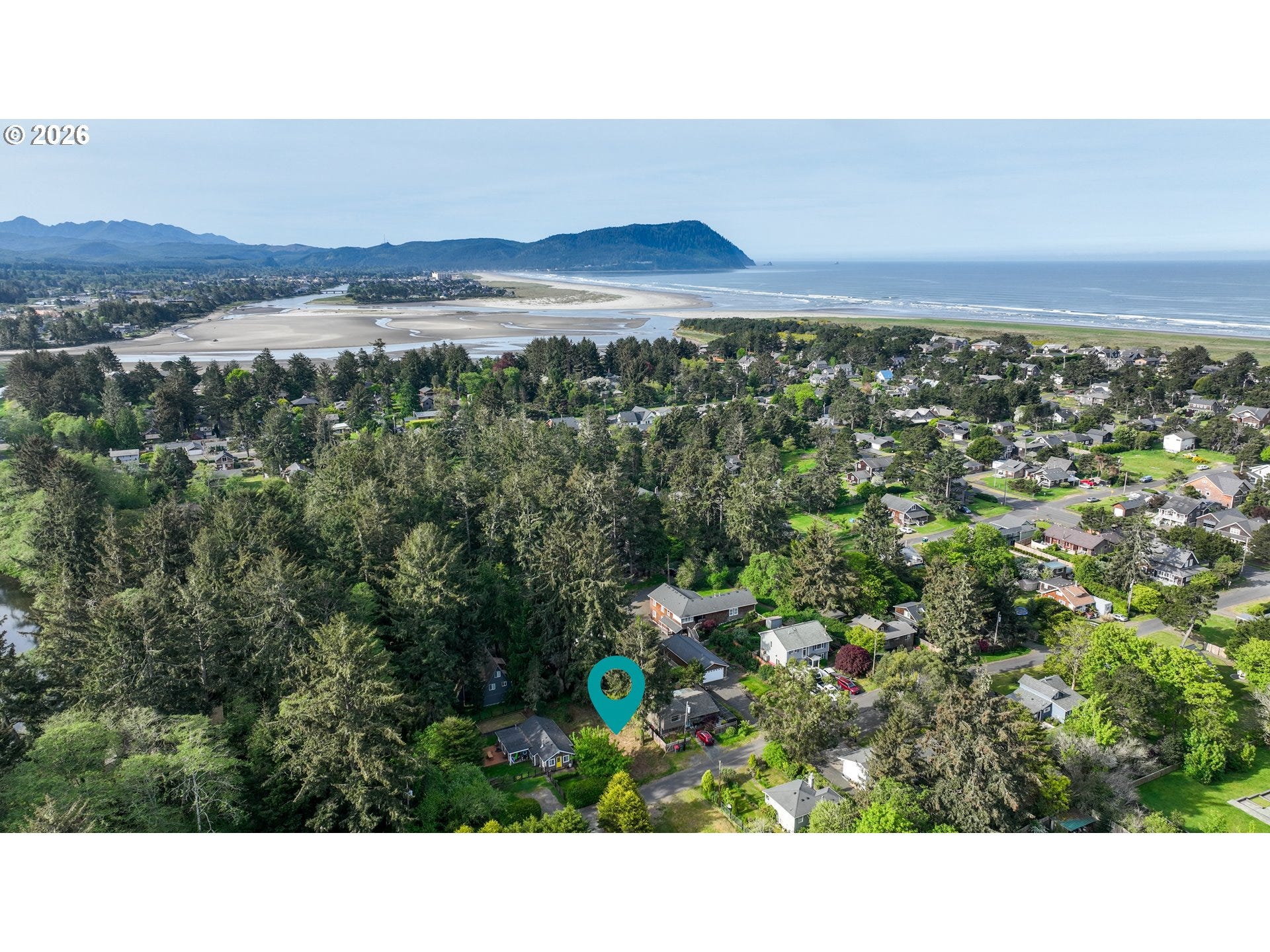
One reason this article made a big impact on me is of course because the idea of somebody building his dream golf course in waterside dunes, the terrain where golf originally developed in Scotland, is highly appealing to golfers.
In 1989, I’d driven from Chicago a couple of hundred miles up the opposite coast of Lake Michigan looking for a quarter mile or so of undeveloped dunes fronting the Great Lake. By 1989, I knew a number of rich golfers in Chicago, a city with boringly flat land and hot and humid summers, so the idea of my putting together a project like Richard Schroeder’s was not unreasonable. The obvious place for a new golf course to serve Chicago weekenders was in the tumultuous linksland on the west coast of the lower Michigan peninsula, where the prevailing winds from the west blowing across Lake Michigan created huge sand dunes and kept the coastline mild all summer.
But, to my surprise, it turned out that almost every potential lakeview lot had a weekend house on it. Compared to my native California, Michigan has a colossal number of second homes, presumably due to the mid-Century prosperity of the auto industry and how widespread the wealth was due to the UAW. (Several superb golf courses have since been built on the coast of Michigan, but further north than I looked.)
Similarly, the long, often spectacular coastline of Oregon was radically underexploited for golf terrain in 1992. Back then, there were virtually no famous golf courses near the Pacific in either Oregon or Washington.
Oregon’s Bandon Dunes golf resort, now the top mecca for golf in the western U.S., started to open seven years later a couple of hundred miles to the south of Gearhart. So Schroeder’s idea of some local hero trying to turn his boyhood terrain into a great golf course was exciting to me. In 1992, there were no truly great golf courses on the 800 miles of coastline between Sonoma County and the Canadian border, and perhaps two linksland courses with ocean views in the dunes, including the 1892 course Gearhart Golf Links.
On the other hand, while this opening human interest story was perfect to hook me in, it was likely a real My-Eyes-Glaze-Over moment for virtually all nongolfers.
The notion that golf course architecture is an art form, and that some golf courses are better than other golf courses, often strikes nongolfers as literally inconceivable.
In contrast, a large fraction of people, including myself, can barely taste the difference between cheap and expensive wine. Some, therefore, conclude that all this wine-tasting stuff is just a big status-seeking hoax. But many of us taste-impaired individuals find the existence of different qualities of terroir, which vintners are constantly discovering in new places, to add fun and glamor to the world, even if it’s not worth it to ourselves to spend money on fine wine.
Schroeder was hardly planning to build on pristine wilderness. Part of the site is fenced off for cow pasture; the rest, to his annoyance, is strewn with beer cans and the tracks of four-wheel-drive vehicles.

But the land is also one of the few remaining habitats for the rare Oregon silverspot butterfly (Speyeria zerene hippolyta). A finger-sized reddish-brown insect, S.z. hippolyta is registered as a threatened species under the Endangered Species Act of 1973, which directs the U.S. Fish and Wildlife Service, a branch of the Department of the Interior, to maintain a list of species that are either endangered (in imminent peril of becoming extinct) or threatened (likely to become endangered in the near future) and to fine or imprison people who “harass, harm, pursue, hunt, shoot, wound, kill, trap, capture, or collect” species on the list.
Speyeria zerene hippolyta is one of approximately 15 subspecies of the species Speyeria zerene. In North America, there are perhaps 750 to 800 species of butterflys, and nobody is sure how many subspecies.
Note that butterflies are beautiful, and often collected, so butterfly biodiversity isn’t just a concern of a few professional naturalists.
A dedicated regional hobbyist might have 100 species in his collection and a nationally known collector might have 400 species.
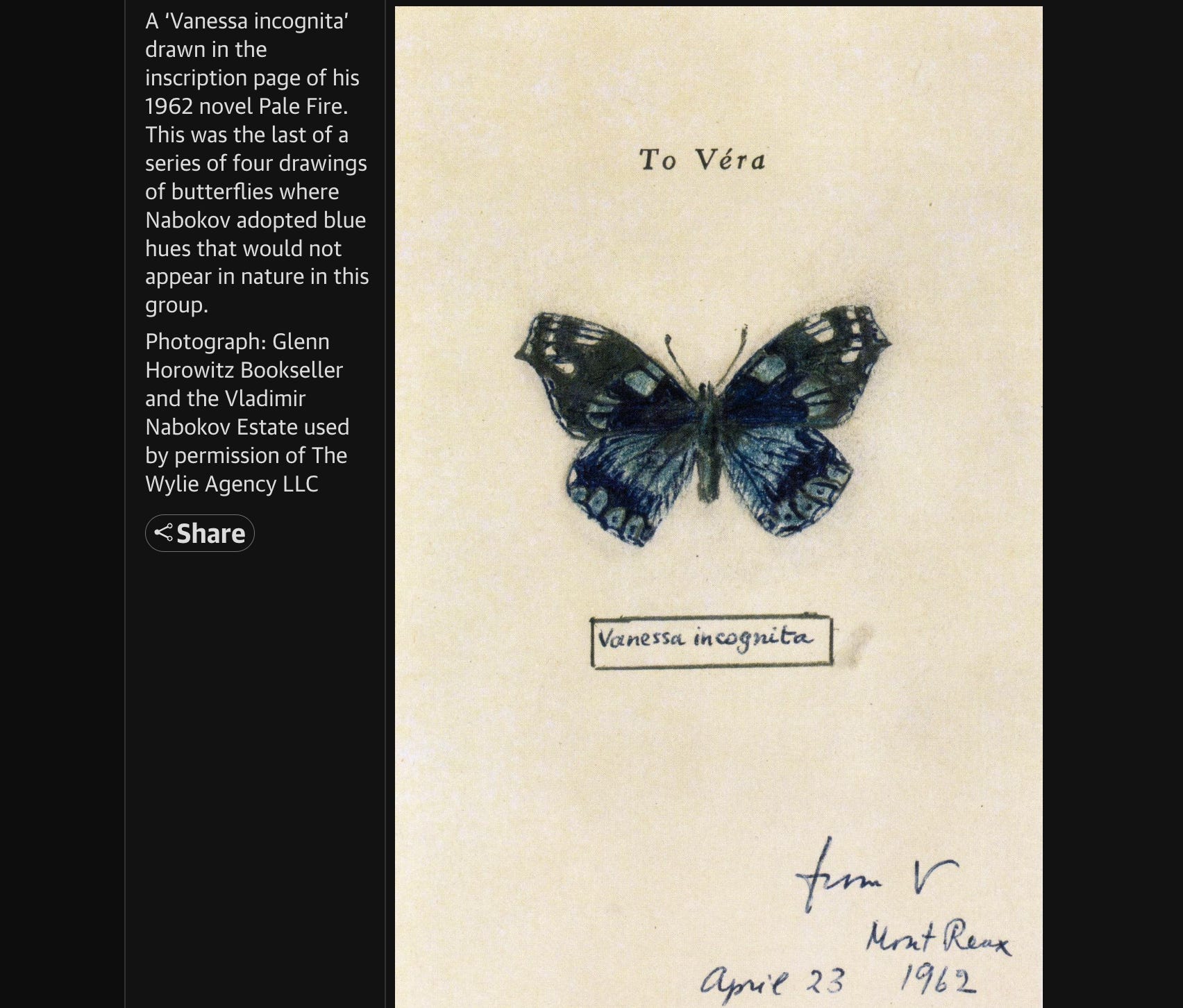
In case you are wondering, I couldn’t find an estimate for the size of Vladimir Nabokov’s collection from his two decades in America.
Fines, jail--all at once Schroeder was in different territory. In addition to the usual obstacles facing developers (lawsuits, permits, bonding agents), he would now have to guarantee that his golf course could be built without killing a single Oregon silverspot butterfly.
The Endangered Species Act first gained notoriety in 1978, when the Supreme Court stopped work on an almost finished dam in Tennessee because it menaced a little-known fish. Since then the act has reached its long fingers into many aspects of American life. The Fish and Wildlife Service has forced the cancellation of one dam, in Colorado, because it put whooping cranes at risk;
I’m guessing the five-foot tall whooping crane, the tallest bird in North America, was one of the charismatic megafauna species Congress had been focused on saving in 1973: it had been discovered in 1941 that only two dozen were left. (There are now about 850.)
In 1965 was born the first captive-born whooping crane to survive. Unfortunately, Tex imprinted on her caregiver, Dr. George Archibald, and refused to have anything to do with male whooping cranes. So, the scientist performed whooping crane mating dances for Tex for five years before she was successfully artificially inseminated and gave birth to Gee Whiz in 1982.
As you might imagine, Johnny Carson kept America updated on this saga. (This is exactly the kind of story — science, sex, and silliness — that Carson loved.) He had the “proud father” on the Tonight Show to celebrate in 1982, but Dr. Archibald had to announce that Tex had been killed by a raccoon the night before.
Back to Mann and Plummer in The Atlantic:
pushed the Bureau of Reclamation to postpone expanding another, because it jeopardized the humpbacked chub; induced Massachusetts to close beaches just north of Boston at the height of summer, to protect the piping plover; started a lengthy political battle by proposing to settle packs of gray wolves in western states; sent a warning to 600 landowners in Polk and Highlands counties, Florida, spelling out the consequences if the development of their property harms the Florida scrub jay; and hauled the town of Ranchos Palos Verdes, California, into criminal court for inadvertently driving the endangered Palos Verdes butterfly into apparent extinction, in part by turning one of its major breeding grounds into a baseball field (the suit was thrown out on a technicality).
None of this comes cheap. Buying land for the Mississippi sandhill crane has cost more than $20 million. Riverside County, California, is spending an equal sum on the Stephens’ kangaroo rat, and would have authorized an additional $100 million had voters not rejected the idea. Voters will not get the chance to refuse in the Pacific Northwest, where the Fish and Wildlife Service plans to save the northern spotted owl, a native of forests in Washington, Oregon, and California, by halting most logging on 8.2 million acres, an area nearly the size of Massachusetts and Connecticut combined. Some estimates of the cost of locking up the timber reach into the tens of billions of dollars. In the case of the California gnat-catcher, now proposed for the endangered-species list, the costs may rise even higher, for the bird lives in Los Angeles, and efforts to save it will require clamping down on the most powerful real estate market in the nation.
In 2001, I interviewed the developer of what’s now the Trump National Golf Club Los Angeles shortly after its 18th hole slid off the cliff in Palos Verde toward the Pacific Ocean, which eventually pushed the project into bankruptcy and selling his golf course to Donald Trump.
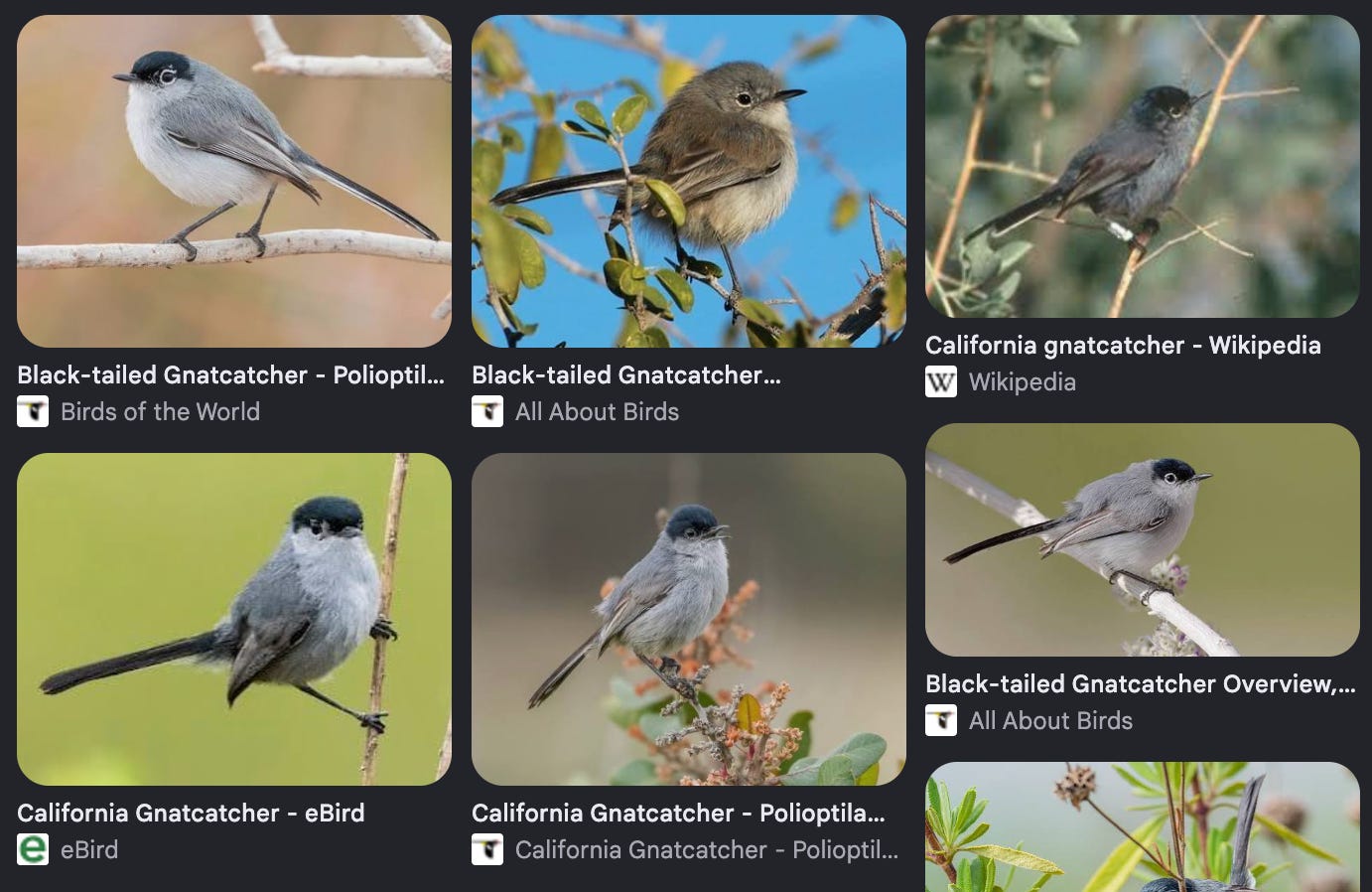
He and his brother had decided in the 1990s to anticipate that the EPA would eventually declare the rare California gnatcatcher, a small, awkward-flying bird of no evident distinction, is a separate and thus endangered species from its prolific doppelganger, the black-tailed gnatcatcher:
Note that endangered species declarations are often nominal excuses for larger environmental concerns. For instance, protecting the northern spotted owl was used as a stalking horse to largely wipe out the logging business in the Pacific northwest, which at the time largely consisted of colossal clear-cuts of magnificent old growth forest. Flying over the Pacific northwest in 1988, I was shocked by the extent of clear-cutting, typically screened off from highways.
Did we really want to continue to clear-cut 150’ tall Douglas firs?
Since the emergence of spotted owl protection around 1990, the most objectionable kind of Pacific northwest lumbering, clear-cutting of old growth timber on taxpayer-owned national forest land, is way, way down versus the 1980s.
On the other hand, the coastal California gnatcatcher thrives in one of ugliest natural environments in America: sagebrush, a grey-brown thorny ground cover a few feet tall. A strip mall is nicer-looking than sagebrush. But the California gnatcatcher was used to limit development in the increasingly hideously expensive Mediterranean climate zone near the Pacific ocean where lots of people would like to live.
The Zuckerman brothers decided that rather than fight the California gnatcatcher like other SoCal developers were trying to do in hopes of lobbying the EPA to declare it not a species, they had their golf architect Pete Dye walk the property with the world’s leading (and perhaps only) gnatcatcher ornithologist, and figure out how they could leave enough sagebrush between fairways for gnatcatcher nests.
This appeared to be working well for the birds by 2001, who were in abundance.
But it was bad for golfers because most shots that missed the fairway disappeared forever into the thorny, foreboding sagebrush. When Trump hosted an LPGA tournaments there a number of years later, it was a fiasco because it took the top women golfers six hours to finish their rounds due to lost balls. And spectators couldn’t get around well to see the action, such as there was, due to the sagebrush barricades between holes.
Richard Schroeder worked diligently to accommodate S.z. hippolyta. He met with the silverspot recovery team, the group of scientists and Fish and Wildlife Service staffers in charge of the butterfly’s future. He hired the world’s expert on the insect, Paul Hammond, of Oregon State University, to put together an official lepidopterist-certified conservation plan for the Fish and Wildlife Service. But all came to naught. Last March, Hammond found an additional patch of butterfly habitat. Exasperated, Schroeder’s financial backers pulled the plug--it seemed they would never know where the butterfly might turn up next.
Theoretically, if the “endangered” butterfly keeps turning up in more places once people are incentivised to look for it, perhaps …
Paywall here.
