

From the New York Times op-ed page:
This California Educational Juggernaut Doesn’t Need the SAT
Sept. 16, 2026
By Miriam Pawel
Ms. Pawel is the author of the forthcoming “California Dreams: The Making and Remaking of the University of California.”
When the University of California eliminated the SAT requirement for admission in 2021, U.C.L.A. saw a significant jump in applications from high-achieving Black and Latino students, for whom the standardized tests had been a barrier.
Yeah, that was the UC Regents’ plan: to lower the intelligence hurdle.
Even California’s liberal voters had twice chosen to outlaw affirmative action: in 1996 with 54% of the vote and in 2020, when Donald Trump got only 34% of the vote in the state, but an initiative to reinstitute affirmative action had flopped almost as hard, gaining only 43% of the vote from California’s highly diverse electorate.
So, the politically appointed regents overruled the expert panel of the UC Faculty Senate, which had documented that the SAT or ACT was essential to selecting students who could partake of UC quality education, and made the U of California schools not even test-optional, but banned applicants from submitting any test scores.
For example, the University of California at San Diego in lovely La Jolla has been self-destructing for the last few years over The Gap because it was prestigious, famous for all the Nobel laureates on the faculty. So a lot of Hispanic politicians have been demanding that it adopt admissions policies to let more of their constituents in, with disastrous consequences for instruction.
University of California was one of most crazily self-destructive decisions of the Great Awokening. The Regents decided to permanently get rid of tests on May 21, 2020 four days before George Floyd’s death, so they can’t even blame their choice on the madness of the Summer of George.
“We are enrolling one of the most academically accomplished and diverse classes in our history,” the admissions director wrote.
And if you can’t believe an admissions director, who can you believe?
Since then, applications have risen at all nine undergraduate campuses,
Hooray! Applications have been pouring in from dumb kids who couldn’t get in before.
the most prestigious have become increasingly selective, and the university retains and graduates students at record rates.
Through grade inflation and lowering standards.
Yet just five years later, the University of California is embroiled again in a very public battle over whether to reinstate the SAT.
In contrast to the University of California system, the entire Ivy League has gone back to mandated testing.
Faculty, whose 2020 recommendation to retain the test was overruled, have led the charge. In a widely circulated letter and opinion piece (both edited with the help of artificial intelligence), a math professor who organized the campaign blamed the test-blind admissions policy for a troubling increase in undergraduates who lack basic skills.
Math literacy is a real issue, not only in California, and not only since the elimination of the SAT for admissions.
“Math literacy” is like “media literacy,” only a less popular oxymoron.
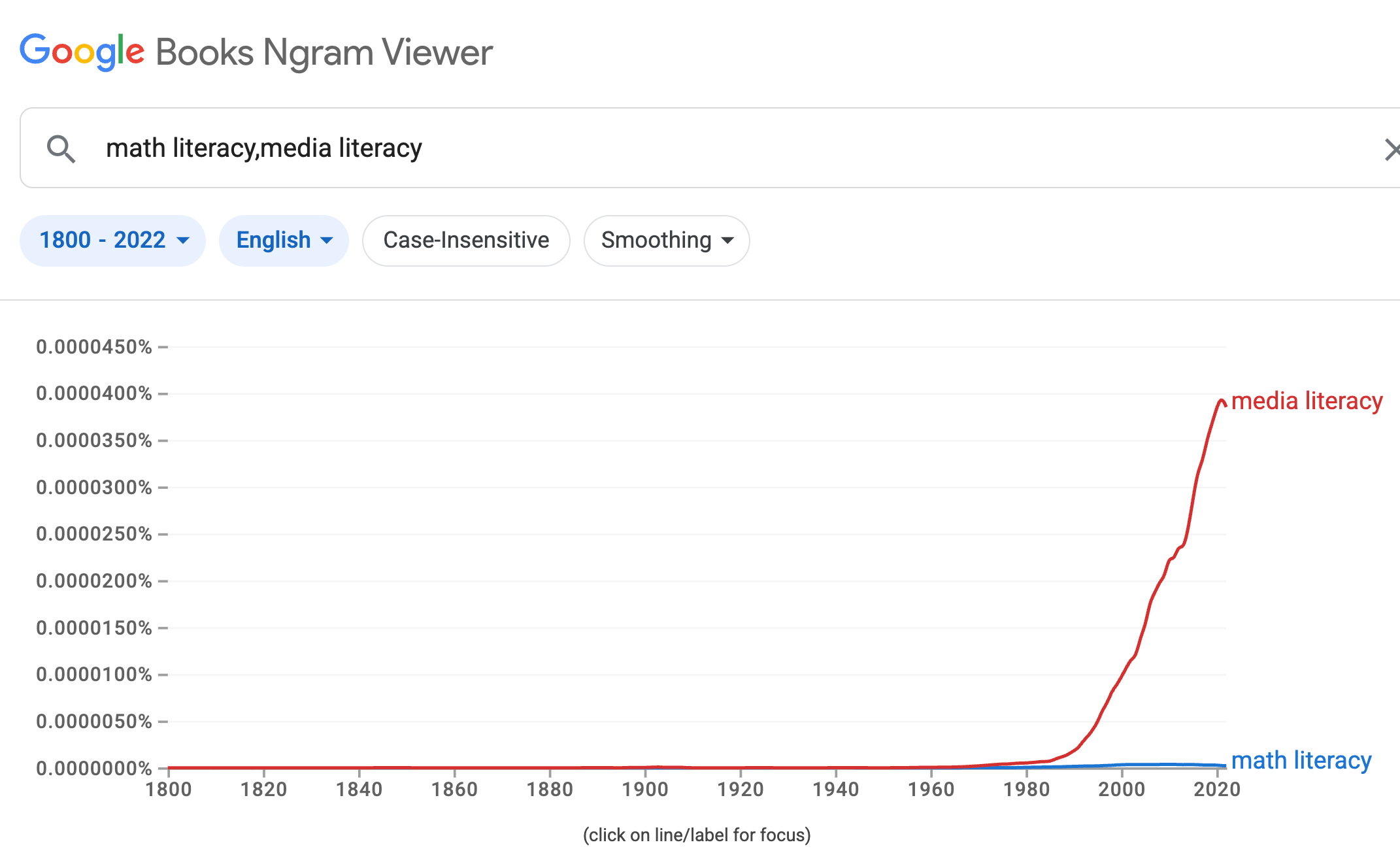
There’s also a literacy literacy crisis in our colleges, as many Literature professors having been pointing out lately.
The argument that reinstituting the standardized test will rectify the math crisis, however, obscures a more fundamental debate over the mission of this elite public university and the longstanding tension between its twin goals of excellence and access.
The University of California is an educational juggernaut that has helped propel the state to its status as the world’s fourth-largest economy.
Back when it used admissions tests.
Lately, not so much.
During the glory days of the UC campuses, they tended to be pretty non-accomodating. They used a simple combination of test score and high school GPA to determine who gets in. And then they flunked out a lot of people fast.
For example, six high school friends of mine showed up at UCLA in September 1976, joined a fraternity, had a fun time, and all were kicked out before their third quarter in the spring.
California also has a second tier of dozens of State Colleges, which are teaching colleges rather than research universities.
And it has a third tier of two-year community colleges, which are open to anybody including high school dropouts.
Each year, about 19,000 junior college students transfer to U. of California campuses, including about 3,600 to UCLA in Westwood.
I suspect the community college transfer rout is a better way to let in a bunch of unpromising students with poor test scores than requiring blindly selecting high school seniors, so UCLA, Berkeley, San Diego and the other traditionally rigorous UCs can’t tell who has poor test scores.
Many young people are considerably more mature at age 20 than they were at age 18.
Many do better living at home and attending a humble community college for a couple of years than going straight from Cesar Chavez Hispanic Heroine To Be Named Later High School to a world famous research university that they only heard about when their Science teacher made them watch Oppenheimer in class.
In contrast, lots of no test score freshmen get into Berkeley and they have no idea what fellow students Gavin Chang from Cupertino HS and Siddartha Goldstein from Harvard-Westlake School are talking about.
It’s depressing.
Community colleges traditionally weren’t a bad learning environment because, unlike high school, there were no truant officers forcing people who don’t want to be there to show up. So, a lot of community college math classes start out with, say, 80 students, but after a few weeks only maybe the 20 who actually want to learn and are learning are still there. So, unlike high school, the instructors can get a fair amount done because nobody is disrupting the class.
It could be that junior colleges have fallen apart in recent years along with the rest of American education. I don’t know. What little insight I have into community colleges is from 15 or 20 years ago.
But maybe not: they have the advantage that unlike K-12, undergraduate colleges, law schools and the rest, nobody in cultural politics seems to much care about community college racial results. I’ve probably read a few thousand articles over the years about The Gap in various levels of education. But I don’t recall ever reading one about The Gap in community colleges.
Oh, dear …
Paywall here.
