

In an NYT oped, YIMBY-advocate Josh Barro articulates some ideas that I’ve often expressed about why California has been so Not-In-My-Back-Yard since the dawn of the environmental movement in 1969:
What’s the Matter With California?
June 3, 2026
By Josh Barro
Mr. Barro, a contributing Opinion writer, is the author of the newsletter Very Serious and the host of the podcast “Serious Trouble.”
… But there’s also a broader anti-development sensibility among many Californians: an idea that the state is “full,”
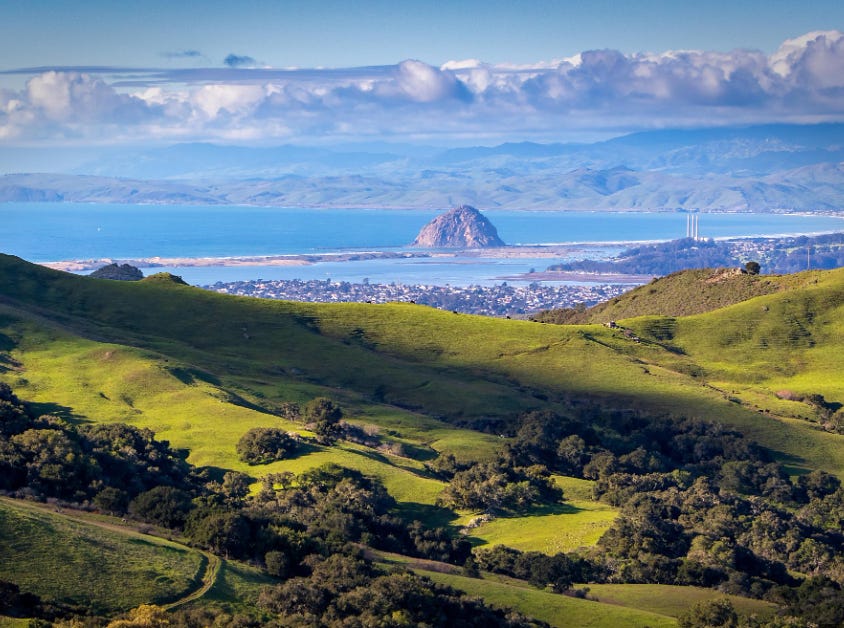
Much of California, especially the 148 miles of coastal zone between Santa Barbara and Hearst Castle, is not full. On the other hand, it’s striking that one of the nicest parts of the U.S. is just sort of sitting there with a bunch of Happy Cows on it, but not much else:
that dense development is anti-environmental and that leafy, low-density suburban jurisdictions like Marin County are the best representation of what it is to live in harmony with nature.
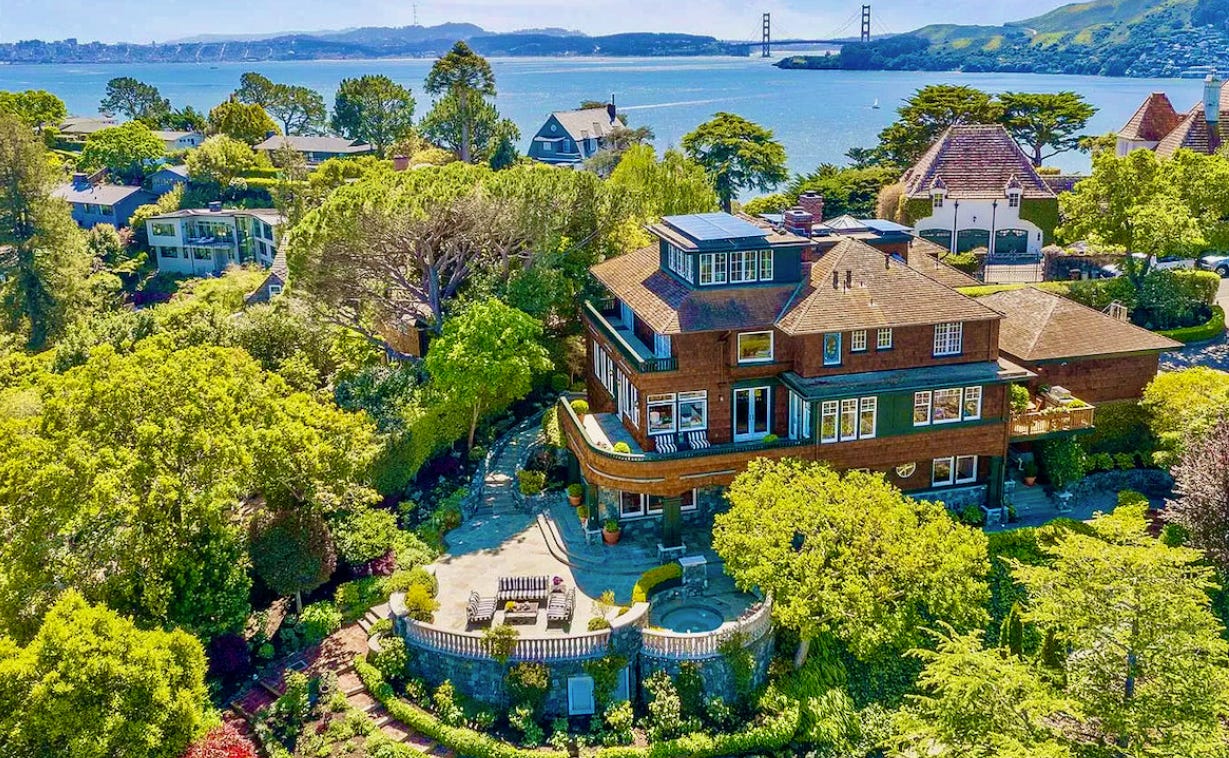
I don’t know whether the mellow Marin County hot tub lifestyle is the best for nature, but it’s likely the highest standard of living in the United States for its lucky quarter of a million human residents (down 3% from 2020 to 2025).
Among the state’s remaining Republicans, you may hear a different version of the anti-development thesis, which is that California’s existing stock of homes would suffice if there weren’t so many illegal immigrants.
There’s also a financial reason voters are ambivalent about fixing the housing crisis: If you increase the supply of homes, the price of homes will tend to go down, which is great for people looking to buy a home but not so great for people who already own a home. Mr. Trump expressed this idea with unusual frankness in January, saying: “There’s so much talk about, ‘Oh, we’re going to drive housing prices down.’ I don’t want to drive housing prices down. I want to drive housing prices up for people that own their homes, and they can be assured, that’s what’s going to happen.”
There’s one added fact about California that encourages complacency: It’s paradise. The state’s vast swaths of detached-house suburbia can’t house enough people within commuting distance of job centers in Los Angeles and Silicon Valley, but they represent an American ideal of suburban living in perfect weather. The state’s leading metro areas remain highly productive places to do business, with that productivity only increasing with the A.I. boom in the San Francisco Bay Area.
With Anthropic and SpaceX going public (and OpenAI probably to follow), California will likely enjoy another brief respite from its perennial budget crisis, as in 2004 when Google’s public offering provided Sacramento with a much-needed windfall.
California’s hills are incredibly scenic places to live, even if the homes above Los Angeles are barely insurable because of fire risk. It’s not hard to see how a long-settled homeowner with a nice house and a yard and a strong local economy and a low property tax bill courtesy of Proposition 13 might look around and resist the idea that the state needs to change much.
So, what could the next governor do with state politicians to change all this? First, they will need to do a better job of arguing that building more housing will improve the quality of life even for the Californians who already own homes.
After an immense increase from 1920 through 1990, the city of Los Angeles’s population growth slowed in the early 21st Century. And then total numbers dropped slightly in the early years of this decade:
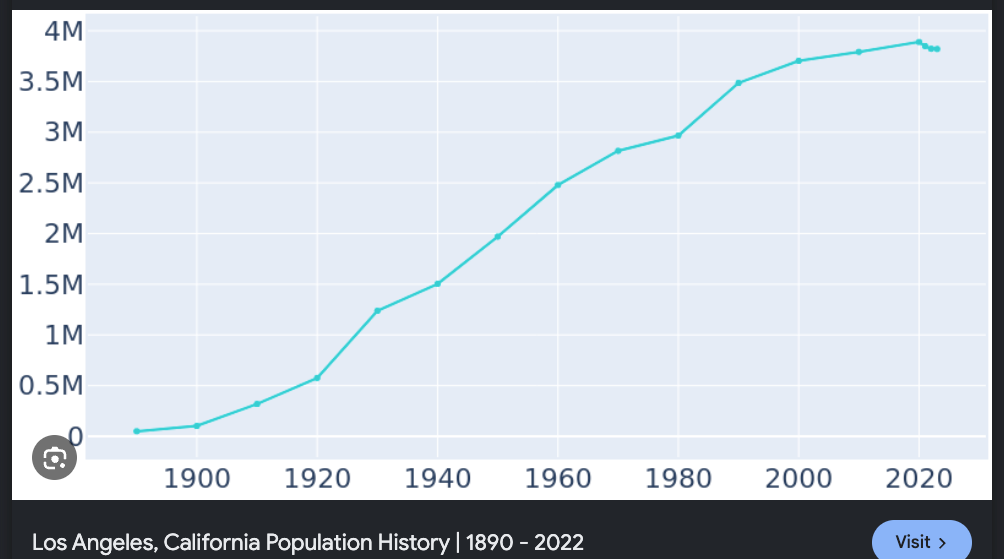
(Note: nobody really knows how many people crowd into places like eastern Hollywood. For decades, American governments have gone out of their way not to count the number of people living in illegal alien havens.)
Similarly, the parts of Los Angeles County that are not in the Los Angeles City may have dropped even faster in total population in this decade.
So has the immense Greater Los Angeles five county area, which is said to have dropped from 18.6 million to 18.3 million in this decade.
So, “Los Angeles” is not like, say, Atlanta or Dallas, where the official municipality has barely grown lately, but the suburbs are booming. However expansively you want to define L.A. (big city, huge county, or enormous metro area), its population shrank from 2020 at least through 2023. (Similarly, the state of California is said to have dropped 0.5% from 2020 to 2025.)
Has that made life worse for those left in Southern California? …
Paywall here.
