

From Works in Progress:
Why the West stopped making land
by Zigmund Forrest & Maxwell Tabarrok
23rd June 2026
Large swaths of America’s cities were originally underwater. We stopped half a century ago, but there is plenty more land left to take.
Some of America’s most famous land was reclaimed from the sea. The Lincoln Memorial, the World War II Memorial, and the Reflecting Pool all sit on earth reclaimed from Potomac River tidal flats in the early twentieth century. Treasure Island was built in San Francisco Bay for the 1939 Golden Gate International Exhibition. Chicago’s Northerly Island was filled in from Lake Michigan to complete Daniel Burnham’s 1909 plan of the city.
In total, around eight percent of the land in America’s major coastal cities was underwater in the 1890s and has since been reclaimed. This includes the land under several major airports, like Newark, Logan, and SFO, as well as neighborhoods like the Financial District in San Francisco, the Back Bay in Boston, and Camden in Philadelphia. Some cities, like Boston and Charleston, have doubled in size by reclaiming land.
Today, reclamation should be more common than ever. Land values in some cities are thirty times what they were in 1950, and high-tide flooding is four to eight times as frequent. Reclamation could extend and protect our coastal cities as it has for centuries. But rather than reclaim more land, we have virtually ceased to reclaim any at all. Since the completion of Battery Park City in 1976, there has not been a single major urban land reclamation project in the United States and only a handful of port expansions.
Two explanations are commonly proposed for this: first, that the easy spots have already been reclaimed, and second, that improved transportation has made reclamation unnecessary since we can expand cities further inland instead. But neither of these matches the evidence. Other countries still reclaim land at enormous scale, under conditions at least as challenging as those in the United States. The transportation story was once plausible, but not any more. Transportation has stopped improving, and downtown land values have risen so much that reclamation costs would be dwarfed by the value of the land created.
The timing points to a third explanation. Reclamation stopped abruptly in the 1970s when a wave of environmental regulations made it enormously expensive to reshape the landscape. And it halted at the same time in every other country that passed similar laws.
If the legal barriers to reclamation were lifted, we could build hundreds of thousands of new homes near the centers of our most valuable cities. We could build new airports to refresh ailing transportation infrastructure, and we could protect low-lying coastal areas from sea level rise. The disappearance of land reclamation is a choice that we have the power to undo.
For example, many of the best parts of Chicago are on landfill (or as they call it, lakefill):
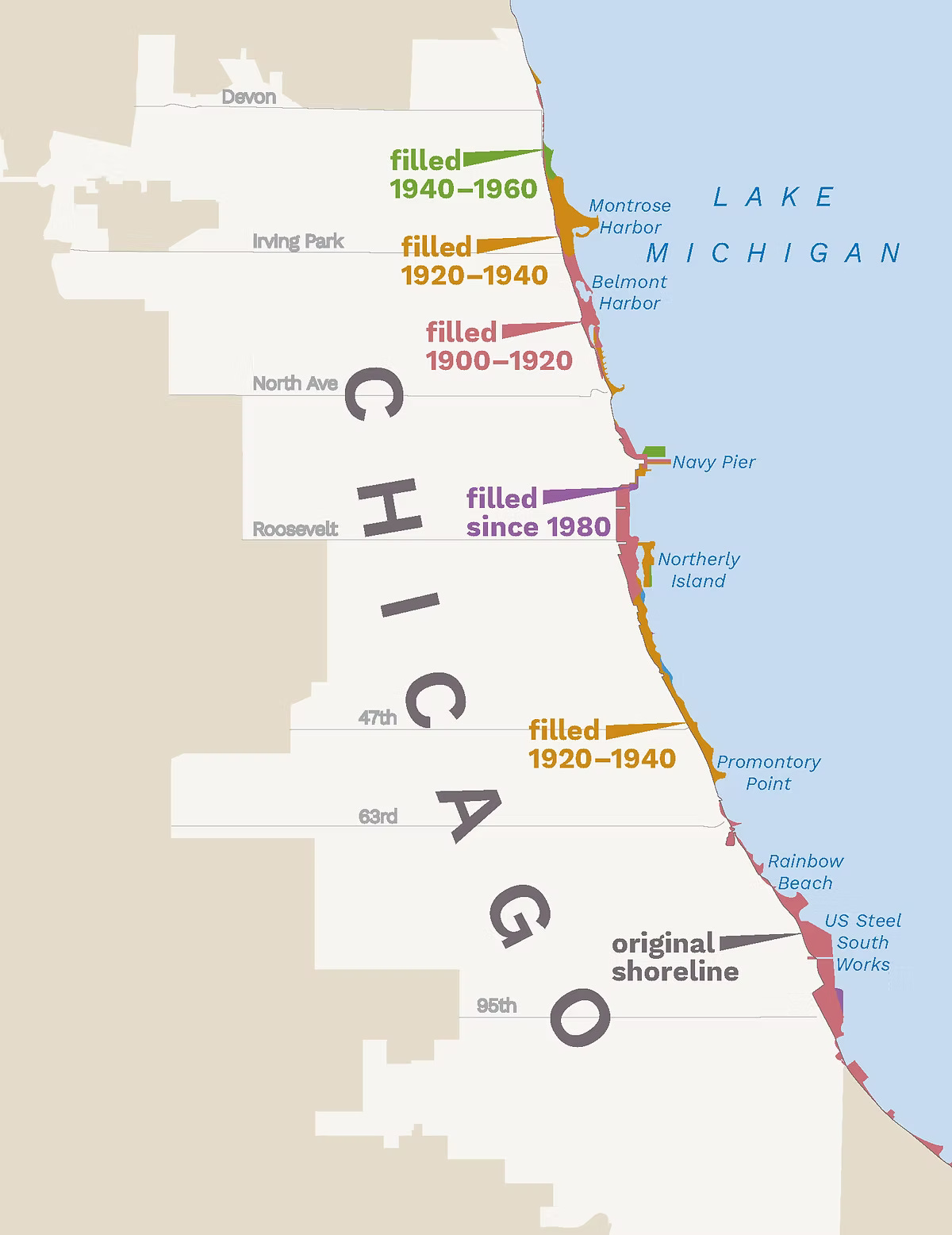
Chicago created its famous lakefront parks by filling in Lake Michigan. When I lived in Chicago northern lakefront, there were an amazing amount of recreational amenities down at the end of my block, all of them built on landfill.
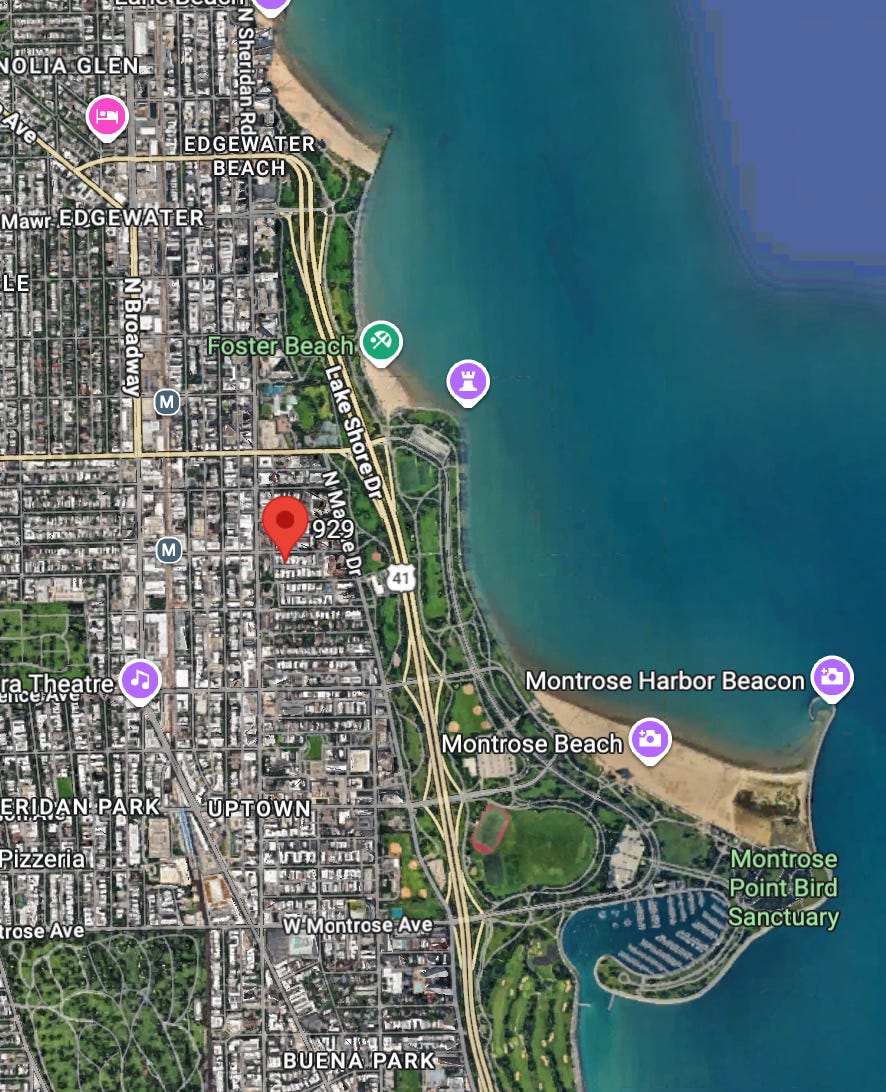
But, does the history of Chicago support the idea that landfill for housing only stopped around 1970 when The Ecology became a fad? …
Paywall here.
