

Lesbians long ranked among the more annoying organized pressure groups in America.
But around 2013, the lesbian community started to get brutally mogged by strong-jawed, arrogant men in dresses shoving their way into women-only spaces as their God-given (or Foucault-and-Judith Butler-given) right. Lesbian ideology, which is dominated by academic social constructionism, turned out to be wholly incapable of mounting an effective defense of lesbians from this attack from an unexpected direction.
And society began to strongly encourage adolescent girls who might normally have grown up to be lesbians to instead have themselves drugged and mutilated to better pretend to be boys.
At this rate, how many lesbians would be left by 2050?
In the face of this fashionable onslaught, lesbians largely crumpled like the British against the Japanese at Singapore, when the Brits’ big guns, supplied with armor piercing shells to sink attacking battleships, proved ineffectual against the Japanese Army marching in by land from their rear.
Among influential celebrities, Harry Potter authoress J.K. Rowling, who is now married to her second husband, was a rare instance of somebody with a lot to lose who made a stand.
So, I haven’t been giving lesbians as hard of a time as in, say, 1994-2014.
But, still …
On the other hand, it’s less than clear from the following narrowing what are the chromosomal counts of most of the characters.
From the Boston Globe:
A Western Mass. lesbian bar required KN-95 masks. When it changed the rules, all hell broke loose.
Last Ditch Bar in Greenfield wanted to build community. They got a firestorm instead.
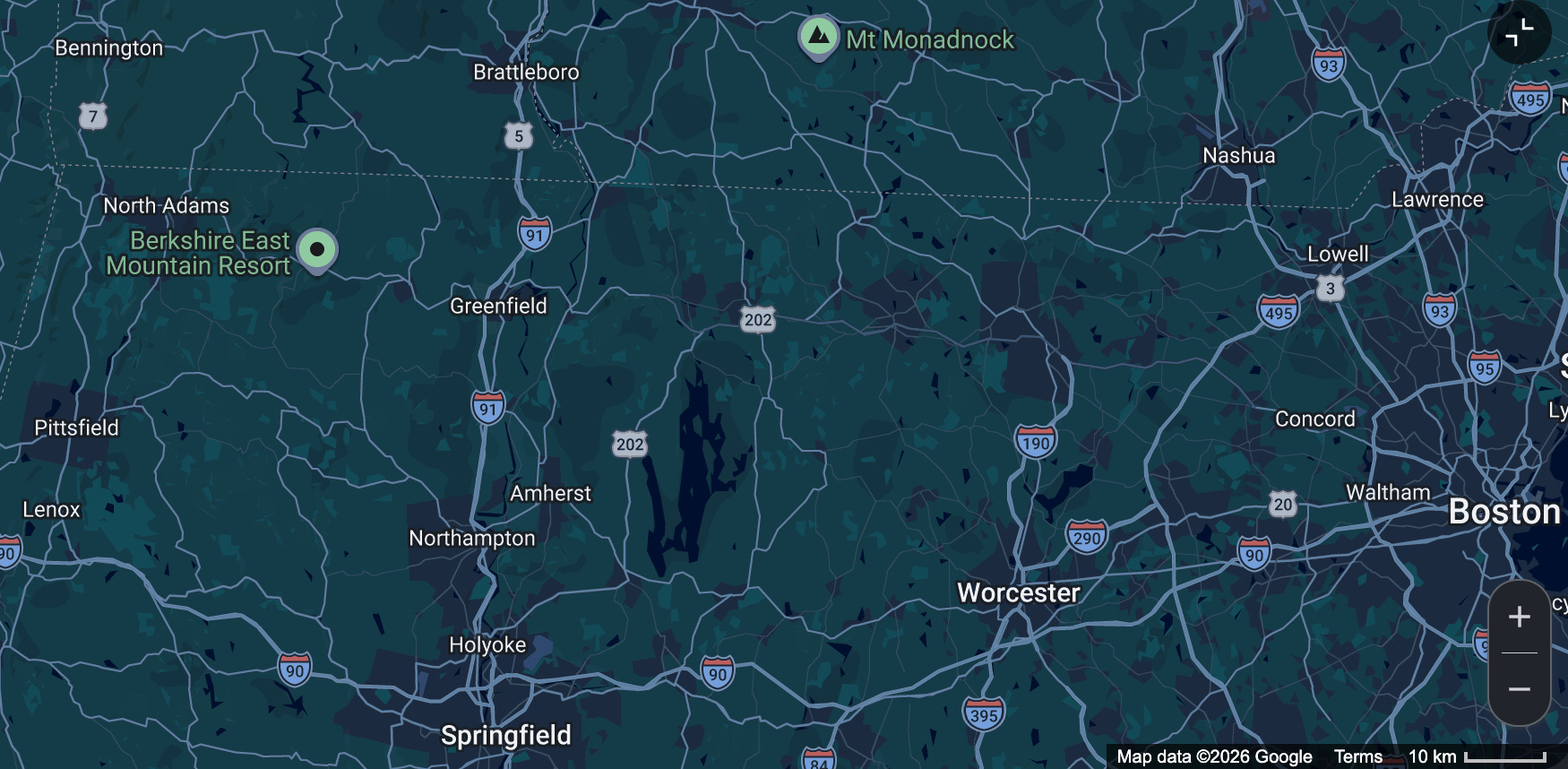
Greenfield, Massachusetts is in the Berkshires, just north of such famously lesbian-heavy towns as Northampton (home of Smith College, one of the Seven Sisters that doesn’t let boys attend, unless they used to be girls), Amherst (Emily Dickinson’s hometown), and Holyoke (Mt. Holyoke College, another Sister).
All else being equal in terms of acceptance, lesbians are much more likely than gay men to prefer small town communities to the anonymity of big cities. Women generally don’t want as many different sex partners as men do, so the big city Grindr lifestyle is of less appeal to lesbians.
By the 19th Century, the Berkshires were emerging as a popular place for women who would today be lesbians (see the 19th Century term “Boston Marriage”). Amusingly, it’s not clear how long it took women who only like women to figure out the sex part.
Lesbian bars had long been in decline, from over 200 in the 1980s to no more than two dozen during covid. Since then, activists have tried to revive lesbian bars as socio-political projects (rather than as profitable businesses), with the Lesbian Bar Project trumpeting 36 official lesbian bars currently in operation.
But, judging by this article in the Boston Globe, running a lesbian bar during Woke 1.5 is a nightmare because so many people with a lot of time on their hands can’t get over the good old days of Woke 1.0.
Published Sept. 22, 2026
The August 31 Instagram post from Last Ditch Bar and Arts Venue, a lesbian bar in Greenfield, was upbeat, teasing a new DJ lineup and a volunteer meetup. But partway down the rainbow-hued post labeled “UPDATES!” was a sentence that would splinter the queer community in this small Pioneer Valley city and beyond.
“It is with love we inform our immunocompromised disabled divas we will be opening Saturday nights as mask optional,” wrote Last Ditch.
Previously, patrons were required to wear a well-fitted KN-95 mask “or better” at all times.
Have there been any definitive scientific studies of whether or not the better sort of masks (American N95 and Chinese KN95) did much good during covid? And what proportion of Chinese KN95 masks really lived up to their ostensible standard versus what proportion were just useless counterfeits?
Or did masks work merely by discouraging socializing by making people look and feel stupid and uncomfortable, so they just stayed home and watched Netflix?
The new policy was not received with love.
“Just say you’re being complicit in a mass disabling event and get it over with,” wrote one commenter.
“people like you kill disabled people in the name of your own leisure and convenience,” posted another.
“I hope your venue gets firebombed for robbing my fellow immunocompromised people of their Saturday plans just to scrape extra revenue from ablists [sic],” wrote a third.
The thread grew to 442 comments, some supportive, but many furious. The people running the bar were accused of being ableist — eugenicist, even — for relaxing their signature policy in the face of what commenters consider an ongoing pandemic (Greenfield hasn’t reported any COVID cases in more than two months).
What is the deal with masks and the Woke?
Two days later, Last Ditch posted an apology. “We are sorry for our passive and dismissive tone of our change to the norms and schedule impacting the most intersectional of us,” management wrote on Instagram.
“We understand everyone faces different intersections and we are always working to consider all needs fully.”
Intersectionality means that a woman (check) who is queer (check) and disabled (check) due to being immunocompromised (real or hypochondriacal) possesses three intersectional Pokemon points, so she deserves to set the rules rather than a two-point woman who is just a lesbian. (Note, however, that fake women get an extra Pokemon point over real women for also being trans.)
Instead of defusing the situation, the apology seemed to make things worse. The bar had erred: it posted an Instagram card without providing alt-text for the visually impaired.
Four Intersectional Pokemon points!
This set off a fresh round of accusations of ableism.
“This is not an accessible post,” wrote one user. “It indicates the lack of care or interest in Disability intersectionality.”
Or do you really get two points for being immunocompromised and blind, or just one for being Disabled? Is there a website where you can look up all possible permutations to calculate the Intersectional Power ratings of everybody you encounter?
Quaint, crunchy Greenfield (population 17,700) isn’t a bad place for a COVID-cautious lesbian bar in 2026, all things considered. Rainbow flags deck store windows downtown. On a recent weekend, a community theater was advertising a workshop for masked performers, down the street from a bookstore with a “medical masks required” sign in the window. Men in ponytails and N-95s were ordering hibiscus tea from the coffee shop off the main square.
Big city gay men who go clubbing at “circuit parties” do not wear masks. The sexually active gay male community is into vaccines, instead.
Greenfield is close, both physically and spiritually, to Northampton, sometimes referred to as “Lesbianville, U.S.A.” In the Pioneer Valley, “every bar is a lesbian bar,” a friend who lives there told me.
Nevertheless, Last Ditch, which opened last year as a bar for “dykes, transsexuals, gender freaks, workers, and their friends,” is struggling.
Three housemates in their mid-20s opened it together, hoping to fill the void left by two local queer bars that had shuttered. One of the trio, Asa Rosario, a drag performer who uses it/its pronouns
Remarkably few woke individuals use “it” (the English language’s traditional nongendered singular pronoun) rather than the confusing “they” (is “they” being used to refer to multiple people, as it has for the last 1,000 years, or just one?)
So, I appreciate its helpful choice to make life easier than the choices of all the theys out there. (Of course, “its” has that apostrophe problem.)
Maybe human beings who call themselves “it” should be rewarded by having their pronouns capitalized: It/Its?
, envisioned a venue where it and its friends could perform.
The three were intentional about the kind of values they wanted to bring to the divey basement bar, which they decorated with discoveries from Facebook Marketplace and pieces from local artists. No one would be turned away from the space for lack of funds. “Poor and unhoused people are welcome in the space.” The police were not.
“Our mission is to create systems of care and action and aid,” says Jackie Matellian, one of the founders.
When it first opened, Last Ditch did fairly well. Customers fondly remember a raucous opening night with a (clothed) simulation of a lesbian sex act — masks in place — on the dance floor.
But over time, foot traffic to the bar slowed. More and more visitors said they didn’t have the cover fee; the bar let them in anyway. The owners fell behind on bills and couldn’t pay themselves or the people who worked there. So, after consulting with the Massachusetts LGBT Chamber of Commerce, they came up with a plan to bend one of their rules — and hopefully attract more customers.
But by the time of Last Ditch’s monthly community meeting on September 11, only one of the original founders, Matellian, is still involved.
Jackie Matellian is a pretty normal look woman.
The two others stepped back from the daily operation months before, Matellian says, citing various pressures and health issues. One had enrolled in clown school.
There are some 10 people, seated in a circle on the dance floor, all wearing masks: Matellian, a handful of volunteers, some bar patrons, and two designated mediators who will facilitate conversations between parties who disagree. Another 10 or 15 people join the meeting via Zoom. The plan is to go clockwise, sharing views on the masking decision and the financial future of the bar. Each person has two minutes to speak. It begins with a calming breath exercise.
Almost immediately, …
Paywall here.
