

Museums and other elite cultural institutions move so slowly that in 2026 we are still force-fed Woke 1.0 ideas that swept like a mental virus through the American Establishment during the (not so) Great Awokening.
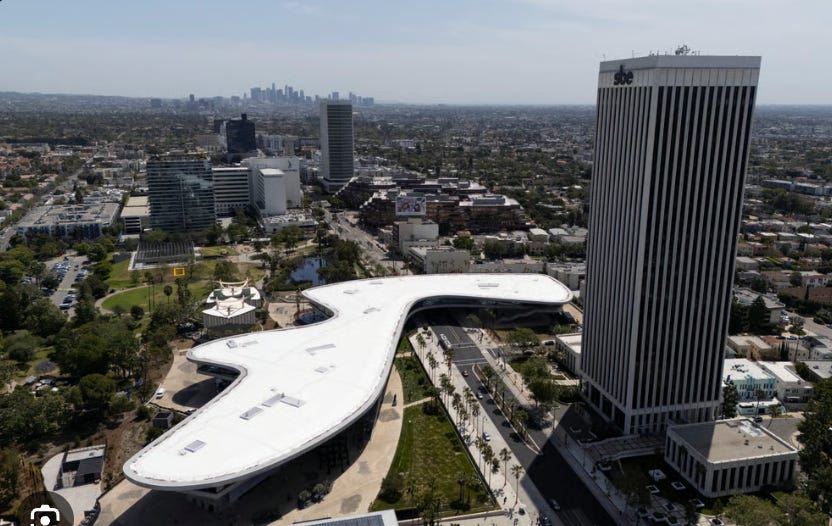
For example, the Los Angeles County Museum of Art is pushing ahead with its plans to de-emphasize Dead White Male Artists that led the Ahmanson Foundation, which had bought 99 works of art for $130 million for LACMA over the decades, to break off relations with LACMA and instead devote more of its generosity to acquisitions for the ultra-WASPy Huntington Gardens museum in San Marino, CA.
LACMA supremo Michael Govan knocked down the four-story Ahmanson Building and three others, a total of 393,000 square feet, and replaced them with the one-story 348,000 square foot David Geffen Galleries that sweeps across Wilshire Blvd. It was considered very important for Woke ideological reasons that the new Geffen museum building have only one story so that no art could be displayed higher or lower than any other art.
Seriously.
You see, traditionally, two-story art museums put their lobby, ticket desk, coat check, gift shop, auditorium, and maybe some ho-hum displays of photographs, textiles, etc. on the lower floor, while the best paintings go on the second floor (a.k.a., “first floor” in many countries), where the paintings benefit from skylights, plus greater security. Second-floors can’t be looted by mobs of high school students protesting budget cuts for school supplies as easily as can ground floors.
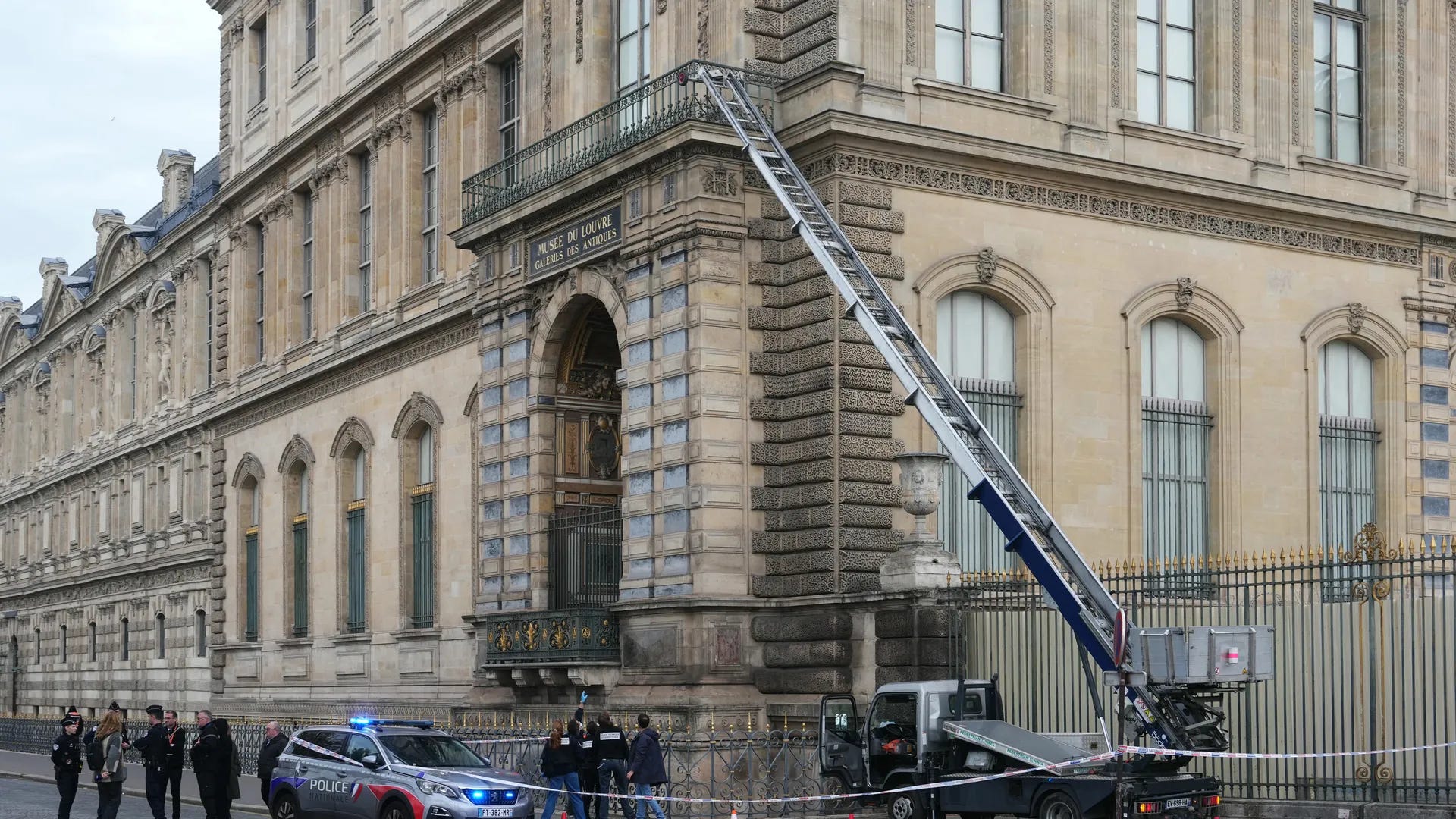
It takes skilled “second-story men” to rob the second floor of the Louvre.
But by not building a racist second floor, even with extending the museum over Wilshire Boulevard, the redesign of LACMA shrank display space by 1/8th. Along with the acquisitions of more multicultural objets d’art, that means that among the Old Masters that were on display in the now demolished Ahmanson Building that are no longer on view is LACMA’s only Titian. Also out of sight are now all its Watteaus and Canalettos. LACMA currently only has room to put one of its two Rembrandts on view.
Serves those Dead White Men right for painting all those paintings that are more beautiful than what anybody else painted!
But even the Washington Post’s lefty art critic unloads on the new David Geffen Galleries spanning Wilshire Boulevard at the Los Angeles County Museum of Art (next to the La Brea tar pits):
A new $724 million museum is a visually stunning train wreck
Decontextualization has made a mess of one of this country’s great art collections.
Today at 6:00 a.m. EDT
Review by Philip Kennicott
LOS ANGELES — Seen from the air, the new David Geffen Galleries at the Los Angeles County Museum of Art look like an amoeba, or one of the soft-edged, biomorphic forms in a painting by Joan Miró. The concrete floor and ceiling plates curve and twist over Wilshire Boulevard, narrowing and expanding to create an amorphous sculptural form that seems to levitate some 30 feet above the noise, bustle and traffic of the city’s Miracle Mile and Hancock Park neighborhood.
Inside, unfortunately, the curators have indulged the contemporary ideological delusion that art can be experienced without reference to history, culture, context or ideas, and the results are also amorphous — in the worst possible way. No museum I’ve visited is as relentlessly hostile to curiosity, exhausting and ultimately depressing. I went twice one day in September, and a third time to visit with LACMA Director Michael Govan, who has made the building the defining legacy of his tenure at the largest encyclopedic museum on the nation’s West Coast.
He has achieved what many curators, scholars and museum professionals dream of: A museum that decontextualizes art, mixes it all up in a giant cauldron of visual distraction and isolates it from history and culture. But why? How could this happen to one of the country’s great art collections? And why are so many seemingly smart museum leaders loyal to an ideology that is ostensibly democratic — open and nonhierarchical — but leads inevitably to museums that express contempt for the visitor?
Named for the billionaire entertainment mogul David Geffen, who contributed $150 million to the project,
Geffen is a gay man without heirs, so in his old age he has been having buildings named after himself in return for generous donations.
the new structure was designed by the Swiss architect Peter Zumthor. The official price tag from LACMA is $724 million, though critics argue that the real cost is likely much higher. Zumthor, a Pritzker Prize laureate revered for projects that make the materials and clean lines of modern architecture feel ancient and earthy, was tasked with a building that displays art on a single level, with a fluid nonlinear arrangement of galleries that can be continually reprogrammed. …
Once inside the galleries, however, the horizontal field of chaos is far less effective.
“The horizontal single-level design eliminates traditional cultural hierarchies, placing all works of art on the same plane,” reads LACMA’s official explanation of the design. “No single path through the spaces is prescribed by the architecture.”
No single path is prescribed, but the architecture is almost dictatorial in the patterns of motion it forces upon the visitor. The only way to get your bearings in this giant space, parceled into 24 small, boxlike galleries connected by what the museum calls open “plazas,” is to constantly return to the half-mile-long glass perimeter of the building, where there is full daylight and some sense of the basic geometry. The visitor becomes a spelunker, poking into the cave-like interior, emerging for a little fresh air, over and over again.
This isn’t just disorienting, it puts the art in constant competition with exterior city views; it makes it difficult for the eyes to adjust to the darker spaces where photographs, paintings and delicate works on paper are on view; and it interrupts the experience of escape and immersion. Bright light leaks into the inner galleries, glaring off the surface of a Dutch painting from the golden age. And in the more dimly lit plazas, many of LACMA’s most treasured paintings feel inert and indecipherable. One never feels settled, transfixed or arrested by beauty.
The art is displayed with minimal labels that give only the name and national or ethnic identity of the artist, the materials, the date and the donor — and the donor listing overwhelms any other information on offer. If you want to know more about the art or object, say what a hacha is (a sculptural carving associated with an ancient Mesoamerican ballgame), you can try using a QR code that links to the online gallery guide, but I couldn’t get it to work while in the building and found it counterintuitive and confusing once outside.
The basic organization is conceptually clever, but creates a confused, jarring experience. Rather than arrange work chronologically, or by schools or national traditions, or by large ethnic groupings, genera or materials, the galleries are thematically grouped by oceans and seas. The Pacific galleries include Mexico, Peru, Japan, Polynesia and Henri Matisse;
See, it’s racist to group cultures by continents. Instead, we should emphasize how the ancient cultures of Mexico and Japan influenced each other due to their constant peaceful voyages of cultural exchange back and forth across the Pacific. ….
Paywall here.
