

One of my basic ideas has been ever since I watched a lot of pro wrestling in 1999-2001 with my sons is that much of modern American intellectual discourse is dominated by the concept that some people are the Good Guys (what wrestling folk call Faces) and other people are the Bad Guys (Heels).
For example, since the early 2000s, I’ve been considered a designated Bad Guy, largely because the Southern Poverty Law Center, a designated Good Guy, says so.
Since then, the SPLC has run into all sorts of scandals that might cast doubt upon their judgment of me.
But … who cares?
A lot of people decided long ago that the SPLC were the faces and I was the heel. To change their minds would be unpleasant for them, so they don’t.
But, I’m still going to keep accumulating evidence for the SPLC’s heelness.
From Slate:
Does Donald Trump Have a Point About the Southern Poverty Law Center?
As the Justice Department pushes its case against the anti-hate group, one lawyer and critic explains where it went wrong.
By Aymann Ismail
Aug 22, 2026
In April, the Trump administration announced a federal fraud case against the Southern Poverty Law Center, the well-heeled organization known for tracking what it calls hate groups. The group pleaded not guilty in July. Then, this month, the Justice Department announced charges against Heidi Beirich, a former senior SPLC official.
And a big fan of lady golfer Annika Sorenstam who was not at all pleased by my publicly expressing doubts about Annika’s Barry Bonds-like massification in the early 2000s.
Prosecutors allege that the SPLC’s long-running program that paid informants inside white supremacist organizations deceived donors and banks about money routed to those informants, including one with whom Beirich allegedly shared a home and bank accounts. …
But Trump’s broadside against the SPLC isn’t emerging from nowhere. Some of what his administration argues actually echoes blistering criticism from civil rights lawyers who have railed against the SPLC for decades.
I’ve traced liberal critiques of the SPLC back to the 1990s. There have been a lot of them over the years, but almost nobody ever notices.
I wanted help untangling that mess, so I called Stephen Bright, a longtime civil rights lawyer and Yale Law lecturer who was once one of the organization’s most prominent critics, particularly of co-founder Morris Dees’ relentless fundraising and what Bright saw as the SPLC’s failure to use its resources to help the people and causes it invoked to raise that money. I asked him to explain what was actually wrong with the SPLC, and how best not to conflate that with what the Trump administration is alleging now. This conversation has been edited and condensed for clarity.
Aymann Ismail: Before we get to the current prosecution, I want to understand when you first started seeing problems at the Southern Poverty Law Center.
Stephen Bright: I was in Atlanta with an organization called the Southern Center for Human Rights. Southern Poverty was down the road in Montgomery. And I sort of had a falling-out with Morris Dees [the co-founder of the SPLC, who was fired in 2019]. After the execution of Henry Hays, who was a guy that lynched a Black kid in Mobile, Alabama, Morris raised money on that case, talking about how the Ku Klux Klan is still running rampant in Alabama, which it was not.
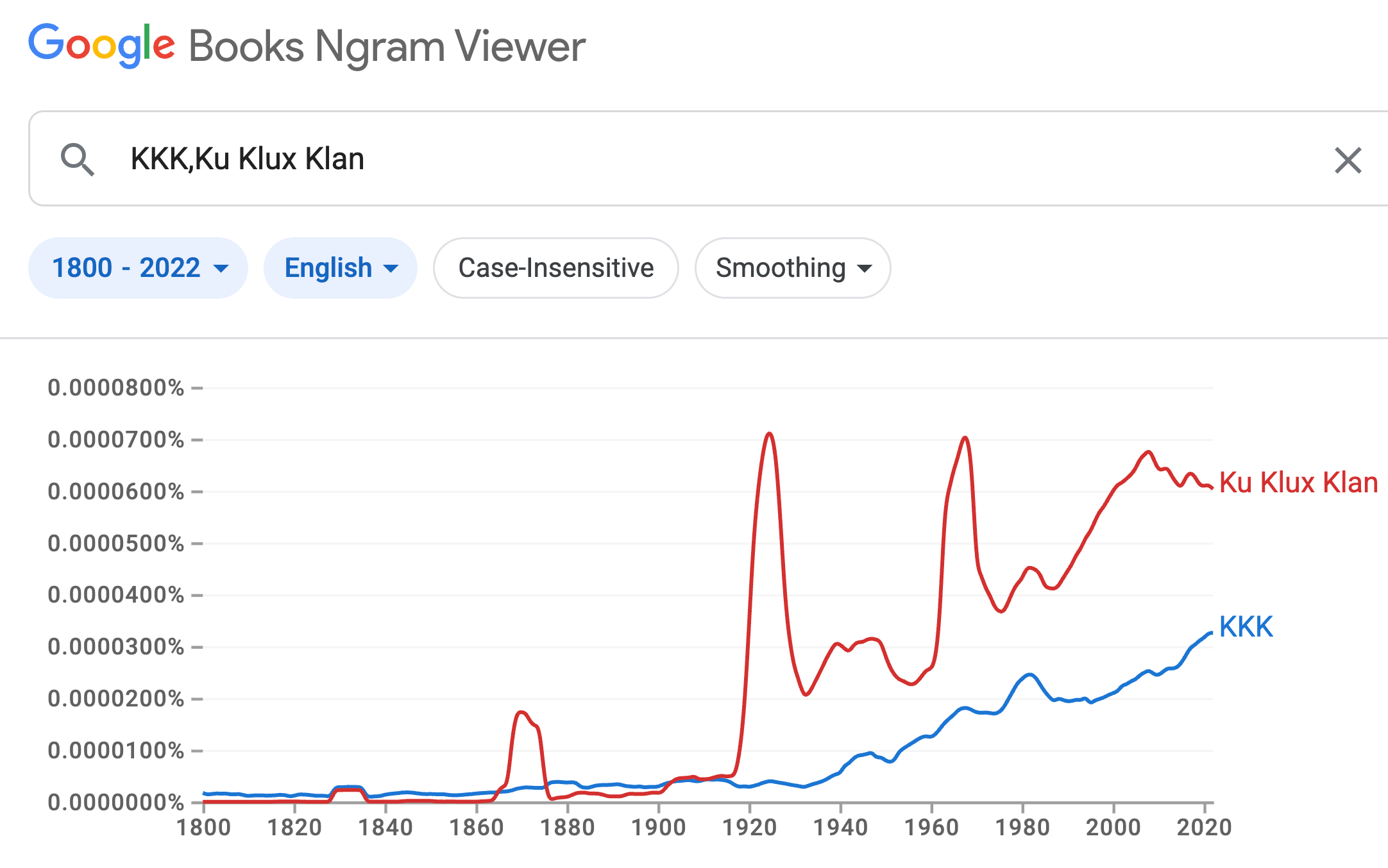
As of 2022, there were about as many books published mentioning the Ku Klux Klan and/or KKK as ever, despite it being largely defunct for a half century or more. …
Paywall here.
