

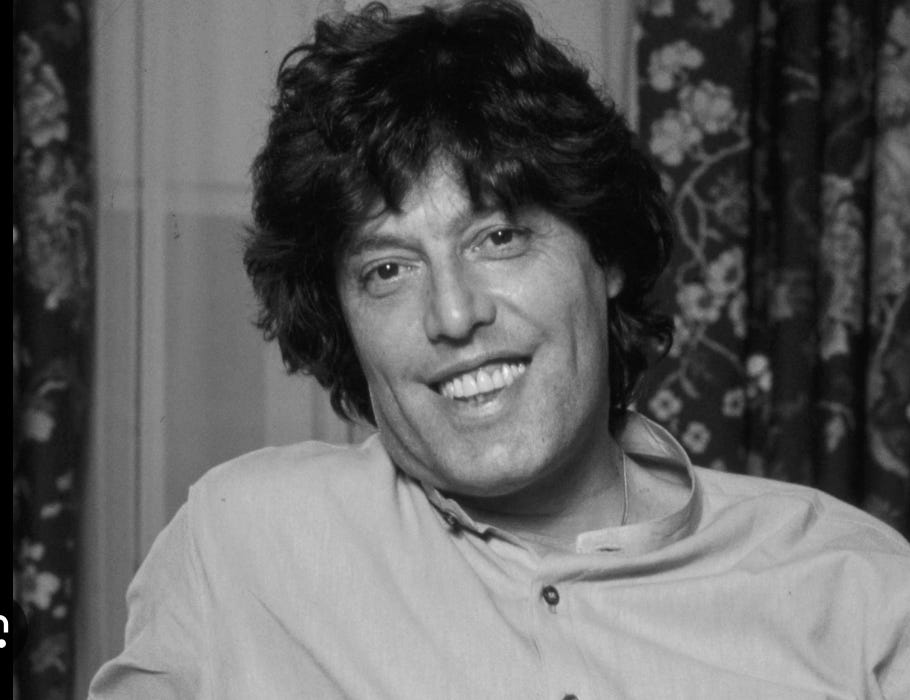
In the Comments below, everybody, paid or free subscribers, please note your favorite and/or most disliked works by Tom Stoppard. (I’ll put my choices in the Comments section later, but not up front to avoid prejudicing my readers.)
I’ve rearranged Wikipedia’s bibliography for Stoppard’s 60 year workaholic career to float the more important stage plays up toward the top.
Published works of Sir Tom Stoppard
Theatre - Major
1968: The Real Inspector Hound
1970: After Magritte – frequently performed as a companion piece to The Real Inspector Hound
1972: Jumpers
1974: Travesties
1977: Every Good Boy Deserves Favour – written at the request of André Previn (the play calls for a full orchestra)
1978: Night and Day
1979: Dogg’s Hamlet, Cahoot’s Macbeth – two plays written to be performed together
1982: The Real Thing
1988: Hapgood
1993: Arcadia
1995: Indian Ink – based on Stoppard’s radio play In the Native State
1997: The Invention of Love
2002: The Coast of Utopia – a trilogy of plays: Voyage, Shipwreck, and Salvage
2006: Rock ‘n’ Roll
2015: The Hard Problem
2020: Leopoldstadt
Below are the categories where Stoppard typically didn’t make as big of an effort as he did for his major plays listed above.
I’d point out the films Brazil, Empire of the Sun, Shakespeare in Love, Indiana Jones and the Last Crusade, and Star Wars Episode III: The Revenge of the Sith; the television plays Professional Foul, Squaring the Circle, and Parade’s End.
Theatre - Early, Short, Minor or Subsumed into Later Pieces
1964: A Walk on the Water
1968: Enter a Free Man – developed from A Walk on the Water
1969: Albert’s Bridge
1969: If You’re Glad I’ll Be Frank
1971: Dogg’s Our Pet – premiered at the Almost Free Theatre
1976: 15-Minute Hamlet
1982: The (15 Minute) Dogg’s Troupe Hamlet – revision of 1979 play, Stoppard’s contribution to eight one-act plays by eight playwrights performed as Pieces of Eight
2010: The Laws of War – a contribution to a collaborative piece for a one-night benefit performance in support of Human Rights Watch
Original works for radio
1964: The Dissolution of Dominic Boot
1964: ‘M’ is for Moon Amongst Other Things
1966: If You’re Glad I’ll be Frank
1967: Albert’s Bridge
1968: Where Are They Now? – written for school radio
1982: The Dog It Was That Died
1991: In the Native State – later expanded to become the stage play Indian Ink (1995).
2007: On Dover Beach
2012: Albert’s Bridge, Artist Descending a Staircase, The Dog It Was That Died, and In the Native State have been published by the British Library as Tom Stoppard Radio Plays
2013: Darkside – written for BBC Radio 2
Television plays
A Separate Peace transmitted August 1966
Teeth
Another Moon Called Earth (containing some dialogue and situations later incorporated into Jumpers)
Neutral Ground (a loose adaptation of Sophocles‘ Philoctetes)
Squaring the Circle
1970: The Engagement, a television version of The Dissolution of Dominic Boot on NBC Experiment in Television
Theatre - Translations and Adaptations
1965: The Gamblers – based on the novel The Gambler by Dostoevsky
1966: Tango – adapted from Sławomir Mrożek‘s play and Nicholas Bethell translation
1979: Undiscovered Country – an adaptation of Das Weite Land by the Austrian playwright Arthur Schnitzler
1981: On the Razzle – based on Einen Jux will er sich machen by Johann Nestroy
1983: English libretto for The Love for Three Oranges (original opera by Sergei Prokofiev)
1984: Rough Crossing – based on Play at the Castle by Ferenc Molnár
1986: Dalliance – an adaptation of Arthur Schnitzler‘s Liebelei
1987: Largo Desolato – a translation of a play by Václav Havel
1997: The Seagull – a translation of the play by Anton Chekhov
2004: Enrico IV (Henry IV) – a translation of the Italian play by Luigi Pirandello
Novel
1966: Lord Malquist and Mr Moon
Film and television adaptation of plays and books
1975: Three Men in a Boat adaptation of Jerome K. Jerome‘s novel for BBC Television
1975: The Boundary co-authored by Clive Exton, for the BBC
1978: Despair – screenplay for the film directed by Rainer Werner Fassbinder, starring Dirk Bogarde, based on the novel by Vladimir Nabokov
1979: The Human Factor – a film adaption of the novel by Graham Greene
1985: Brazil co-authored with Terry Gilliam and Charles McKeown, script nominated for an Academy Award
1987: Empire of the Sun first draft of the screenplay
1989: Indiana Jones and the Last Crusade final rewrite of Jeffrey Boam‘s rewrite of Menno Meyjes‘s screenplay
1990: The Russia House screenplay for the 1990 film of the John le Carré novel
1990: Rosencrantz & Guildenstern are Dead – won the Golden Lion and which he also directed
1998: Shakespeare in Love co-authored with Marc Norman; script won an Academy Award
1998: Poodle Springs teleplay adaptation of the novel by Robert B. Parker and Raymond Chandler
2001: Enigma film screenplay of the Robert Harris novel
2005: Star Wars: Episode III – Revenge of the Sith dialogue-polish of George Lucas‘s screenplay
2005: The Golden Compass a draft screenplay, not produced
2012: Parade’s End, television screenplay for BBC/HBO of Ford Madox Ford‘s series of novels
2012: Anna Karenina, film screenplay of the Leo Tolstoy novel
2014: Tulip Fever, film screenplay of the Deborah Moggach novel
There are many other films where Stoppard did some work on the script but didn’t get a credit. For example, he probably did more work on Steven Spielberg’s forgotten Always than on George Lucas’s Revenge of the Sith, but the image of Lucas and Stoppard collaborating on Sith’s dialogue is funnier:
Anakin Skywalker: Love won’t save you, Padmé. Only my new powers can do that.
Padmé: At what cost? You’re a good person. Don’t do this!
Anakin Skywalker: I won’t lose you the way I lost my mother. I am becoming more powerful than any Jedi has ever dreamed of, and I’m doing it for you... to protect you.
Padmé: Come away with me. Help me raise our child. Leave everything else behind while we still can!
Anakin Skywalker: Don’t you see? We don’t have to run away anymore. I have brought peace to the Republic. I am more powerful than the Chancellor; I... I can overthrow him. And together, you and I can rule the galaxy... make things the way we want them to be!
Padmé: I don’t believe what I’m hearing! Obi-Wan was right... you’ve changed!
Anakin Skywalker: [growing angry] I don’t want to hear anymore about Obi-Wan. The Jedi turned against me. Don’t you turn against me!
Padmé: [crying] I don’t know you anymore! Anakin... you’re breaking my heart! You’re going down a path I can’t follow!
Now let me kvetch about Substack’s Comments Settings.
Substack doesn’t seem to allow me a full range of options for allowing comments on posts. For posts with a paywall part way through, only paid subscribers are allowed to post comments and see the other comments. For posts that are free to everybody, I can open the comments section so everybody can post comments and read comments.
I’d like to experiment with in-between settings, such as: “Hey, Free Subscribers, on this post you can read the excellent comments by the Paid Subscribers, but you can’t comment yourself without ponying up for a subscription.”
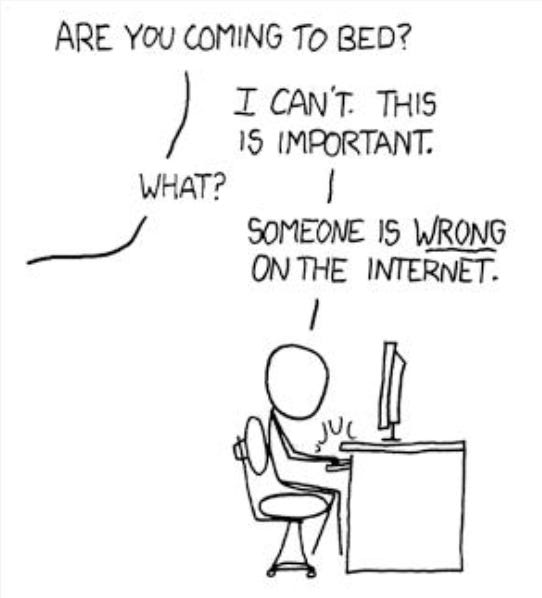
That way Free Subscribers would be more tempted to become Paid Subscribers so that they too could point out in my comments section why Someone Is Wrong on the Internet, which is, I must confess, fun:
“Steve, what is best in life?”
“To prove your enemies wrong on the Internet, see their arguments driven before your logic, and to imagine the lamentation of their women.”
Of course, it doesn’t help when I incompetently forget to turn on Comments for anybody, as I did this morning with my previous post “Is Capitalism Natural.” I’ve now fixed that one so paid subscribers can please comment on the post.
Also, on Twitter you can vote until Monday afternoon on my survey question:
Who was the actual author of the famous plays, such as “Arcadia,” “The Real Thing,” “Travesties,” and “Rosencrantz and Guildenstern Are Dead,” that are popularly misattributed to Tom Stoppard?
The Earl of Oxford
Harold Pinter
George Lucas
Richard Hanania
Ok, for those who haven't seen the comparison, you need to see how Stoppard punched up Indiana Jones & the Last Crusade:
https://mffilm.wixsite.com/lastcrusade
There's a spreadsheet and everything (and I bet this crowd will love that). The visual comparison of how Stoppard sliced out the flab and extended acts for balance is useful.
All that said, I went into IMDB for my own substack post... and saw the stinkers that Stoppard was a script doctor on, and I actually love that he was a consummate professional. Evidently, he was a script doctor for Beethoven (the film about the big slobbery dog), and hey, they paid, I assume.
My personal fave was Arcadia bc of all the "literati", Stoppard actually understood math/science at a high level that he could include it in his work in a RELEVANT way. I appreciated that.
I didn't realize that he directed the movie version of R&G are Dead, but now that I know that, I appreciate it more, b/c he put stuff in there he couldn't have in a stage play (even tho Steve ragged on him for not having a good eye for a film director, which, fair).
He looks like Tim Curry in that pic. "Paradise Garage"!
https://www.youtube.com/watch?v=wgGS0HH8CpE
Well, I'm from Plainsboro, New Jersey / And I didn't bring a date / I guess I wasn't really sure / If you'd be boogeyin' this late / I can't think where I put my wallet / Naive suburban fool / You wouldn't think that I'd spent hours outside / French polishing my cool . . .
Wanted to throw this in: *All This and Bevin Too* by Quentin Crisp, a cycle of 44 limericks, was released in 1943, in a chapbook with illustrations by Mervyn Peake. It's very hard to find and copies are quite expensive, so here is the text of the book (followed by link where a PDF scan can be viewed and downloaded).
ALL THIS AND BEVIN TOO by Quentin Crisp
There's a place at the edge of the town / where a Kangaroo walks with a frown / in the loneliest street / on the wariest feet/ and, whenever he can, he looks down,
though they say that the street simply shone / with his smiles in the days that are gone. / He played hop-scotch, had fun / with the kids and would run / with one foot off the curb and one on.
But all that was before he had heeded / the wireless announcements that pleaded, / or read in the press / the distressed S.O.S. / saying, 'KANGAROOS URGENTLY NEEDED.'
For, as soon as the meaning was plain / (and it was when he'd read it again), / having hopped from his chair, / he had slid down the stair / and had boarded a Bakerloo train.
It was clear to him what he must do. / He must offer himself to the Zoo. / But the moment he tried / the committee replied, / 'We've already got plenty of you.
'If you like, you may leave us your name / so that we can go into your claim / and then, doubtless, you'll hear / in the course of a year / an evasive reply to the same.
'And, perhaps, in the interim, you / would take home these forms to read through, / paying special attention, / perhaps I should mention, / to paragraph four-seven-two.'
So our hero returned to his room. / (O Bloomsbury, where is thy bloom?) / and he lit in an attic / to make it dramatic / a candle to lighten the gloom.
And he sat there and tried not to snivel / while wading through pages of drivel / compiled in verbose / and ambiguous prose / by the servants that some have called civil,
for most of their questions were rude. / They asked what he weighed in the nude / and, as well as his size / and the shade of his eyes, / if he'd ever been formerly 'zooed.'
And the sky became black that was blue / before all of his reading was through / and he still couldn't see / what the meaning could be / of that paragraph four-seven-two.
It said, 'Kindly state how and when / in the future, the past or since then / either you or you mother / or father or brother / has ever? And will they again?'
So he called in the cat, who was good / at what cannot be quite understood, / and by dawn, weary-eyed, / they had somehow replied / to the questions as well as they could.
About paragraph four-seven two, / with the craftiest possible mew, / said the cat, looking wise / and half closing his eyes, / 'I should say, “Yes and No.” People do.'
But day after day after day / drifted by, either sunny or grey, / and, when finally came / a reply to his claim, / it was not what he'd hoped they would say.
Though they didn't say, 'No,' I confess, / yet they certainly didn't say, 'Yes.' / They said, 'Not in as much, / heretofore, such and such, / notwithstanding' and 'nevertheless.'
And affixed to this note with a pin, / which the Kangaroo saw with a grin / that was more a grimace / or a twitch of the face, / were a dozen or more forms to fill in.
They would know of his favourite books / and his friends—were they English or crooks? / And you may think it wrong / but they questioned him long / and unkindly concerning his looks.
But the cat only murmured, 'I knew / that your paragraph four-seven-two / though we all tried so long / not to answer it wrong, / was the first of not even a few.'
But, courageously setting aside / his impatience and animal pride, / with the help of his friends, / in a dozen week-ends / he could say he had duly replied.
And the Kangaroo thought that at least, / since his chances were greatly increased / of achieving his ends / by the help of his friends, / he must offer to make them a feast.
Now he hadn't the butter for toast / and not rations enough for a roast / but each guest brought some beer / and his egg for the year / and they drank to the health of their host.
They had bread, which they cut very thick, / and a cake that was hard as a brick. / It was mostly wood-pulp / but they all gave a gulp / and thirteen of them only were sick.
They had coffee but drank it, perforce, / with no milk and no sugar of course, / But the deadliest flop / was a tiny lamb chop / which they all of them knew to be horse.
But week after week after week / drifted by, either sunny or bleak, / before, less out of pity / than pique, the committee / could deign or be bothered to speak.
When it did, it was hardly to state / but more nearly to hint at a date / when an interview might, / if the weather was bright, / be arranged for deciding his fate.
And the skies on that day were as blue / as if nothing momentous were due, / and he stood until four / in a queue by a door / with 'ENQUIRIES' on it and 'ZOO.'
To create an effect he had sat / on the previous night with the cat / who had washed from his nose / to the claws on his toes, / and a monkey had lent him a hat.
But all that didn't get him much forwarder, / he stuck for an hour in an corridor, / then in a room / that was cold as a tomb / and, because of the people, was horrider.
They asked him his birth-place and who / were his parents and what did they do; / and they asked him what wage / and how tiny a cage / they could get him to take in the Zoo.
And they told him his chances were small, / if indeed they existed at all, / and they yawned and enquired, / looking angry and tired; / if he'd been to the local town hall.
After that he saw girls of fifteen / who were gushingly willing but green / and others of fifty / whose answers were shifty, / but no one an age in between.
And they said, without shame or remorse, / that they'd given his cage to a horse, / but that still, if he chose, / and could alter his nose, / he could put his name down for a course.
So they gave him a pen that was squiggly / and, feeling half sad and half giggly, / he managed to sign / on the dottiest line, / though his signature went a bit wiggly.
They would train hm, they said, in the art / that's performed by a horse with a cart, / and would teach him to neigh / in the very best way. / In September the classes would start.
And so, once having signed, willy-nilly, / he went, feeling wretchedly silly, / to school with a foal / being trained as mole / and a finch being trained as a filly.
And, after a term and a half, / with a jaguar and a giraffe, / he went in for a test / to see which was the best, / and they all of them tried not to laugh.
And the Kangaroo, out of the three, / was successful alone in that he / didn't swallow his bit, / and they had to admit / he was due for an equine degree.
But the final results of this test, / which were posted to them on request, / had got nothing to do / with a cage in the Zoo / as the cat, in his wisdom, had guessed,
for, suppressing a querulous mew, / he said, “All of our failure is due / to our answer, I fear, / Being rather too clear / about paragraph four-seven two,
because year after year after year / will go by, either cloudy or clear, / without ever a word / being spoken or heard / that concerns your intended career.'
What the Kangaroo wondered was, 'Why?' / but he feared that to speak was to cry, / so he lolloped away. / There was nothing to say / but to bid all the neighbours good-bye.
On the monkey who'd lent him a hat / he bestowed a benevolent pat / on the top of the head,
/ with no word being said. / Then he want for walk with the cat.
And to him, who was nearest his heart, / he announced he was willing to part / with his radio set, / with the bitter regret / that he'd listened to it at the start.
After which he turned homeward in tears / where he settled his rental arrears. / Then he packed both his bags / and took down all the rags / that he'd used as a black-out for years.
'Of all joy and all happiness robbed, / We live,' the poor Kangaroo sobbed, /'(and I hope there's no harm / in misquoting a psalm) / our life as a tale that is bobbed.'
He lives now on the edge of the town / where at dusk he will walk with a frown / in the loneliest street / on the weariest feet / and, whenever he can, he looks down.
And he said to me, 'Though I've succeeded / in finding out how we're impeded, / it *does* puzzle me / that the posters I see / still say, “KANGAROOS URGENTLY NEEDED.”'
https://www.dropbox.com/scl/fi/wfrw3zxut81z5eb6kxq8b/All-This-and-Bevin-Too-Crisp-Peake.pdf?e=1